
Sun in the 11th house
Mesh Lagna (Aries Ascendant)
A practitioner study of Surya in Labha Bhava for Aries ascendant natives. Sun in enemy Kumbha, the 5L trikona lord in the upachaya gain house, and the creative-gain-through-friends pattern that distinguishes this placement from the solo-achievement Sun positions.
Sun in 11th house for Mesh Lagna, the quick reference
If you carry Surya in the eleventh house of a Mesh chart, you hold a placement that combines two opposing structural forces in the same reading, and practitioners need to hold both to describe the placement accurately. The eleventh house from Mesh is Kumbha (Aquarius), ruled by Shani, and the Sun-Saturn relationship is classical enmity rooted in the Vivasvan-Yama myth. A Sun in Saturn's own sign expresses through a medium that is temperamentally opposed to its core nature, and classical texts treat the result as a sign-weakened placement where the solar warmth and authoritative register run through an unfriendly Saturnian operating system. However, the 11th house is also Labha Bhava, an upachaya growth house where malefic and hot planets strengthen over time rather than fading, and the house is the specific seat of gains, friend networks, elder siblings, and the fulfilment of worldly desire. The upachaya rule partially offsets the enemy sign reduction, and the net functional output is mid-strength rather than weak, with a specific pacing where the native's solar expression builds across decades rather than peaking early.
The second structural feature is the 5L in 11H configuration. For Mesh Lagna, Surya rules Simha and is therefore the 5L, the lord of the trikona of creativity, past life merit, children, and mantra siddhi. Placing this trikona lord in the 11H upachaya house creates a specific pattern classical texts describe as the creative-income combination: the native earns gains (11H) through their creative intelligence (5L), and the income arrives specifically through friend networks, group contexts, and the larger community rather than through solitary achievement. This is NOT the cleanest trikona-kendra raja yoga because the 11th is not a kendra, but it is a recognised trikona-to-upachaya pattern that compounds across decades. This guide reads every layer of Sun in 11th house for Mesh Lagna natives: the enemy sign vs upachaya tension, the 5L creative lord in the gain house, the friends and elder-brother pattern, and the ruby protocol that still applies here despite the sign dignity.
Why enemy sign and upachaya work together rather than against each other
Students often find this placement confusing because the enemy sign reading and the upachaya growth reading point in opposite directions, and popular astrology sometimes averages them into a neutral prediction that misses both halves of the truth. The honest practitioner reading holds both simultaneously. The enemy sign means the solar quality of the native's expression is filtered through a medium that does not welcome warmth, authority, or the usual Sun register. Natives with this placement rarely step into leadership with the confident directness that exalted or friendly-sign Suns produce. They often feel internally cold around matters of authority, self-assertion, and visible power, and the coldness is structural rather than temperamental. The upachaya house means the functional output of the placement grows across decades. The native who seems less authoritative than peers in their twenties often becomes the gathered elder in their fifties whose work and network have compounded into a recognised form that early peers could not have predicted.
The 5L in 11H pattern is the second specific feature practitioners need to read because it transforms the whole interpretation. Surya as 5L carries the native's purva-punya (past life merit) and creative intelligence, and placing this into the 11H channels both into the gain and network domains. The practical effect is that the native earns material income through their creative output rather than through solo achievement or institutional authority. Income flows from creative work (writing, teaching, art, research, innovative business models) that reaches the native through friend networks, groups, and community contexts rather than through single employer relationships or family inheritance. The 5L-11H link also produces the classical pattern where the native's children become channels for gain and where creative output in one decade compounds into income in subsequent decades. The third interpretive layer is the elder-brother reading. The 11th house rules elder siblings specifically, and Sun here places the father-karaka in the elder-sibling house, which often produces an elder brother (or elder-brother figure) who carries significant authority or fatherly responsibility in the native's life, sometimes replacing or complementing the biological father's role.
When the soul karaka sits in the gain house of an enemy sign, the solar warmth arrives slowly through other people rather than directly from within. The friend network becomes the mirror in which the native finally sees their own light reflected back.
How Surya in enemy Kumbha shapes the Aries native
Physically the native carries the Mesh Lagna frame with the specific modification that the enemy Saturnian sign produces. The face is steady and composed rather than radiant, the bearing is upright but not imposing, and the overall expression carries a slightly reserved quality that peers sometimes read as distance when the native intends presence. Complexion runs cooler than the typical Mesh spectrum because the Kumbha sign tempers the standard solar warmth with a Saturnian register. Hair is typically dark and stays that way longer than peers, and the body tends to be lean and angular rather than heavily built. The 11th house body-part rulership covers the calves, ankles, and left ear, and natives should pay attention to all three across decades, especially the calves and ankles which can accumulate stress injuries from the native's active lifestyle. The eyes carry a thoughtful, group-oriented quality that becomes one of the native's distinctive features by adulthood.
Temperament is the layer where the placement most clearly diverges from popular Aries stereotypes. These natives carry Mesh courage but the courage expresses through group contexts rather than solo performance. They are unusually good at joining groups where they are not the leader but gradually become indispensable through sustained contribution over years, and the pattern repeats across friend networks, professional communities, and creative circles throughout their adult life. They are often described by friends as the steady presence who has been part of the group for longer than anyone remembers, and the description captures the specific strength the placement produces. They form unusual friendships across age, class, and cultural lines because the 11th house amplifies the native's network tolerance and the enemy-sign Saturnian register gives them comfort with unconventional group structures. The shadow side is the reliance on group validation that the placement can produce. Natives who do not develop their solo creative voice alongside the group participation can reach midlife having been part of many groups without having built anything personally distinctive, and the chart asks for explicit solo creative work to balance the group gravity. Natives who pair the group-centric gifts with explicit solo creative commitment develop the rare combination of network embeddedness and personal authorship that this placement is capable of supporting.
Strengths, shadows and career fits
- Upachaya growth across decades
- 5L trikona lord in gain house
- Creative income through friend networks
- Elder brother or elder-figure support
- Unusual friendship range across categories
- Network embeddedness compounds steadily
- Enemy sign dampens solar warmth
- Slow career ripening frustrates peers
- Calf and ankle attention required
- Group reliance can mask solo development
- Father distance compensated by elder brother
- Authority feels cold even when given
- Group-based creative enterprise
- Research and academic collaborations
- Community leadership and nonprofit work
- Open-source technology and collective projects
- Teaching within cooperative institutions
- Public-sector creative work
Where the creative-gain-through-friends vocation plays out
Career paths cluster around fields where creative output reaches income through group or community channels rather than through solo authority or institutional ladder-climbing. The strongest single fit is group-based creative enterprise, where the native works within a collaborative structure producing creative output that the group collectively brings to market. Many natives with this placement build careers in creative agencies, collaborative publishing houses, research teams, or cooperative creative ventures where their contribution is significant but the income flows through the group's collective work rather than through solo visibility. Research and academic collaborations fit the chart because the scholarly world rewards the specific kind of group-embedded creative work the placement produces: journal publications with multiple authors, research grants for team projects, long-term academic collaborations that compound across decades.
Community leadership and nonprofit work suit the chart because the 11th house specifically rules community and groups, and natives often find their footing in nonprofit roles where the creative dimension (programme design, communications, strategy) intersects with community organising. Open-source technology and collective projects channel the combination productively for natives with technical skills. Teaching within cooperative institutions (collectively-run schools, teacher cooperatives, academic departments that reward collaboration) suits natives whose vocational pull is more educational. Public-sector creative work rounds out the list because government cultural institutions, public media, and civic creative programmes all reward sustained contribution within group structures rather than solo performance. Surya mahadasha is when the creative-gain pattern crystallises into recognised form, and the window often arrives through a specific friend or group connection that opens the decade of compound gain.
Sun marked in the eleventh house of Mesh
- Surya in Labha Bhava in enemy Kumbha, marked in saffron
- 12 houses in North Indian format
- Upper-right diamond is the 11th house of gains
Why the chart rewards group embeddedness and slow compound
The enemy sign vs upachaya tension is the most useful frame for Sun in 11th of Mesh. The two forces are in dynamic tension where the enemy sign dampens the solar expression in quality terms (warmth, directness, natural authority) while the upachaya house amplifies the solar output in quantity terms (gains, network reach, accumulated recognition). Natives in their twenties often feel that peers have more authoritative presence than they do, and the observation is structurally correct. But by their forties and fifties, when peers from other charts have plateaued, the 11th house upachaya growth has compounded the native's network, creative output, and steady contribution into a recognised presence that early peers did not see coming.
The elder-brother signature is the second specific feature clinical reports consistently show. The 11th house rules elder siblings, and when Surya (the father karaka) occupies the elder-brother house, the native's elder brother often carries unusual fatherly responsibility within the family, sometimes replacing or complementing the biological father's role. Practitioners should ask about this directly because the pattern is reliable enough to be predictive. The elder brother often provides direction or mentorship that other natives receive from their father. The third pattern is the friend-as-family signature. Because the 11th rules friends and Surya brings the father-karaka there, natives often form friendships that function as chosen family with specific friends carrying roles blood relatives usually carry in other charts. Practitioners should describe this because it helps natives understand why their closest friends feel more central to their emotional life than their blood family.
When Sun in 11th delivers its Labha Bhava chapter
Surya mahadasha is the defining window for this placement and arrives with the creative-gain pattern crystallising through friend-network channels.
Calves, ankles and the slow-vitality profile
Health follows the enemy-sign Sun in the upachaya house pattern with specific 11th house considerations. Constitution is generally lean and wiry rather than powerfully built, with vata most prominent because the Kumbha air sign and the Sun's fire combine into a mobile, slightly dry tissue quality. The 11th house body-part rulership covers the calves, ankles, left ear, and the circulatory return from the lower body, and natives should pay sustained attention to all of these across the decades. Ankle and calf care is specifically important because the native's active lifestyle combined with the placement's slow-vitality pattern produces accumulated micro-injuries that compound into chronic issues if preventive stretching and strength work are not maintained.
The cardiac vitality reading is the second specific layer because the Sun governs the heart and the enemy sign produces a specific pattern where the native's cardiovascular system runs reliably but needs explicit support from a lifestyle that generates warmth the Saturnian sign otherwise dampens. Morning sunlight exposure, warming foods, regular cardiovascular exercise, and deliberate stress management are preventive practices the chart requests. Sunday is the ritual day, and the placement responds well to weekly Surya observance even though the sign is classically enemy, because the observance specifically supplies the solar warmth the sign subtracts. Annual cardiac and circulatory screening from the late thirties completes the preventive baseline.
Remedies for Surya in the Mesh gain house
The Sunday discipline is foundational for this placement and delivers benefit despite the enemy sign because it specifically supplies the solar warmth the Saturnian sign otherwise dampens. Rise before sunrise, bathe, wear saffron, red, or golden-toned clothing, and offer arghya (water libation) to the rising Sun facing east. Visit a Surya, Vishnu, or Aditya temple if accessible, and offer red flowers, wheat, jaggery, or copper at the morning altar. Donate to causes that channel creative work through group or community structures (creative nonprofit support, community arts programmes, cooperative publishing efforts), all of which align with the chart's specific pattern. The Surya Hridayam is the primary recitation for this placement because it is the heart of the Sun hymn and specifically activates the solar warmth at its most intimate level, which is what this enemy-sign placement structurally needs.
Reciting the Surya Hridayam daily for forty days at any major creative or gain-related transition provides the stabilising current the chart rewards, and the protocol can be repeated annually to maintain the solar strength the sign otherwise subtracts. The daily creative-output practice is the single most important lifestyle remedy for this placement because the chart specifically converts creative work into gains through the 5L-11H channel. Natives who establish a daily creative practice (writing, drawing, composing, crafting, designing, researching) in their twenties report that the practice compounds across decades into the creative body-of-work that eventually becomes the primary income source. The gemstone is ruby (Manikya) and is recommended here despite the enemy sign because the 5L trikona status outweighs the sign-dignity reduction for gemstone purposes. Wear a natural Burmese or African ruby of minimum three ratti set in gold on the ring finger of the right hand on a Sunday at sunrise after Surya mantra recitation. The lifestyle adjustment that compounds most is treating the slow ripening as the chart's literal instruction. Natives who refuse to compare themselves to peers on shorter timelines and commit to the decades-long creative-gain compound experience the placement as the source of unusually durable late-career recognition.
Gemstones for Sun in 11th house Mesh Lagna
Ruby remains the primary recommendation here because the 5L trikona status outweighs the enemy sign reduction for gemstone purposes.
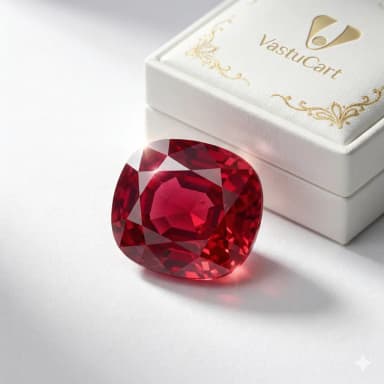


Disclaimer: Ruby in an enemy sign placement should still be reviewed by a qualified Jyotishi for chart confirmation before permanent wearing.
Rudraksha beads for Sun in 11th house
The Surya-aligned rudraksha is the Ek Mukhi, the rarest bead and the one directly ruled by the Sun.
The rarest and most revered rudraksha and the primary bead for any Sun strengthening protocol. Supplies the solar warmth the enemy Saturnian sign otherwise dampens, amplifies the 5L creative signature, and is specifically recommended for natives building creative careers through group and community channels.
The Saturn bead serves as secondary support for this placement because the dispositor of Sun here is Shani (Saturn rules Kumbha). Wearing the Saat Mukhi alongside the Ek Mukhi honours both planet and sign-lord and softens the enemy-sign friction so the solar warmth and the Saturnian structure work together rather than against each other.
Surya Yantra for the gain-house Sun
Sacred recitations for Surya in enemy Kumbha
Namo namo yogi hrt padma natha namostu te lola lala ambarasya
Namo namas te sakala bhutartha karaya purna mahima gunaya
Namo namo bhukti vimukti daya namo namo maha bhava sodhanaya
Translation: Salutations, salutations to you, O lotus-moon radiant, young as the lotus bud, salutations again and again. Salutations to the lord of the yogi's heart lotus, salutations to you whose flowing tongue is unbearable. Salutations to the one who makes the meanings of all beings, full of glorious qualities. Salutations to the giver of enjoyment and liberation, salutations to the purifier of great existence. The Surya Hridayam is the intimate heart of the Sun hymn and is the perfect daily recitation for a chart where the enemy sign dampens the solar register and the native needs explicit solar warmth to balance the placement.
Read the full stotra on stotra.vastucart.inTools for Sun 11th house Mesh natives
Is your Labha Bhava Sun carrying the creative-gain pattern?
Get a full personalised analysis of your eleventh house Surya, the friend-network timing, and the upachaya compound growth.
Questions about Sun in 11th house, Mesh Lagna
Pt. Raghav Sharma has practiced Parashari Jyotish for over twenty two years from Varanasi. A student of the Varanasi Jyotish tradition, he specialises in Graha-in-Bhava analysis, Vimshottari Dasha predictions, and Muhurta. He has authored over four hundred in-depth articles on Jyotish principles across the VastuCart knowledge network.