
Sun in the 10th house
Mesh Lagna (Aries Ascendant)
A practitioner study of Surya at the directional strength point of Karma Bhava for Aries ascendant natives. Sun in Makara, the enemy sign by dignity yet the zenith by direction, the 5th lord in the 10th house raja yoga, and the Saturnian path to solar authority.
Sun in 10th house for Mesh Lagna, the quick reference
If you carry Surya in the tenth house of a Mesh Lagna chart, you hold one of the most interpretively interesting Sun placements in the Aries ascendant catalogue because it forces two opposing structural facts into the same reading. The tenth house from Mesh is Makara (Capricorn), ruled by Shani, whose relationship with Surya is classical enmity rooted in the Vivasvan-Yama myth. By sign dignity, a Sun in Makara is a Sun in the house of an adversary, and classical texts describe the result as constrained or slow to ripen. However, the tenth house is also the specific house where Surya holds digbala, the directional strength that Parashara awards to a planet at its strongest point on the wheel. Directional strength is not a sentiment, it is a measurable Shadbala component that adds to the planet's functional output regardless of sign.
The result is a reading where your solar signature is powerful and visible but arrives through a Saturnian medium. Ambition is cold, patient, and methodical rather than hot, impulsive, and dramatic. Authority is earned through discipline, not claimed through birthright. Add to this that Surya is the 5th lord for Mesh Lagna (he owns Simha, the fifth), and placing the 5L in the 10H creates a trine-to-kendra raja yoga that classical texts treat as one of the clean career-elevation yogas. This guide reads every layer of the placement: the enemy sign vs digbala tension, the raja yoga, the Saturnian authority pattern, and the ruby protocol that still applies here despite the sign dignity.
Why enemy sign and digbala do not cancel each other
Students new to this placement often ask whether the enemy sign weakness and the directional strength simply cancel each other and produce an average Sun. They do not. The two factors operate in different registers and compound rather than average. Sign dignity tells you about the quality of the planet's expression, the warmth or coldness of its native atmosphere, and whether the planet feels at home or in foreign territory. Directional strength tells you about the functional output, the measurable brightness of the result the planet produces in the chart's visible house system. A Sun in Makara in the tenth is both cold in quality and bright in output. Natives experience an ambition that feels austere, restrained, almost dutiful, and a public result that is nonetheless significant and visible to the world at large.
The 5L in 10H configuration is the second structural feature that deserves careful attention. For Mesh Lagna, Surya rules Simha, which falls on the fifth house, the trikona of dharma, creativity, progeny, and purva punya (past life merit). Placing this trikona lord in the tenth, which is the strongest of the four kendras, creates a clean trikona-kendra raja yoga. Classical texts name trikona-kendra combinations as one of the three cleanest raja yoga patterns in Jyotish, and the effect is that the native's past life merit, creative intelligence, and dharmic current flow directly into the public career and reputation. The third layer is aspect. From the tenth, Surya aspects the fourth house, the domain of home, mother, and emotional foundation, with his full seventh aspect. The aspect is classical solar and tends to bring strict discipline to the home atmosphere. Fathers of these natives often carried authority in ways the native absorbed structurally even when the personal relationship felt distant.
A Surya in Makara at the zenith is a Sun that climbed a cold mountain. The view from the top is undeniable, but the path up was patient, earned, and unforgiving. Authority arrived, but only after the native stopped demanding it.
How a digbala Sun in the Saturnian sign shapes the Aries native
Physically the native carries the Mesh Lagna frame with a taller, more upright posture than peers with other Sun placements. The spine is straight, shoulders are held back, and even in childhood teachers comment on the native's bearing and presence in a room. The face is serious in repose, the jawline is defined, and the eyes carry a steady, measuring quality that many people find either deeply reassuring or slightly intimidating depending on how they are read. Complexion runs on the cooler side of the Mesh spectrum, hair is typically dark and well-kept, and the build is naturally lean with a tendency toward wiry strength rather than bulk. The 10th house body-part rulership covers the knees and spine, and natives should pay sustained attention to both from the mid-thirties onward. Knee injuries from overtraining are a specific risk because the digbala Sun produces natives who drive themselves physically the same way they drive themselves professionally.
Temperament is the layer where this placement diverges sharply from the generic Surya-in-10th portrait that popular astrology offers. These natives are ambitious, but their ambition has a Saturnian cast. Where a Surya in Mesha at the tenth (if such a thing existed from a different lagna) would produce a fiery, impatient career drive, a Surya in Makara at the tenth for a Mesh native produces a cold, methodical, almost corporate ambition. They set ten-year plans at twenty-five and follow them. They tolerate years of unglamorous work because they can see the destination. They rarely complain publicly, they rarely seek recognition early, and they often become visibly successful only in their forties when peers from other charts have already peaked and plateaued. The shadow side is that the same coldness that produces sustained career output can make the native emotionally distant, slow to celebrate, and hard on family members who read the quietness as disapproval. Natives who recognise this and build explicit warmth rituals into family life see the Saturnian ambition soften without losing its structural strength.
Strengths, shadows and career fits
- Digbala strength at the zenith
- 5L in 10H trikona-kendra raja yoga
- Sustained long-horizon career ambition
- Reputation earned through discipline
- Fourth house aspect brings home gravity
- Past life merit flows into public visibility
- Enemy sign produces cold expression
- Slow career ripening until thirties
- Father relationship often distant
- Knee and spine vulnerabilities
- Emotional austerity with family
- Ego refinement happens through hardship
- Civil service and bureaucratic leadership
- Corporate executive and long-horizon management
- Judicial service and legal authority
- Military officer and defence services
- Mining, engineering, heavy infrastructure
- Public sector policy and planning
Where the Saturnian-Surya channel plays out
Career paths for Sun in 10th Mesh natives cluster around fields that reward patience, structure, and the slow accumulation of authority over decades. Civil service and bureaucratic leadership are the single strongest fit because the combination of digbala Surya and Saturnian sign produces a native whose natural temperament matches the institutional environment. Many natives with this placement sit for competitive examinations in their twenties, work through the system's grades without impatience, and emerge as senior administrators, secretaries, or directors by their late forties. The chart is specifically aligned with public sector work where visible authority is earned through documented merit rather than charisma.
Corporate executive roles in mature, structured industries (banking, insurance, infrastructure, heavy manufacturing) are the parallel private-sector fit. These natives excel in environments where results compound over quarters and years rather than days, and they often run divisions or functions where institutional memory matters more than quick wins. Judicial service and legal authority are natural because the Saturnian gravity of Makara aligns with the weight of legal process, and natives frequently rise to senior judge, senior counsel, or regulator roles. Military and defence services suit the placement when the Mesh lagna lord Mars is also well placed, because the combination produces officers who command with quiet authority rather than theatrical presence. Mining, engineering, and heavy infrastructure work because Makara rules structures built from rock and earth, and natives are often drawn to fields where the work is tangible and durable. Public policy and planning roles complete the list. Surya mahadasha is typically when the career ripens into visible recognition, and the window often arrives in the mid-thirties to mid-forties when peers from other charts are already declining, producing the classical late-bloomer pattern this placement is known for.
Sun marked in the tenth house of Mesh
- Surya in Karma Bhava at digbala, marked in radiant saffron
- 12 houses in North Indian format
- Upper diamond is the 10th house of Makara
Why practitioners treat this as one placement, not two conflicting ones
The interpretive rule for this placement, which students should memorise and which many textbooks blur, is that sign dignity governs quality while directional strength governs output. Two different registers, two different questions, two different answers. A beginner reads the Makara sign placement, sees enemy dignity, and concludes that the Sun is weak. A more advanced reader sees the digbala and concludes that the Sun is strong. A practitioner holds both and reads them as a single compound signature where the native experiences a cold internal atmosphere around the solar themes (authority, father, self-worth, vitality) and a bright external result in the solar house (career, reputation, public visibility). The two do not cancel. They describe different layers of the same native's life.
The Saturnian medium is the second specific insight. Makara is not just any enemy sign, it is Shani's own sign, which means Surya here expresses through Shani's preferred operating system: patience, delay, structure, hierarchy, tangible results, documented merit, and slow ripening. Natives who resist this operating system and try to force a hot, impatient Mars-style ambition onto the chart experience frustration throughout their twenties and early thirties and often conclude that the placement is simply bad. Natives who accept the Saturnian medium and learn to work inside its constraints find that the same placement delivers exceptional results by the mid-forties, often well beyond what their peers from more classically dignified charts achieve. The third interpretive layer is the father relationship, which Surya signifies and which this placement specifically marks. Fathers of natives with Sun in Makara tenth are often authoritative, distant, demanding, and slow to offer approval. The relationship usually improves after the native crosses thirty and begins to see the father's austerity as structure rather than rejection. Classical tradition treats this pattern as a form of karmic training: the father teaches the native the Saturnian operating system that the chart requires, even when the lessons feel harsh at the time they are given.
When Sun in 10th delivers its Karma Bhava chapter
Surya mahadasha is the defining window for this placement and arrives with the slow, documented career ripening that the Saturnian sign governs.
Knees, spine and the Saturnian stamina profile
Health follows the Sun-Saturn dialogue that the placement sets up. Constitution is durable rather than vigorous, meaning the native holds up under sustained workload for decades but recovers slowly from acute illness. Vata dosha is prominent, and the cold, dry qualities of Makara amplify the native's tendency toward dehydration, joint stiffness, and slow digestion when the work pace is unrelenting. The 10th house body-part rulership covers the knees and spine, and both require sustained preventive attention. Knee injuries from sports or overtraining in the twenties often leave lingering vulnerabilities that flare up in the forties, and natives should adopt disciplined warm-up, strength training, and stretching routines early rather than after the first injury.
Spinal care is the more important long-term layer because the placement produces natives who sit for long hours at demanding work and often develop postural issues that compound over decades into genuine back pain. Daily walking, yoga with specific attention to back strength, and an ergonomic work setup are not optional here, they are preventive medicine the chart specifically requires. The solar vitality reading is steady rather than peaking, and natives benefit from morning sunlight exposure even in winter because the cold Saturnian medium tends to dim the native's internal solar warmth if the practice is neglected. Sunday is the ritual day, and the placement responds well to a weekly reset that includes morning sun, devotional recitation, and a formal rest from the work pace the chart otherwise sustains. Annual cardiac and metabolic screening from the mid-thirties completes the preventive care baseline because the Sun governs the heart and the Saturnian sign tends to produce stress-pattern cardiac risks the native will not feel until they appear on a test.
Remedies for digbala Surya in the enemy sign
The Sunday discipline is foundational and delivers real benefit here because the placement specifically needs the native to keep their internal solar warmth alive against the cold Saturnian medium the sign provides. Rise before sunrise, bathe, wear saffron, red, or golden-toned clothing, and offer arghya (water libation) to the rising Sun facing east. Surya Ashtakam recitation is the primary stotra for this placement because it is a classical eight-verse hymn that invokes the eight qualities of Surya in a structured, disciplined format that aligns with the Saturnian operating system the chart requires. Offer red flowers, wheat, jaggery, or copper at the morning altar, and donate to institutions that serve structural causes: schools, legal aid, public health, or civil rights work, all of which channel the 10th house karma signature constructively.
Ruby (Manikya) is the primary gemstone and remains the correct recommendation here despite the enemy sign placement, because the digbala and the 5L in 10H raja yoga together override the sign-dignity reduction for the purposes of gemstone work. Wear a natural Burmese or African ruby of minimum three ratti set in gold on the ring finger of the right hand on a Sunday at sunrise after Surya mantra recitation. The classical rule that cautions against ruby in enemy sign placements applies when the Sun is also debilitated or combust, which is not the case here, and practitioners who work with this placement consistently see the ruby produce positive career and health results within six to twelve months of wearing. The specific lifestyle adjustment that compounds most is what I call the long-horizon calendar. Because the chart rewards patience and punishes impatience, natives who adopt a three-to-five year planning horizon for career decisions (rather than the quarterly or annual planning most people default to) see the Saturnian medium shift from adversary to ally. The chart is literally asking for the Saturnian operating system, and natives who give it the operating system it asks for see the digbala reward they were promised.
Gemstones for Sun in 10th house Mesh Lagna
Ruby remains the primary recommendation here because the digbala and raja yoga override the enemy sign reduction for gemstone purposes.
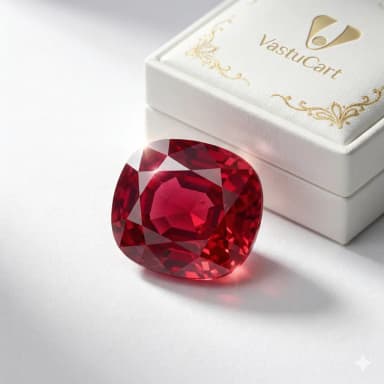


Disclaimer: Ruby in an enemy sign placement should still be reviewed by a qualified Jyotishi for birth chart confirmation before permanent wearing.
Rudraksha beads for Sun in 10th house
The Surya-aligned rudraksha is the Ek Mukhi, the rarest bead and the one directly ruled by the Sun.
The rarest and most revered rudraksha, directly ruled by Surya and the primary bead for any Sun strengthening protocol. Amplifies the digbala strength, supports the career ripening process, and is specifically recommended for natives stepping into senior authority roles.
The twelve-mukhi bead carries twelve forms of Surya and is the practical alternative to the rare Ek Mukhi. Supports career visibility, leadership stamina, and the authority channel the placement requires. Safer daily wear than the Ek Mukhi and works well for natives in public sector or corporate leadership.
Surya Yantra for the digbala Sun
Sacred recitations for digbala Surya in Makara
Divakara namastubhyam prabhakara namostu te
Saptashva ratham arudham prachandam kashyapatmajam
Shvetapadma dharam devam tam suryam pranamamyaham
Lohitam ratha samyuktam bhayadam krupanidhimaksharam
Divakaram jagannatham bhaskaram pranamamyaham
Translation: Salutations to the first deity, be gracious to me O Bhaskara, maker of day. Salutations to the giver of light, the source of brilliance. I bow to that Surya, mounted on a seven-horsed chariot, fierce and brilliant, son of Kashyapa, holding a white lotus in his hand. I bow to that Bhaskara, lord of the world, compassionate and imperishable, in his red chariot. The Surya Ashtakam is the classical eight-verse Sun hymn and is perfectly suited to the Saturnian structural medium a Makara Sun requires.
Read the full stotra on stotra.vastucart.inTools for Sun 10th house Mesh natives
Is your Karma Bhava Sun carrying the digbala raja yoga?
Get a full personalised analysis of your 10th house Sun, career timing, and the Saturnian ripening window.
Questions about Sun in 10th house, Mesh Lagna

Pt. Raghav Sharma has practiced Parashari Jyotish for over twenty two years from Varanasi. A student of the Varanasi Jyotish tradition, he specialises in Graha-in-Bhava analysis, Vimshottari Dasha predictions, and Muhurta. He has authored over four hundred in-depth articles on Jyotish principles across the VastuCart knowledge network.