
Rahu in the 11th house
Mesh Lagna (Aries Ascendant)
A practitioner study of Rahu in Labha Bhava for Aries ascendant natives. The north node in friendly Kumbha in the gain house, classically the best Rahu placement in the entire catalogue, and the structural reasons why the amplification expresses as pure gain without the usual Rahu shadow.
Rahu in 11th house for Mesh Lagna, the quick reference
If you carry Rahu in the eleventh house of a Mesh chart, you hold what classical Parashari texts consistently describe as the single best Rahu placement in the entire catalogue, and the reason the tradition treats this position differently from every other Rahu location is structural rather than sentimental. Three features converge here in the same direction and produce the gain amplification the chart is famous for. The eleventh house from Mesh is Kumbha (Aquarius), ruled by Shani, and the Rahu-Saturn relationship is classical friendship because the two planets share temperamental affinities around structure, systems, outsider positioning, and the slow build of unconventional networks. Rahu in Saturn's sign expresses through a medium that welcomes its full karakatva range without the friction that appears in more turbulent sign placements, and the friendly Kumbha sign therefore gives the placement unusually stable functional output.
The second structural feature is the house itself. The eleventh house is Labha Bhava, the upachaya house of gains, income, friend networks, elder siblings, fulfilment of desires, and the visible material return on the native's worldly effort. Upachaya houses classically grow malefics rather than reducing them, which means Rahu (a shadow malefic) gets progressively stronger across the native's life in this position rather than fading, and the amplification energy Rahu carries finds its natural expression in the gain-related themes the house already rules. The third feature is the lagna aspect. From the 11th, Rahu casts his full 5th aspect (counted from the occupying house) to the lagna, bringing the amplification signature directly into the body and identity angle without going through the chaotic body-placement version that the more difficult Rahu positions produce. This guide reads every layer of Rahu in 11th house for Mesh Lagna natives: the Rahu-Saturn friendship, the upachaya amplification, the classical best-placement reading with the practitioner nuance it actually requires, and the hessonite protocol that applies here with unusual confidence.
Why classical texts consistently rank this as the best Rahu placement
Students learning classical Jyotish quickly notice that Parashari texts treat most Rahu placements as producing some form of difficulty or pedagogical tension, but the eleventh house is the specific exception that nearly every classical source discusses in positive terms. The reason comes down to the compounding of three structural advantages that no other Rahu position combines. First, Rahu shares temperamental affinities with Saturn that produce a friendship classical texts describe explicitly, and Kumbha is Saturn's mulatrikona-adjacent own sign (Kumbha and Makara are both Saturn's own signs, with Kumbha carrying the unconventional, group-oriented, outsider dimension that particularly suits Rahu's nature). Second, upachaya houses grow malefics over time, which means Rahu's amplification energy does not need to be contained here, it simply grows into the gain-related output the house naturally produces. Third, the 11th house is the specific house where growth, income, friendships, and the fulfilment of worldly desire all converge, and Rahu's core karakatva of hungry desire for worldly fulfilment aligns directly with the house's own purpose rather than fighting against it.
The practical expression of all three features compounding is that the native experiences unusually strong gains, an expanding friendship and professional network that crosses conventional boundaries, and the fulfilment of material desires that the chart seems to deliver without the catastrophic side-effects other Rahu positions produce. Classical texts sometimes describe this placement as producing everything the native desires, and while practitioners should always qualify such statements with the broader chart context, the clinical reports for natives with this placement are remarkably consistent. They do experience gain amplification. They do build unusual networks. They do find that their income grows in unexpected ways across decades. The shadow side that practitioners need to read is not financial, it is that the gain pattern can produce a native whose identity becomes over-tied to external success, and natives who do not develop their inner dimension alongside the outer fulfilment can reach midlife with significant external achievement and a strange inner emptiness that the external success does not address. The third interpretive layer is the aspect to the 5th house (Rahu's 7th aspect from the 11th). Rahu aspects the 5th from the 11th, bringing the amplification signature into the creativity and children house as well, and natives often experience children, creative output, and purva-punya expression as additional sites of gain and amplification.
Rahu in the gain house of Saturn's sign is the one Rahu placement classical texts let themselves praise without qualification. The hunger finds its destination, and the destination is built the way the hunger always wanted.
How Rahu in friendly Kumbha shapes the Aries native
Physically the native carries the Mesh Lagna frame with the Rahu signature that classical texts catalogue carefully, and the friendly Kumbha sign softens the harsher edges that Rahu can produce in more difficult positions. The face often has striking but not unusual features, with eyes that carry the scanning Rahu quality in a friendlier register than the enemy-sign versions. Complexion can run on the slightly darker or smokier side of the Mesh range, and many natives have a specific feature (a distinctive brow, a strong chin, or an unusual voice quality) that family members notice. The body tends to be lean and active, with an energy that wants movement and social contact rather than solitude. The 11th house body-part rulership covers the calves, ankles, and left ear, and natives should pay attention to all three across the decades, especially the ankles which can become sites of sports or walking injury when the native's active lifestyle compounds across years.
Temperament is the layer where this placement most clearly expresses the gain amplification the chart structurally produces. These natives carry Mesh courage combined with an unusual capacity to build networks across conventional boundaries of class, culture, nationality, generation, and profession. They are at home with people their family would have considered exotic or inappropriate, and they genuinely enjoy the heterogeneous social world the placement delivers them into. They are ambitious but the ambition is social and network-driven rather than solitary and achievement-driven: they want to be at the centre of an expanding circle of interesting people rather than to be the lone expert at the top of a specific hierarchy. They are unusually generous with their networks, often making introductions and sharing opportunities as naturally as other natives hold them close, and the generosity is itself part of what makes the network grow. The shadow side is the dependence on external validation that the gain amplification can produce. Natives who do not build explicit inner reflection alongside the outer expansion can reach midlife having accumulated substantial gains and a large network while feeling that they do not know who they are when the activity stops. Natives who pair the expansion with explicit inner work develop the rare combination of genuine external achievement and inner settledness that this placement is capable of supporting.
Strengths, shadows and career fits
- Friendly Kumbha sign supports Rahu
- Upachaya house amplifies malefic gains
- Unusual friendship and professional networks
- Income grows across decades consistently
- Aspects 5H, brings amplification to creativity
- Elder siblings often provide strategic support
- Over-identification with external success
- Dependence on network activity for self-worth
- Calf and ankle attention required
- Inner dimension can stay underdeveloped
- Unconventional friends may strain family ties
- Gain pattern can delay inner maturation
- Technology, startups, and disruptive enterprise
- International business and foreign-market commerce
- Social enterprise and community organisation
- Media, publishing, and content platforms
- Venture investment and speculative finance
- Group-based consulting and network-leveraged work
Where the gain-amplification vocation plays out
Career paths cluster around fields where network effects and the amplification of unconventional work produce the gain pattern the chart delivers. Technology, startups, and disruptive enterprise are the strongest single fit because the placement supports the native who thrives in fast-moving, network-leveraged environments that reward growth over stability. Many natives work in technology sectors where careers compound through connections and equity. International business and foreign-market commerce fit because the Rahu foreign signature combined with the Labha income signature produces natives whose commercial work crosses borders naturally.
Social enterprise and community organisation suit the chart because the 11th house rules groups and friend networks, and Rahu amplifies the group-dimension specifically. Media, publishing, and content platforms work because the native's natural social gift translates directly into audience-building. Venture investment and speculative finance suit natives whose pattern recognition runs to markets. Group-based consulting and network-leveraged work round out the list. Rahu mahadasha is the defining career window and arrives with dramatic expansion of income and network that often multiplies the native's professional reach several times over. The window typically runs for the full eighteen years and produces the cumulative gain the chart has been building toward since childhood.
Rahu marked in the eleventh house of Mesh
- Rahu in Labha Bhava in friendly Kumbha, marked in smoky indigo
- 12 houses in North Indian format
- Upper-right diamond is the 11th house of gains
Why the best Rahu placement still asks for practitioner nuance
The upachaya amplification reading is the most useful frame for Rahu in 11th of Mesh. Upachaya houses (3, 6, 10, 11) are the classical growth houses where malefic planets strengthen over time rather than fading, and the rule applies specifically to Rahu in the 11th because the house's own growth nature combines with Rahu's amplification nature to produce compound growth. Natives do not peak early and fade. They start moderately, build steadily through their twenties and thirties, and often experience their strongest gain decades in their forties and fifties. The pacing asks the native to commit to the long build rather than seeking quick wins.
The inner-dimension caution is the second specific feature practitioners need to read because the classical best-placement label can mask the one vulnerability this position produces. Gain amplification without inner development produces natives whose self-worth becomes structurally tied to external metrics: income, network size, professional recognition. When those metrics falter even temporarily, the native experiences disproportionate distress. The placement does not produce inner development by itself. It produces external fulfilment that the native must balance with deliberate inner work. Practitioners should describe this clearly because natives often arrive believing the placement means no difficulties. Natives who accept the inner work develop unusually robust lives. The third pattern is the elder-siblings reading. The 11th house rules elder siblings, and Rahu here often produces elder siblings who are themselves unusual, accomplished, or geographically distant in ways that make them strategic supporters of the native's expansion.
When Rahu in 11th delivers its Labha Bhava chapter
Rahu mahadasha is the defining window for this placement and arrives with cumulative gain amplification that often multiplies income and network several times over.
Calves, ankles and the high-activity profile
Health follows the Rahu-in-11th pattern with specific Labha Bhava body-part considerations. Constitution is generally lean and active, with vata most prominent because Rahu in an air sign produces a mobile, high-activity tissue quality that the native often maintains into later decades than peers. The 11th house body-part rulership covers the calves, ankles, left ear, and the circulatory return from the lower body, and natives should pay attention to all of these throughout life. The ankles are the specific vulnerability because the native's active lifestyle combined with the placement's travel and network signature often produces sports or walking injuries that accumulate over decades if not managed preventively.
The pace-related stress is the second specific layer because the gain amplification the placement produces often comes with a working pace that other natives find unsustainable. Rahu in 11th natives can work in sustained bursts for years at a time and then need longer recovery periods than they expect. The corrective practice is built-in rest cycles rather than purely reactive recovery: explicit weekly rest days, quarterly retreats, and annual longer breaks compound across decades into sustained vitality rather than the burnout pattern that the pace would otherwise produce. Saturday is sometimes treated as Rahu's day in some lineages. The placement responds well to sustained ritual practice rather than sporadic intense efforts. Annual cardiovascular and circulatory screening from the late thirties is recommended because the high-activity lifestyle benefits from early baseline data rather than reactive testing.
Remedies for Rahu in the Mesh gain house
The daily Durga worship is the primary remedy for this placement because Durga is the classical patron deity of Rahu, and the secondary observance layer for this specific placement is Saturn devotion because the dispositor of Rahu here is Shani and the two planets reinforce each other. Rise before sunrise, bathe, wear dark blue or smoky grey clothing on Saturdays and red or saffron on other days, and visit a Durga or Shani temple as accessible. The Rahu Stotra is the primary recitation for this placement because it is the classical hymn to the north node itself, and the placement specifically honours the planet in its most productive expression. Reciting the Rahu Stotra daily for forty days at any major gain-related transition (job change, venture launch, network expansion opportunity) provides the stabilising current the chart specifically rewards.
Offer red flowers, coconut, sesame, and dark sweets at the altar, and donate to causes that support group welfare and community development (refugee aid, community organising support, social enterprise funding), all of which channel the 11th house gain themes and the Rahu karakatvas simultaneously. The inner-work practice is the single most important lifestyle remedy for this placement because the chart specifically asks the native to balance the outer expansion with deliberate inner development. Daily meditation, scriptural reading, journaling, or any consistent contemplative practice compounds across decades into the difference between the placement's full expression and the version that leaves the native hollow despite the gains. The gemstone is hessonite (Gomed, made from grossular garnet), and it is recommended here with unusual confidence because the friendly Kumbha sign and the upachaya house together support the gemstone protocol cleanly. Wear a natural Sri Lankan or African hessonite of minimum five ratti set in silver on the middle finger of the right hand on a Saturday at sunrise after Rahu mantra recitation. The lifestyle adjustment that compounds most is treating the long build as the chart's literal instruction. Natives who refuse to hurry past the upachaya pacing and commit to the decades-long compound experience the placement as the source of unusually durable late-life abundance.
Gemstones for Rahu in 11th house Mesh Lagna
Hessonite is the primary recommendation here and is applied with unusual confidence because the friendly Kumbha sign and upachaya house together support the gemstone protocol cleanly.
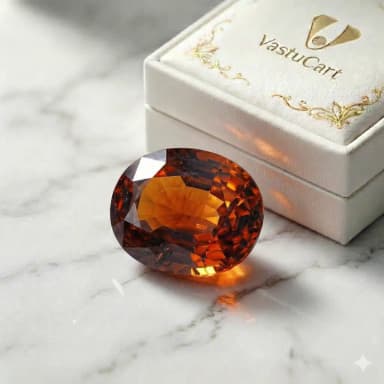
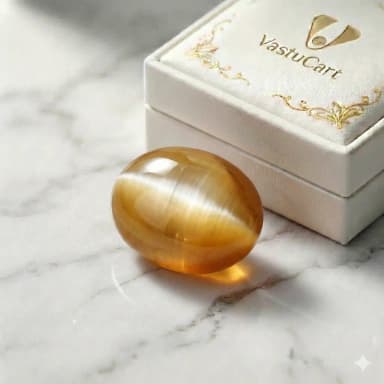

Disclaimer: Hessonite in the gain house is one of the cleanest Rahu gemstone recommendations, but always consult a qualified Jyotishi before permanent wearing.
Rudraksha beads for Rahu in 11th house
The Rahu-aligned rudraksha is the Nau Mukhi (Nine Mukhi), the bead directly ruled by Durga and the north node.
The classical Rahu rudraksha and the bead specifically associated with Durga as the patron deity of the north node. Amplifies the gain signature, supports the network expansion, and is specifically recommended for natives in technology, international business, social enterprise, or any vocation built on large-scale connections.
The Saturn bead serves as secondary support for this placement because the dispositor of Rahu here is Shani. Wearing the Saat Mukhi alongside the Nau Mukhi compounds the placement's strength by honouring both planet and sign-lord, and specifically supports the long-horizon compound pacing the chart rewards.
Rahu Yantra for the gain placement
Sacred recitations for Rahu in the gain house
Simhika garbha sambhootam tam raahum pranamamyaham
Nilavarnam bhayaanakam tam grasantam divaakaram
Nagraajam mahaasooram raahum vande tamah priyam
Rahur daanava mantri cha simhika chitta nandanah
Ardha kaayah sada krodhi chandra aditya vimardanah
Translation: Half-bodied, of great valour, the one who torments the Moon and the Sun, born from the womb of Simhika, to that Rahu I bow. Dark-coloured, fearsome, devouring the day-maker, king of serpents, great hero, the beloved of darkness, I praise Rahu. Rahu, minister of the demons, joy of Simhika's mind, half-bodied, always wrathful, the tormentor of Sun and Moon. The Rahu Stotra is the classical hymn to the north node itself and is the perfect daily recitation for a chart where Rahu sits in the gain house and the amplification needs direct honouring of the planet in its most productive expression.
Read the full stotra on stotra.vastucart.inTools for Rahu 11th house Mesh natives
Is your Labha Bhava Rahu carrying the best-placement signature?
Get a full personalised analysis of your eleventh house Rahu, the gain timing, and the network expansion pattern.
Questions about Rahu in 11th house, Mesh Lagna
Pt. Raghav Sharma has practiced Parashari Jyotish for over twenty two years from Varanasi. A student of the Varanasi Jyotish tradition, he specialises in Graha-in-Bhava analysis, Vimshottari Dasha predictions, and Muhurta. He has authored over four hundred in-depth articles on Jyotish principles across the VastuCart knowledge network.