Shukra in the 6th house
Vrishabha Lagna (Taurus Ascendant)
A practitioner study of Shukra in Ari Bhava for Taurus ascendant natives. Venus in his own sign Tula produces the textbook 1L plus 6L Vipareet Rajayoga signature: the dushthana lord placed in his own dushthana neutralises the affliction and converts service work, medical or legal practice, and patient HR leadership into the chart's quietly strongest income engine.
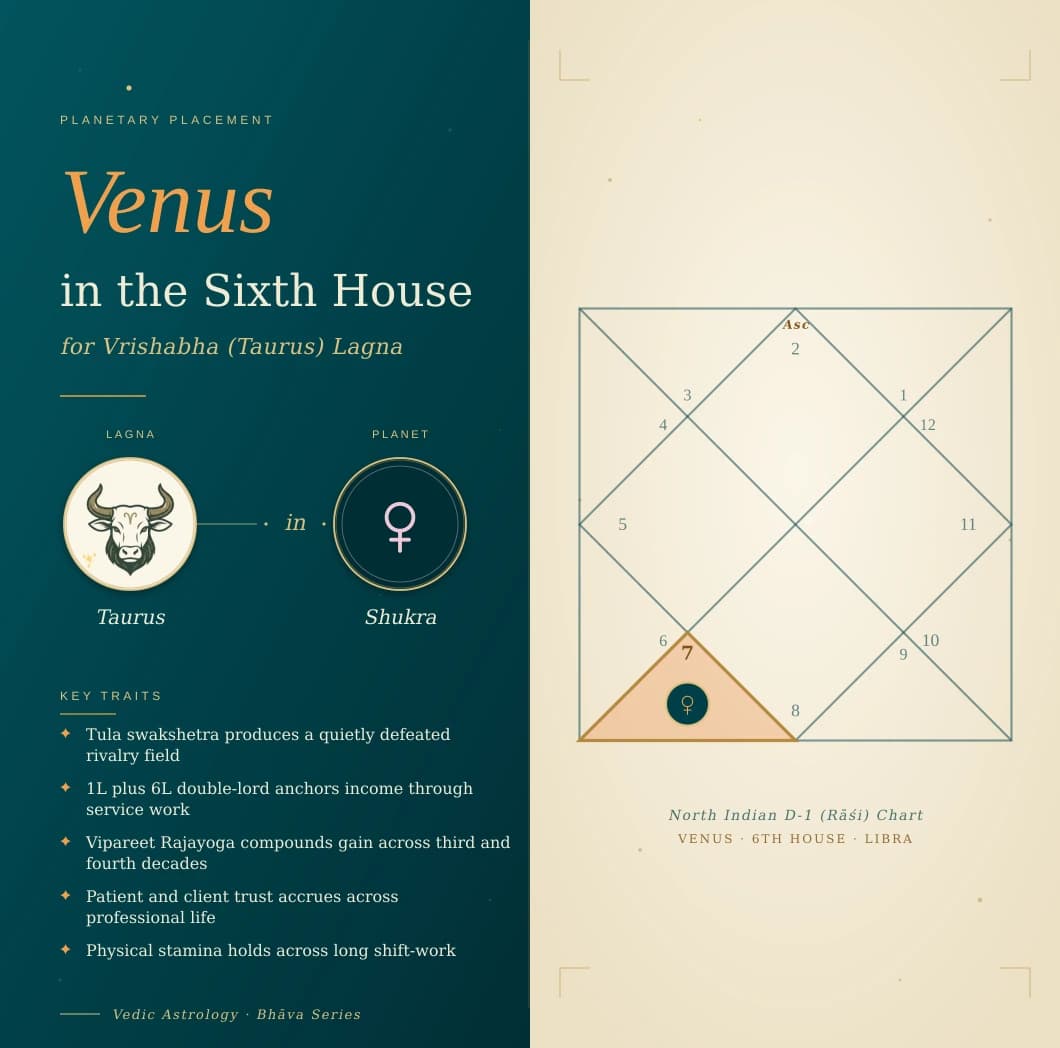
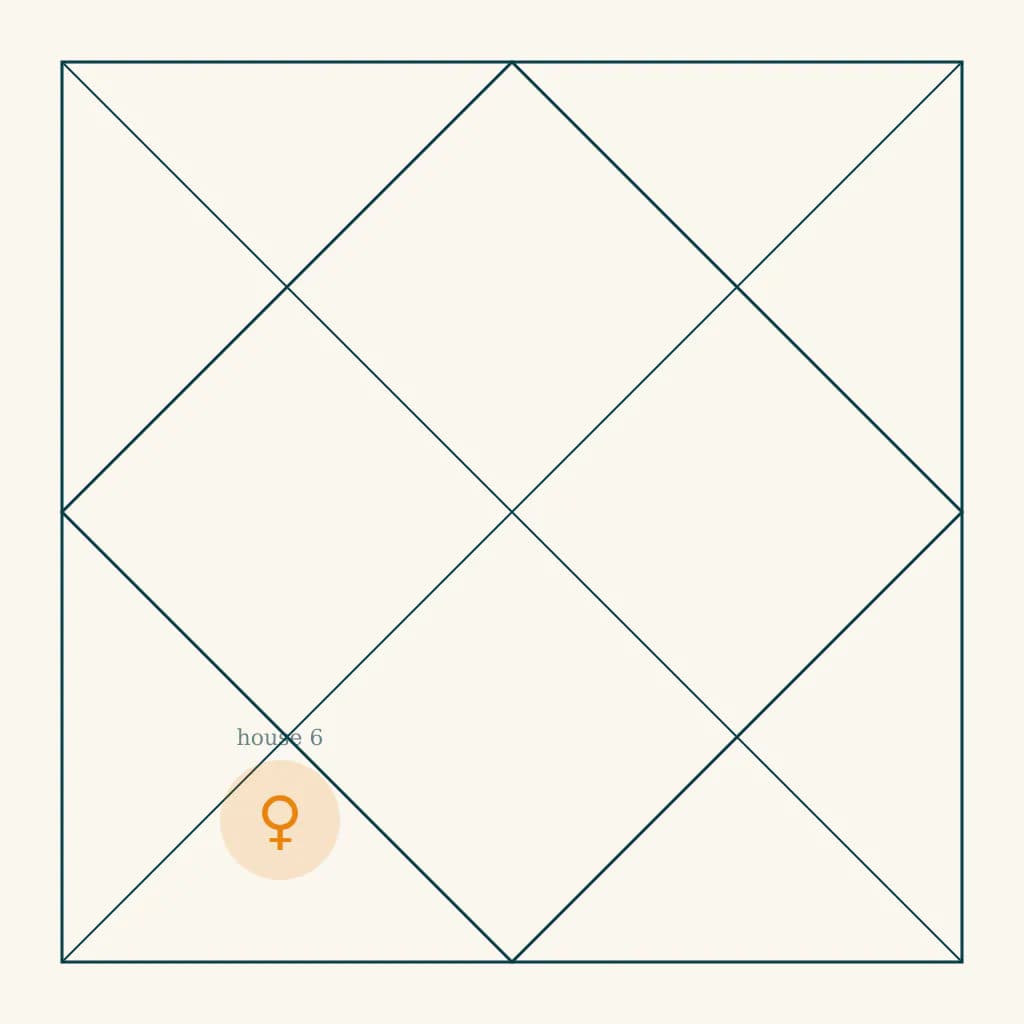
Shukra sits in his own sign Tula in the sixth house for Taurus ascendant natives, the 1L plus 6L Vipareet Rajayoga signature.
Shukra in 6th house for Vrishabha Lagna, the quick reference
If you carry Shukra in the sixth house of a Vrishabha chart, you are looking at the textbook Vipareet Rajayoga (reversed royal yoga) signature in modern practice. Shukra rules both the lagna and the sixth for Vrishabha, so when he sits in Tula (Libra) inside the sixth, the lord of obstacles becomes the lord of his own obstacle house. Classical Parashari texts read this composite as a structural cancellation that converts illness, debt, and rivalry into the chart's quietly most reliable rajayoga channel.
The second feature is the swakshetra logic. Shukra in his own sign Tula carries his full dignity, and own-sign placement removes the dispositor contingency that ordinarily bleeds the 6th. The lagna itself benefits indirectly because the 1L is now backing his own karya bhava (action house) rather than sitting passively at the ascendant.
Physical health holds, daily routine carries unusual stamina, and the native shows up to long service-shifts where peers tap out. The third feature is the karaka logic. Shukra is karaka for marriage and refined relationships, so placing him in the 6th brings refinement into colleague, patient, client, and subordinate dynamics rather than into the romantic field directly.
This guide reads every layer of Shukra in 6th house for Vrishabha Lagna natives: the Tula swakshetra, the 1L plus 6L double-lord Vipareet Rajayoga, service vocation amplification, the medical, legal, and HR career templates, and the diamond protocol classical practitioners reach for once a chart confirmation is in place. Each section is built on clinical observation rather than greeting-card astrology, so the reader can decide what applies to their own kundali and what does not.
Why Shukra in Ari Bhava reads as Vipareet Rajayoga rather than ordinary 6th house affliction
Students often arrive at Shukra in the sixth carrying anxiety from popular astrology readings that mark any Venus in a dushthana as relationship trouble or marriage delay. The honest practitioner answer for this exact configuration is the opposite, because the rules of the 6th house read very differently when the same planet owns both the lagna and the dushthana.
Shukra is the lagna lord and the sixth lord for Vrishabha. When the same graha owns a kendra (angle) and a dushthana, his placement in his own dushthana neutralises the affliction. The native does not look beaten by enemies, illness, or debt; the native is the one quietly defeating those obstacles for clients, patients, and colleagues.
The first specific feature is the swakshetra anchor. Tula is Shukra's own sign, so the dispositor field collapses into the planet himself.
That removes one whole layer of chart contingency from the 6th. The native does not borrow grit from circumstance, the grit is structural, and most clients report that they have always been able to outlast a stubborn workload that breaks peers in the same office.
The second feature is the vipareet logic. The Sanskrit word vipareet (reversed) names the Parashari doctrine that a dushthana lord seated inside his own dushthana cancels the affliction.
Classical sources catalogue this as Harsha Yoga when the 6L is well placed in his own house, and the income, service-work, and clean-rivalry signatures it produces tend to compound across the second and third life decades. Most natives report that what looked like obstacles in their twenties became their literal job description in their thirties.
The third feature is the lagna interaction. The sixth does not aspect the first by full graha drishti, so the placement supports the Vrishabha frame indirectly through stamina rather than through visible image. The lagna keeps its bull-frame outline; the 6L Shukra does the inside work of routing daily duty into refined output.
Shukra in his own Tula in the sixth for a Vrishabha native is not an afflicted Venus. It is a service-Venus: the lagna lord seated in his own dushthana, converting illness, debt, and rivalry into the chart's quietly most reliable income channel.
Terms used in this article
A short glossary of the Sanskrit and Jyotish terms that recur in this study. First-occurrence expansion is also retained inline.
- Ari Bhava
- The 6th house, the bhava of enemies, illness, debt, daily service, and litigation.
- Vipareet Rajayoga
- The Parashari doctrine where a dushthana lord placed in his own dushthana cancels the affliction and produces rajayoga gain.
- Swakshetra
- Own-sign placement, where a planet sits in the sign he himself rules.
- 1L
- Lagna lord, the planet ruling the sign on the ascendant. Shukra is the 1L for Vrishabha Lagna.
- 6L
- Sixth-house lord, the planet ruling the sign on the 6th house cusp. Shukra is also the 6L for Vrishabha Lagna.
- Upachaya
- An improving house (3, 6, 10, 11) where outcomes strengthen with sustained time and effort.
- Karaka
- The natural significator of a domain. Shani is the karaka of the 6th house for service work.
How Shukra in Ari shapes the Vrishabha native
Physically the native carries the Vrishabha bull-frame on top of a wiry inner stamina that traces directly to the Tula swakshetra in the 6th. Build is mid-height, often with a fuller torso and softer waist that the 6th house body-part rulership keeps steady through diet rather than through gym discipline. The complexion tends to be even, eyes carry a gentle steadiness that puts patients and clients at ease, and the hands look at home doing precise, sustained work whether that work is surgical, legal, or operational.
Temperament is where the placement most distinguishes the native from peers. These natives are the calm-under-load type that hospitals, courts, and HR floors quietly rely on. They notice details that pass others by, file the details cleanly, and produce them when a case turns. Friends and colleagues consistently report that the native is the one they call when something difficult needs a steady hand, because the chart can hold a stressful situation without turning brittle.
The shadow side rides the same engine. The same constitution that absorbs and processes a heavy daily load also accumulates if there is no recovery rhythm. Natives who never set boundaries on patient calls, client emails, or colleague favours tend to develop kidney sensitivity, lower-back stiffness, and digestive irregularity by the late thirties. The 6L Shukra is built to flow outward through service work; blocked, it turns the same energy inward and registers as somatic load. Most clinical reports emphasise that natives who keep one weekly day non-negotiably free for refinement (music, art, gardening, cooking for self) retain the chart's longevity advantage well into the seventh decade.
Strengths, shadows and career fits
- Tula swakshetra produces a quietly defeated rivalry field
- 1L plus 6L double-lord anchors income through service work
- Vipareet Rajayoga compounds gain across third and fourth decades
- Patient and client trust accrues across professional life
- Physical stamina holds across long shift-work
- Disputes and litigation more often resolve in the native's favour
- Quiet over-extension when service-load is unbounded
- Late-thirties kidney and lower-back risk if recovery is skipped
- Digestive sensitivity tracks workload before mind does
- Tendency to absorb colleague burnout without naming cost
- Public reading misreads the calm as low-ambition
- Reluctance to ask for help when own health quietly slips
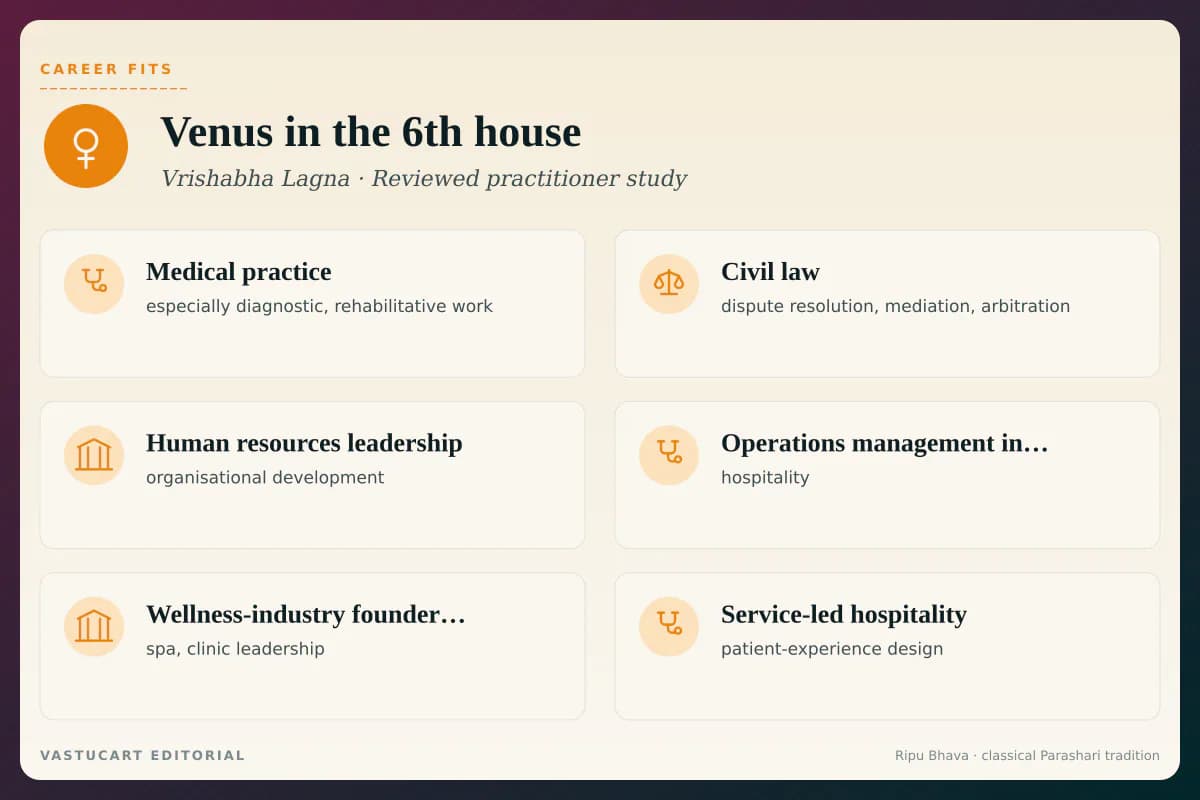
- Medical practice, especially diagnostic and rehabilitative work
- Civil law, dispute resolution, mediation, arbitration
- Human resources leadership, organisational development
- Operations management in healthcare and hospitality
- Wellness-industry founder roles, spa and clinic leadership
- Service-led hospitality, patient-experience design
Where the medical, legal, and HR vocation plays out
Career paths cluster around fields that draw on the sixth house's service, dispute, and daily-routine significations, all refined by the Tula swakshetra's relational fluency. Medical practice fits cleanly because the chart pairs Shukra's bedside warmth with the 6L's diagnostic patience, and the field rewards exactly the long-haul calm the placement supplies. Diagnostic specialties such as radiology, pathology, internal medicine, and rehabilitative work suit best, with most natives finding their footing inside a hospital or clinic system before pivoting to a named practice in their late thirties.
Civil law and dispute resolution form the second cluster because Tula rules balance and the sixth rules litigation; the combination is built for mediation rooms, arbitration panels, and any field that pairs refined judgement with the ability to read both sides without breaking stride. Native lawyers in this combination tend to prefer cases that settle rather than cases that grandstand.
Human resources leadership and organisational development recur strongly in clinical reports because Shukra's relational grace joins the 6L's service-and-rivalry rulership to produce the temperament that patient HR work demands. Wellness-industry founder roles, spa and clinic leadership, hospitality operations, and patient-experience design all sit in the same vocational family. Career typically peaks between 38 and 55 because the 6L upachaya rule rewards accumulated effort, and Vipareet Rajayoga compounds income slowly. Work environments that drain the native are aggressive sales floors, high-conflict office cultures, and any role where the refinement and patient-listening signatures are forbidden their natural release.
Why the swakshetra in Ari reads as the chart's quiet structural strength
The clearest way to understand Shukra in Tula in the sixth for Vrishabha is to read the swakshetra and the double-lord ownership as a single composite rather than as two separate features. The lagna lord and the obstacle lord are the same planet, and that planet has been seated in his own obstacle house in his own sign. The dispositor field collapses entirely. The 6th house cannot lean on a foreign sign-lord to break the native because the sign-lord is also the lagna lord, and the lagna lord has chosen to sit in the 6th and run it personally.
The second compositional feature is the upachaya benefit. The sixth is one of the four upachaya houses, where outcomes strengthen rather than weaken across the decades. Shukra in an upachaya in his own sign reads as a placement that becomes more valuable in the chart's third decade than it was in the first, and the same reading holds across mahadasha-antardasha sub-windows. Most natives report that the qualities Tula brings (sustained patient-trust, mediator instinct, refined daily routine) became visibly distinguishing only after their late twenties. Before that age the placement was still calibrating.
The third compositional feature is the Harsha Yoga overlay. Classical sources catalogue the well-placed 6L as one of three Vipareet Rajayoga subtypes, and Harsha is the variant produced when the 6L is in his own house. The yoga's name translates as joyful gain, and it specifically signals income that arrives through clean service rather than through dispute or extraction. The composite produces what practitioners simply call a clean Ari: rivals who become referrers, illnesses that resolve under the native's hand, and daily duty that compounds into reputation rather than dissipating into burnout.
When Shukra in 6th delivers its Ari Bhava chapter
Shukra mahadasha is the defining window for this placement and arrives with the medical, legal, or HR breakthrough, the named-practice pivot, or the Harsha Yoga income lift that crystallises the Ari vocation.
Kidneys, digestion, and the Ari health link
Health follows the Shukra-in-sixth pattern with the body-part rulership of lower abdomen, intestines, kidneys, and waist, layered onto the Tula airy-watery temperament. Constitution leans kapha-pitta because Vrishabha carries earth-cool kapha and Shukra adds water; the digestion is generally strong but tracks emotional and workload pressure faster than most natives realise. The kidney and lower-back vulnerability is the most consistent clinical thread across this configuration.
The clinical signature most worth naming is the way professional load registers in the body before it registers in the mind. Tula seeks balance, and the 6L Shukra is built to give. When the giving exceeds the recovery, the kidneys and lower back take the strain first, with the digestive tract tracking close behind. Most natives report that whenever a chronic phase of lower-back ache or kidney discomfort begins, an unseen workload accumulation is somewhere in the background that has not yet been bounded.
Daily disciplines that compound for this placement are an evening warm-water hydration practice, a regular short walk after meals so the abdominal and waist rulership stays mobile, and a non-negotiable weekly off-day where the refinement signature finds its own outlet (music, cooking, gardening). The reproductive system is the second body-part shadow zone because Shukra rules its primary signification. Routine annual screening, gentle yoga, and explicit avoidance of crash dieting or extreme cleansing protocols are the most reliable lifestyle stabilisers. Diamond wearing, when chart-confirmed, supports the constitution rather than burdening it.
Remedies for Shukra in the Vrishabha Ari angle
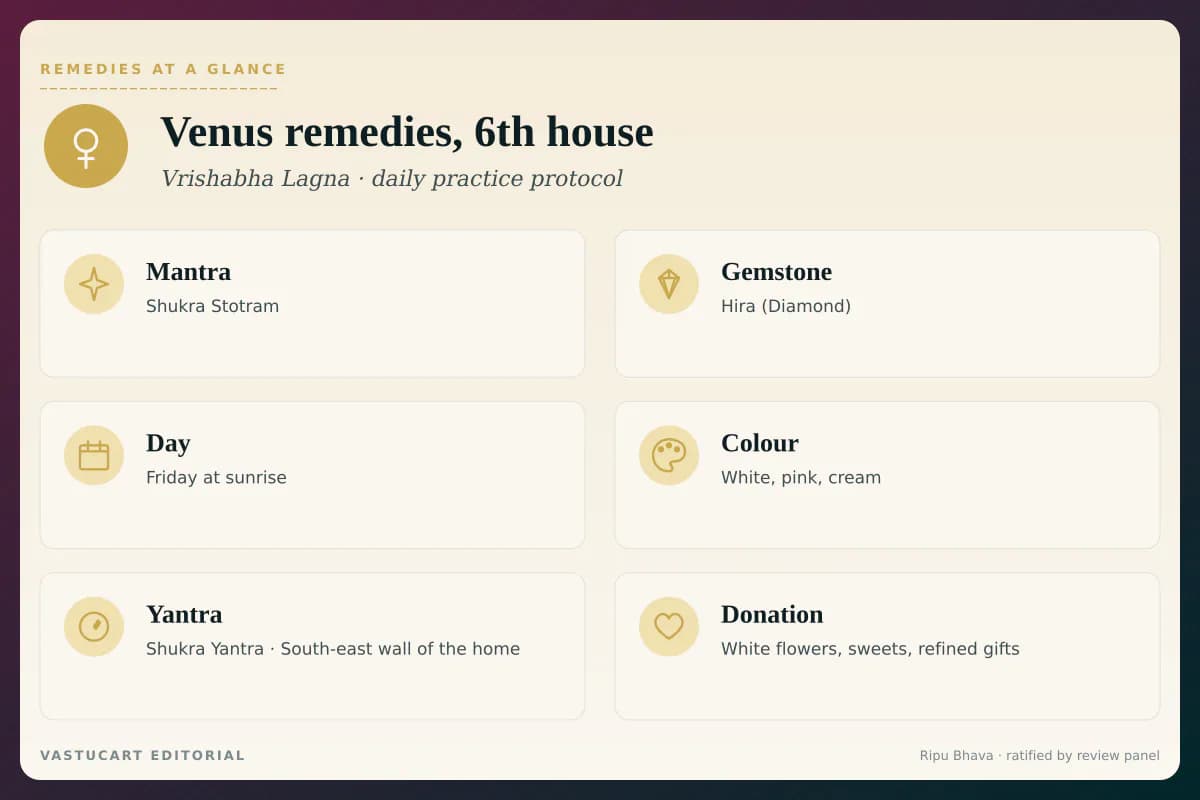
The daily Shukra recitation at sunrise on Friday is the primary remedy for this placement because it ritualises the relationship between the lagna lord and the planet that owns the chart's daily duty house. Bathe before sunrise, wear cream, white, or pale silver clothing on Fridays, and offer rice, white sweets, and white flowers at the home altar reciting the Shukra Stotram. The Shukra Kavacham is the longer recitation reserved for professionally loaded windows when caseload or patient-load presses on stamina.
For the 1L plus 6L Vipareet placement specifically, a sustained service-discipline outside of paid work is itself a remedial channel. Most clinical follow-ups confirm that natives who allocate one regular slot a month to free or low-cost professional service (free legal aid clinic, charitable medical camp, community HR mentoring) compound the Harsha Yoga income channel rather than diluting it. Donate to causes connected to patient welfare, hospice care, or legal aid for under-resourced clients, and offer milk and white sweets at a Lakshmi shrine on Friday evenings.
The gemstone is diamond (Hira), the primary Shukra ratna and the stone consistently recommended for this placement after a confirmed reading. Wear a natural unblemished white diamond of minimum half a carat set in white-gold or platinum on the middle finger of the right hand on a Friday at sunrise after Shukra mantra recitation. Vrishabha is Shukra's own sign at the lagna, so diamond rarely overheats this configuration; the more common failure is under-dosing the stone or substituting an industrial-cut piece, which dilutes the steadiness benefit. Always consult a qualified Jyotishi who has read the full kundali before permanent wearing.
Gemstones for Shukra in 6th house Vrishabha Lagna
Diamond is the primary Shukra gemstone and pairs cleanly with this 1L plus 6L Vipareet placement after careful chart confirmation.
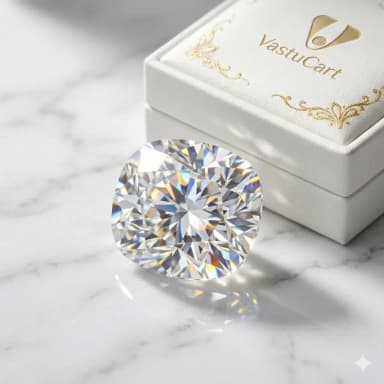


Disclaimer: Diamond over a Tula swakshetra Shukra is generally safe for the Vrishabha lagna because the ascendant sign is itself ruled by Shukra. Even so, always confirm the full kundali with a qualified Jyotishi before permanent wearing.
Rudraksha beads for Shukra in 6th house
The Shukra-aligned rudraksha is the Chha Mukhi (Six Mukhi), the bead directly ruled by Venus and Kartikeya.
The classical Shukra rudraksha and the bead specifically associated with the refinement, marriage karaka, and lagna-lord stamina the Vrishabha chart leans on. Strengthens the daily service rhythm, supports the kidney and lower-back constitution, and stabilises the Vipareet Rajayoga income channel when transit pressure rises.
Shani is the yogakaraka for Vrishabha because he rules the 9th and 10th. Wearing the Saat Mukhi alongside the Chha Mukhi compounds the placement's natural strength by honouring both the lagna-lord Venus and the chart's most powerful kendra-trikona ruler.
Shukra Yantra for the Ari placement
Sacred recitations for Shukra in the Ari angle
sarva-shastra-pravaktaram bhargavam pranamamy aham
Translation: Bright as snow, jasmine, and the lotus stalk, supreme preceptor of the daityas, master of every classical scripture, I bow to Bhargava, the son of Bhrigu. The Shukra Stotram is the canonical Navagraha verse to Venus and the perfect daily recitation for any Vrishabha native carrying Shukra in his own sign in the Ari angle.
Read the full stotra on stotra.vastucart.in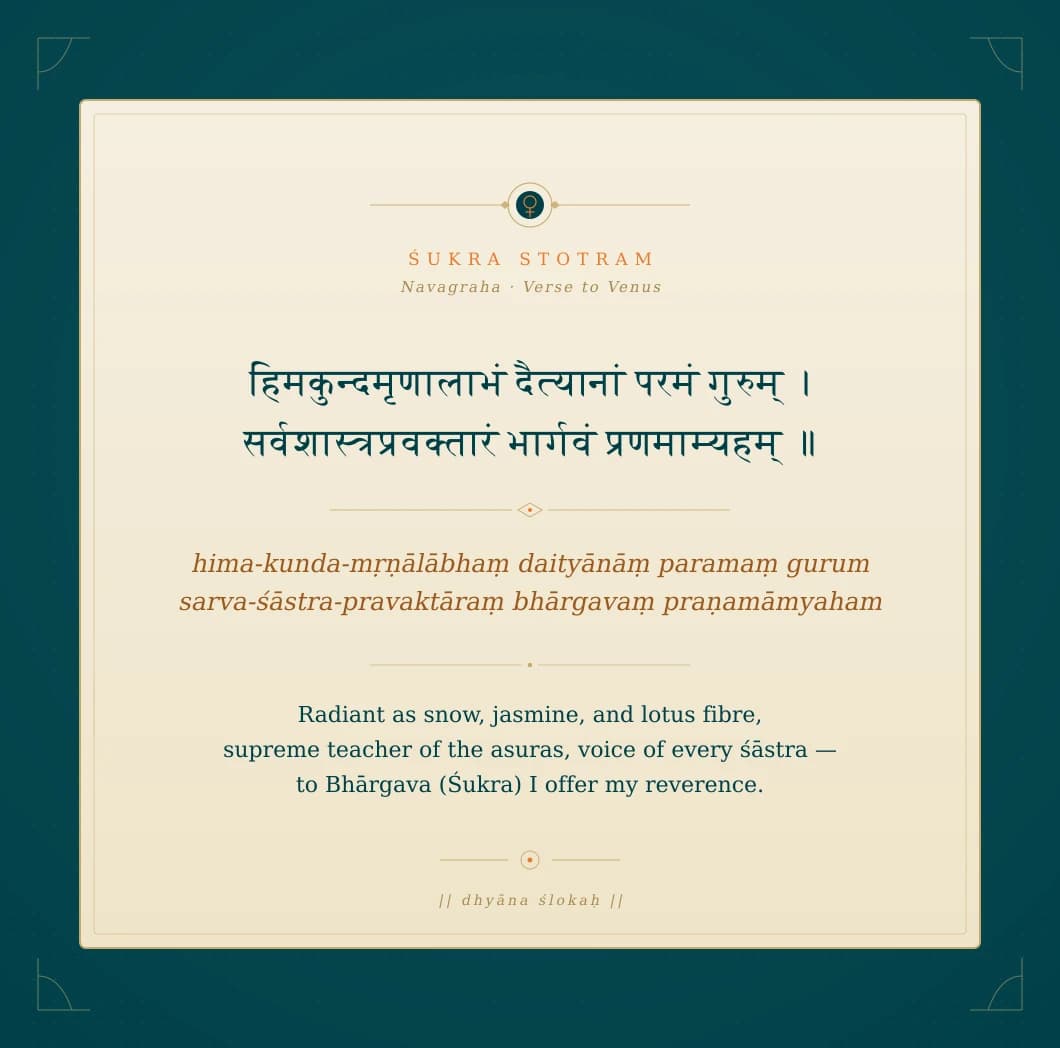
Tools for Shukra 6th house Vrishabha natives
Is your Ari Bhava Shukra carrying the Vipareet Rajayoga signature?
Get a full personalised analysis of your sixth house Venus, the Tula own-sign placement, and the diamond protocol.