
Rahu in the 4th house
Mesh Lagna (Aries Ascendant)
A practitioner study of Rahu in Sukha Bhava for Aries ascendant natives. The north node in Karka in the mother and home angle, the classical problem placement read with the nuance the chart actually requires, and the foreign home and restlessness signature that shapes the inner domestic life.
Rahu in 4th house for Mesh Lagna, the quick reference
If you carry Rahu in the fourth house of a Mesh chart, you hold one of the most commonly misread placements in popular astrology because the standard summary reduces this configuration to a fear-mongering sentence about mother problems, home loss, and emotional instability that misses the structural truth almost entirely. The honest practitioner answer is that the placement produces a specific set of tensions that the native has to work with consciously, but the tensions are pedagogical rather than punitive and the chart is describing a training ground rather than a curse. The fourth house from Mesh is Karka (Cancer), ruled by Chandra, and the Moon-Rahu relationship is classically treated as friction because the cool, emotional, nurturing Moon and the hungry, amplifying, destabilising Rahu pull in opposite directions. The sign is not a friend to Rahu and not quite an enemy, and the placement therefore expresses through a medium that gives the native specific structural work to do rather than easy expression.
The second important feature is the broader classical context. Rahu in the 4th is one of the placements classical Parashari texts discuss under the banner of matru-dosha (mother-affliction) because the Sukha Bhava is specifically the mother and home angle. But the classical reading treats matru-dosha as a pedagogical marker, not as a fate sealed from birth. The actual pattern the placement produces is a native whose relationship with mother, home, and emotional foundation carries a specific restlessness that requires conscious work across decades. The mother relationship may feel structurally distant even when both parties love each other. The home may move or change multiple times across the native's life. The emotional foundation may feel less settled than peers describe. Rahu also aspects the 10th house with his full 10th-aspect (counted from the 4th), which brings the amplification into the career angle and produces the unusual foreign-career or unconventional-career signature that distinguishes this placement from simpler 4th house readings. This guide reads every layer of Rahu in 4th house for Mesh Lagna natives: the Karka tension, the mother and home pedagogy, the 10H career amplification from the aspect, and the hessonite protocol that requires especially careful chart confirmation here.
Why the mother and home tension is pedagogical rather than punitive
Students often arrive at this placement carrying significant anxiety because popular astrology has labelled it as mother-harming and home-destroying, and the honest practitioner answer is that the popular label is overstated in the way most Rahu placement readings are. Rahu in 4th does not predict literal loss of mother or literal loss of home. It produces a specific structural tension between the native and the themes the 4th house rules: mother, home, vehicles, property, education, and the inner sense of belonging. The tension expresses in recognisable patterns that practitioners should describe to natives rather than hide behind fear language. Mother relationship runs distant even when both parties love each other, because the Moon (mother karaka) and Rahu (the placement's occupant) fight for emotional territory in the same house. Home changes multiple times across the native's life because the north node never lets the 4th house settle into the stability the native's instincts want. Property decisions come with more restlessness than other natives experience. Education can feel unsatisfying in conventional structures, and many natives end up learning through unconventional channels the family did not expect.
The foreign home signature is the second specific feature that deserves direct attention because clinical reports for this placement are remarkably consistent. Many natives with Rahu in 4th spend significant portions of their adult life living outside their birth country or birth state, and the relocation is usually not a lifestyle choice but a structural pull the chart delivers through an unexpected opportunity, a marriage, a career posting, or a family circumstance. The foreign setting often becomes the native's actual home in the sense that it finally feels settled in a way the birth home never quite did. The 10th house aspect is the third interpretive layer that practitioners need to read. From the 4th, Rahu casts his full 10th aspect (counted inclusively) to the 10th house itself, which carries the amplification energy directly into the career angle. Natives with this placement often experience career success through unconventional, foreign, or amplified channels precisely because the home instability pushes them to seek identity through work rather than through the stable domestic foundation other natives rely on. The pattern is clear enough in consultation that practitioners can describe it predictively before the native confirms the structural distance from mother and the geographic movement the chart has delivered.
Rahu in the mother house does not harm the mother. It moves the native past the conventional version of home so they can find the one that actually fits them. The work is to grieve the conventional version that never quite arrived.
How Rahu in the mother house shapes the Aries native
Physically the native carries the Mesh Lagna frame with the Rahu signature that classical texts catalogue carefully. The face often has unusual proportions: features that would be ordinary on another body combine into a face strangers notice without being able to name why. Eyes are typically intense with a watchful, scanning quality natives describe as always looking for something the environment does not quite provide. Complexion can run on the smokier side, and the chest area may carry a Rahu marker: a mole, scar, or asymmetry. The body tends to be lean and restless, and many natives report they cannot sit still at home the way others can.
Temperament is the layer where the placement most distinguishes the native from popular Aries stereotypes. These natives carry Mesh courage but the action comes from an inner restlessness that never quite rests at home even when the home is physically beautiful. They love their mother but feel subtly distant from her, and the distance is structural rather than personal. They move house multiple times across their adult life, even when each move makes practical sense individually, because the cumulative pattern reflects the chart's pull. They often feel that their actual home is somewhere they have not been yet, and the feeling softens only after they find the foreign or unconventional setting the chart has been delivering them toward. Natives who do not honour the restlessness as the chart's instruction spend their twenties and thirties forcing themselves into conventional domestic scripts that never quite fit. Natives who accept the pull and allow the unconventional home to arrive develop a genuine settledness peers find surprising.
Strengths, shadows and career fits
- Foreign home signature opens unusual paths
- 10H aspect amplifies career from home
- Restlessness drives sustained exploration
- Unconventional property decisions pay off
- Mother relationship finds its own form
- Cross-cultural domestic life is natural
- Mother relationship feels structurally distant
- Home changes multiple times
- Chest and heart attention required
- Emotional foundation feels unsettled
- Conventional domestic scripts fit poorly
- Popular astrology fear can compound self-blame
- International business and overseas posting
- Property development and unconventional real estate
- Foreign-market commerce and export-import
- Cross-cultural consulting and relocation work
- Alternative education and homeschool leadership
- Expatriate community and diaspora services
Where the restless-home vocation plays out
Career paths cluster around fields that the restlessness and foreign signature naturally channel. International business and overseas posting are the strongest single fit. The chart literally produces natives whose career takes them away from their birth location at least once and often several times, and many find their vocational footing only after a major geographic move in their twenties or thirties. Property development and unconventional real estate work the chart because the native's mind is consistently on home and property, and many build property portfolios across multiple countries or develop alternative housing models.
Foreign-market commerce and export-import work suit natives whose vocational pull is commercial, and the 10H aspect amplifies career visibility through the foreign channel. Cross-cultural consulting and relocation work fit because the native has lived the experience. Alternative education and homeschool leadership are specific fits because the 4th house rules early education and the Rahu signature often pushes natives out of conventional schooling. Expatriate community and diaspora services round out the list because natives who have built their own foreign home often become the bridge for others making the same transition. Rahu mahadasha is the defining career window and arrives with a dramatic relocation or foreign opportunity the native did not specifically seek.
Rahu marked in the fourth house of Mesh
- Rahu in Sukha Bhava in Karka, marked in smoky indigo
- 12 houses in North Indian format
- Lower-central diamond is the 4th house of home
Why the chart delivers career through the home restlessness
The pedagogical reading is the most useful frame for Rahu in 4th of Mesh because it captures the structural truth that the chart is training the native through the mother and home themes rather than damaging them. Classical texts treat shadow planets in the 4th as markers of unfinished karma related to mother, home, or emotional foundation that the current life is meant to work through. The work does not require the relationships to be broken. It requires them to be approached consciously. Natives who treat the distance from mother as personal failure spend years trying to force a closeness the chart will not deliver in the conventional form. Natives who accept the structural distance and find their own way to express love across it develop unusually strong adult relationships with their mothers in middle age.
The 10th house aspect from the 4th is the second specific feature. Rahu casts his full 10th-aspect directly onto the career angle, which means the amplification energy does not stay contained in the home domain. The practical effect is that the native's career often blooms through the same foreign channels the home restlessness drew them toward. The restlessness is the mechanism through which the career arrives. The third pattern is property timing. Property decisions for these natives come at unusual moments: sudden, urgent, through channels the family did not expect, and frequently involving foreign ownership or unconventional structures. Practitioners should ask about this directly because the pattern is reliable enough to be predictive.
When Rahu in 4th delivers its Sukha Bhava chapter
Rahu mahadasha is the defining window for this placement and arrives with a dramatic relocation, a property decision, or a foreign opportunity that opens the rest of the life.
Chest, heart and the emotional-displacement profile
Health follows the Rahu-in-4th pattern with specific chest and heart considerations. Constitution is generally lean and restless, with vata most prominent because Rahu and watery Karka together produce a mobile, unsettled tissue quality. The 4th house body-part rulership covers the chest, heart, and lungs, and natives should pay sustained attention to all three because the combination of Rahu intensity and emotional-displacement themes produces specific risks: stress-related chest tightness, cardiac rhythm changes during turbulent home periods, and respiratory patterns reflecting inner restlessness. Daily breathing practice and regular cardiovascular exercise are preventive medicine the chart specifically requests.
The emotional-displacement pattern is the second specific layer because natives carry a baseline unease they describe as feeling out of place even when circumstances are technically settled. The unease is the chart's literal expression of the home restlessness, and it typically softens only after the native finds the foreign or unconventional home. Recovery practices the chart responds to are sustained sleep, time in nature near water, and explicit emotional regulation work. Annual cardiac and respiratory screening from the late thirties is recommended because the chest-house rulership makes early detection more valuable than reactive testing.
Remedies for Rahu in the Mesh home angle
The daily Durga worship is the primary remedy for this placement because Durga is the classical patron deity of Rahu, and the secondary deity layer for this specific placement is mother worship through any mother-form of the Devi (Parvati, Annapurna, Durga). Rise before sunrise, bathe, wear dark blue, red, or smoky grey clothing on Saturdays and white on Mondays, and visit a Durga or Devi temple when accessible. The Durga Suktam is the primary recitation for this placement because it is the Vedic hymn to the warrior goddess and activates the Rahu channel through the protective feminine principle the placement specifically needs. Reciting the Durga Suktam daily for forty days at any major home transition (relocation, property decision, mother's health event) is the formal protocol, and natives report a noticeable shift in inner stability and clarity about the home decisions by the third week.
Offer red flowers, coconut, and dark sweets at the altar, and donate to causes that protect displaced mothers and families (refugee mother aid, women's shelters, single-parent support), all of which channel the 4L karakatvas alongside the Rahu signature constructively. The mother-honouring practice is the single most important lifestyle remedy for this placement, and natives who maintain explicit warmth toward the mother despite the structural distance (regular phone calls, visits, honouring her in household decisions) see the placement settle into its benevolent expression across decades. The gemstone is hessonite (Gomed, made from grossular garnet), and it is recommended only after careful chart confirmation because Rahu in the home house specifically affects mother and property themes and the gemstone amplifies whatever the placement is currently producing. Wear a natural Sri Lankan or African hessonite of minimum five ratti set in silver on the middle finger of the right hand on a Saturday at sunrise after Rahu mantra recitation, and only after a practising Jyotishi has confirmed the timing. The lifestyle adjustment that compounds most is accepting the foreign home as the chart's literal instruction rather than fighting it. Because the chart delivers the native to a non-conventional home setting as the pedagogical path, natives who stop resisting the pull and allow the move to happen experience the placement as the source of their most stable adult life.
Gemstones for Rahu in 4th house Mesh Lagna
Hessonite is the primary Rahu gemstone but is recommended only after careful chart confirmation because the home angle is especially sensitive to amplification.
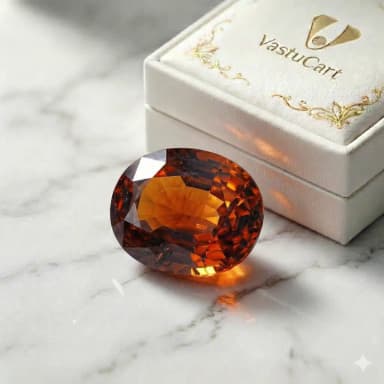
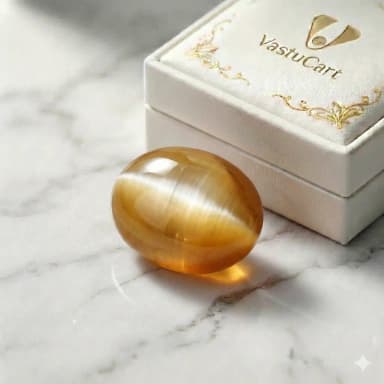

Disclaimer: Hessonite in the mother house amplifies home and property themes sharply. Always consult a qualified Jyotishi before permanent wearing.
Rudraksha beads for Rahu in 4th house
The Rahu-aligned rudraksha is the Nau Mukhi (Nine Mukhi), the bead directly ruled by Durga and the north node.
The classical Rahu rudraksha and the bead specifically associated with Durga as the patron deity of the north node. Contains the amplification energy in the home dimension, supports the conscious working with the mother and home themes, and stabilises the inner restlessness when the relocation pull is strong.
The Moon bead serves as secondary support for this placement because the dispositor of Rahu here is Chandra (Moon rules Karka, the sign Rahu occupies). Wearing the Do Mukhi alongside the Nau Mukhi compounds the placement's strength by honouring both planet and sign-lord, and softens the home restlessness.
Rahu Yantra for the home placement
Sacred recitations for Rahu in the Mesh home angle
Sa nah parshat ati durgani vishva naveva sindhum duritaty agnih
Tam agni varnam tapasa jvalantim vairochanim karma phaleshu jushtam
Durgam devim sharanam aham prapadye sutarasi tarase namah
Translation: We press the Soma for Jatavedas (all-knowing fire), who consumes the wealth of the enemies. May he lead us across all difficulties as a boat crosses the ocean, and burn up our sins like fire. I take refuge in that goddess Durga, the colour of fire, blazing with tapas, born of the Sun, the granter of the fruits of action. O excellent crosser, carry us across, salutations. The Durga Suktam is the Vedic hymn to the warrior goddess and is the perfect daily recitation for a chart where Rahu sits in the mother and home angle and needs the protective feminine principle to contain the restlessness.
Read the full stotra on stotra.vastucart.inTools for Rahu 4th house Mesh natives
Is your Sukha Bhava Rahu carrying the foreign home signature?
Get a full personalised analysis of your fourth house Rahu, the mother pedagogy, and the relocation timing the chart is preparing.
Questions about Rahu in 4th house, Mesh Lagna
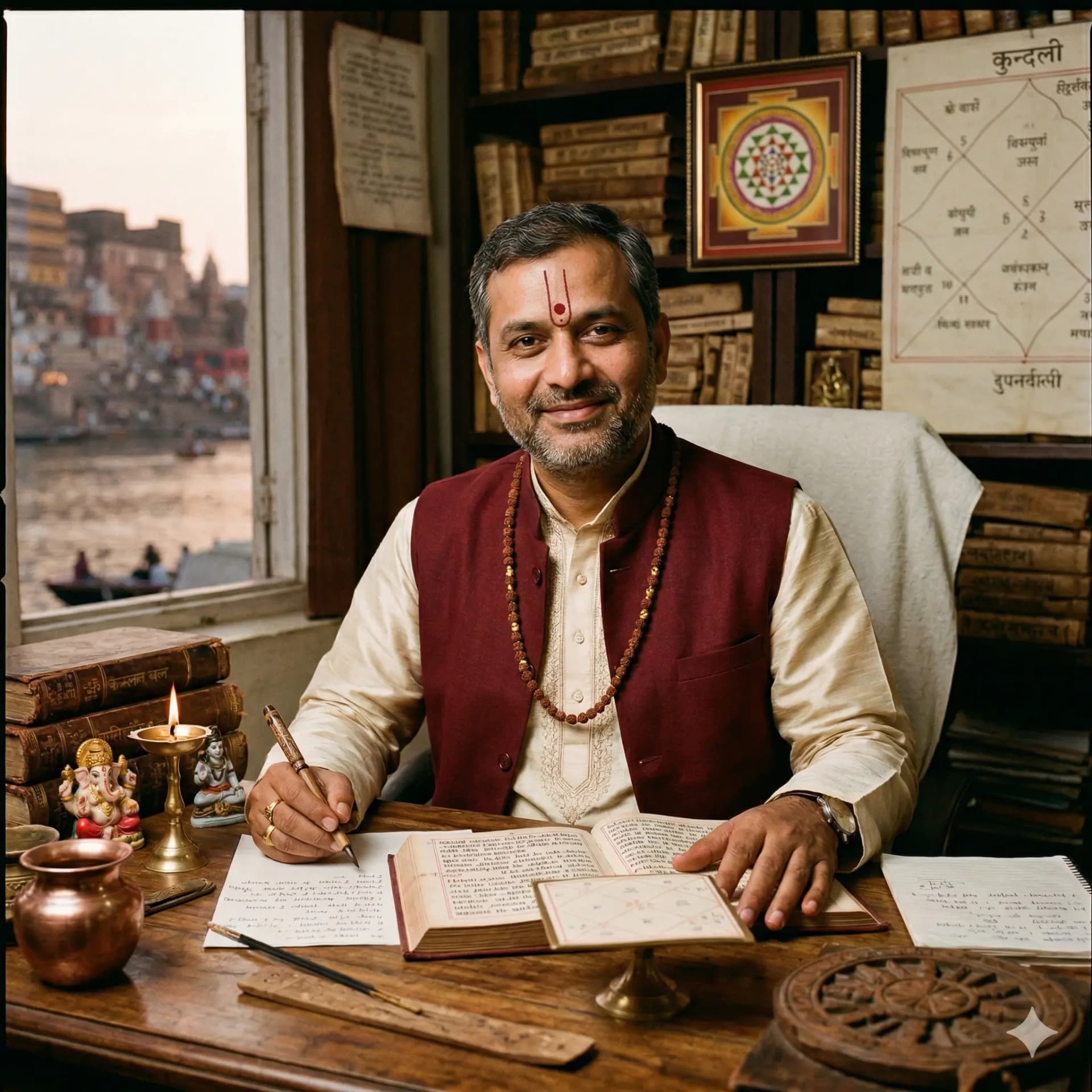
Pt. Raghav Sharma has practiced Parashari Jyotish for over twenty two years from Varanasi. A student of the Varanasi Jyotish tradition, he specialises in Graha-in-Bhava analysis, Vimshottari Dasha predictions, and Muhurta. He has authored over four hundred in-depth articles on Jyotish principles across the VastuCart knowledge network.