
Rahu in the 1st house
Mesh Lagna (Aries Ascendant)
A practitioner study of Rahu at the ascendant of Mesh Lagna. The north node in Mesha at the body angle, the identity-amplification signature, the magnetic presence other people read as either compelling or unsettling, and the unconventional life path the placement specifically produces.
Rahu in 1st house for Mesh Lagna, the quick reference
If you carry Rahu at the lagna of a Mesh chart, you hold one of the most identity-shaping placements in the entire Aries ascendant catalogue, because the north node sitting on the body angle reshapes the whole personality around the themes Rahu rules: amplification, hunger for difference, foreign signature, technology, taboo-crossing, ambition without limit, and the magnetic presence that other people read as either compelling or unsettling depending on how they meet the native. Rahu is the planet of unprocessed desire, the karaka for everything the soul still wants from worldly engagement, and his presence at the lagna means the body itself becomes the vehicle for that desire rather than just one expression of it. Rahu has no own sign, no clear exaltation in mainstream Parashari tradition, and no house lordship because he is a shadow planet, but his nodal nature means he amplifies the house and sign he occupies and infuses the placement with his core themes regardless of dignity.
The second structural feature is the relationship between Rahu and Mesha. Mesha is Mars's sign, and the Rahu-Mars relationship is classically described as friction rather than friendship. Rahu is the smoky, foreign, unprocessed appetite. Mars is the direct, sharp, action-oriented warrior. Placing Rahu in Mesha at the lagna of Mesh produces a native whose identity carries both the Aries directness and the Rahu hunger, and the combination is volatile in ways the native must learn to channel. The hunger drives action that other natives find exhausting to keep up with. The Aries directness pushes the native toward visible roles even when the Rahu signature would prefer to operate from the margins. The result is the magnetic-but-unsettling personality that consistently shows up in consultation reports for this placement. This guide reads every layer of Rahu in 1st house for Mesh Lagna natives: the north node at the body, the Rahu-Mars friction, the magnetic presence pattern, the unconventional life-path signature, and the hessonite protocol that requires careful chart confirmation before wearing.
Why Rahu at the lagna reshapes the whole personality
Students often ask whether Rahu at the lagna is good or bad, and the honest practitioner answer is that the question does not quite apply to a shadow planet at the body angle. Rahu does not work on the standard good-bad spectrum the visible grahas use. He works on the amplification spectrum, and his presence at the lagna of any chart amplifies whatever the native chooses to identify with, regardless of whether the chosen identification is healthy. The result is a personality that is unusually intense in whichever direction the native turns, and the practitioner reading is that the placement asks for conscious choice about what to amplify rather than the unconscious default that produces the chaotic version of the chart.
The second specific feature is the magnetic presence reading. Classical texts describe natives with strong Rahu at the lagna as having an unusual presence that other people notice immediately, often described as charismatic, hypnotic, or slightly unsettling depending on the observer. The mechanism is that Rahu amplifies the body's own energetic signature, and the amplified signature reads to other people as more than the body should logically project. New acquaintances often remember meeting these natives when they cannot remember meeting other people from the same event, and the placement therefore produces an unusual capacity to shape rooms simply by entering them. The third interpretive layer is the unconventional life-path signature. Rahu is the planet of difference, foreignness, and taboo-crossing, and his presence at the body angle produces natives whose lives consistently do not match the patterns their family expected. They marry across class, race, or nationality lines. They take up vocations the family does not understand. They live in countries the family never visited. They build identities from materials the family did not provide, and the building is itself the work the chart specifically asks them to do. The fuller chart determines whether the unconventional path becomes a celebrated breakthrough or a chaotic struggle, but the unconventionality itself is structural and cannot be talked away.
Rahu at the lagna is a soul that arrived hungry for an experience the family could not provide. The work is to give that hunger a worthy direction before it picks one for itself.
How Rahu at the lagna shapes the Aries native
Physically the native carries the Mesh Lagna frame with the Rahu signature that classical texts catalogue carefully. The face often has unusual proportions: features that would be ordinary on another body somehow combine into a face that strangers cannot stop looking at, and the look is more often called striking than conventionally beautiful. Eyes are typically intense, sometimes asymmetric, and many natives report being told their gaze feels intrusive even when they are simply looking at the speaker normally. The complexion can run on the darker or smokier side of the Mesh range because Rahu carries smoky qualities at the body level, and the body itself often has an unusual marker (a scar from a foreign accident, an asymmetry, a feature that family members do not share, a height or build that does not match the parents) that classical texts treat as the diagnostic sign of strong Rahu at the lagna. The hair is often thick and unruly. The voice can be unusually deep or unusually high, almost never average.
Temperament is the layer that most distinguishes this placement from every other Mesh combination. These natives carry a hunger that other Aries natives do not. They want more, bigger, foreign, different, and they often cannot articulate why. The hunger drives the personality through phases that family members find disorienting: the native who was a quiet student becomes a controversial activist in their twenties, then a foreign professional in their thirties, then a public figure in a field nobody predicted in their forties. Each phase looks coherent from the inside but discontinuous from the outside, and the discontinuity is itself the chart's signature. They are often charismatic in ways that surprise even themselves, walking into rooms and finding that strangers gravitate toward them without obvious reason. They are also unusually sensitive to social hierarchies and often spend years building unconventional credentials precisely because the conventional credentials feel borrowed. The shadow side is the volatility, because natives who do not channel the hunger consciously can drift into addictions, toxic relationships, conspiracy thinking, or status pursuits that consume the personality without satisfying the underlying drive. Natives who pair the hunger with explicit purpose (a vocation that genuinely matters to them, a partnership they have chosen consciously, a body practice that grounds the amplification) develop the rare magnetic-leadership integration the placement is capable of in its fullest expression.
Strengths, shadows and career fits
- Magnetic presence at the body angle
- Identity amplification supports leadership
- Foreign signature opens unusual paths
- Capacity for unconventional breakthrough
- Hunger drives sustained action
- Past-life desire signature finds expression
- Volatile identity phases through decades
- Rahu-Mars friction produces inner conflict
- Susceptibility to addiction and status pursuit
- Marks at head or unusual body asymmetry
- Family struggles to recognise the native
- Hunger never feels permanently satisfied
- Foreign service and international business
- Technology, AI, cryptocurrency, frontier research
- Politics, activism, public movement leadership
- Film, media, performance, publicity work
- Speculative trading and unconventional finance
- Cultural translation and cross-border ventures
Where the amplification vocation plays out
Career paths cluster around fields that reward unconventional thinking and willingness to operate outside the mainstream the family expected. Foreign service and international business are the strongest single fit because the 1st house Rahu signature produces natives whose body is most at home in cross-cultural environments, and many spend significant portions of their working life abroad. Technology and frontier research suit the chart because Rahu rules everything new and disruptive, and natives are often drawn to AI, cryptocurrency, biotech, or space technology where the work moves faster than the regulatory environment can catch up.
Politics, activism, and public movement leadership work because the magnetic presence translates directly into the ability to mobilise crowds around unconventional causes. Many natives step into public roles in their thirties or forties and discover that the same hunger that confused their family in childhood becomes a leadership asset when channelled into causes that genuinely matter to them. Film, media, and publicity work suit natives whose vocational pull is more visible. Speculative trading and unconventional finance suit those whose pattern-recognition runs to markets. Cultural translation and cross-border ventures round out the list. Rahu mahadasha is the defining career window and arrives with sudden shifts that often look reckless in the moment but reveal themselves as the right move ten years later.
Rahu marked in the first house of Mesh
- Rahu at the lagna in Mesha, marked in smoky indigo
- 12 houses in North Indian format
- Central diamond is the 1st house of Tanu Bhava
Why this is one of the most demanding lagna placements to live well
The amplification pattern is the most useful interpretive frame for Rahu in Mesha at the lagna because it explains why the same placement produces such different lives in different natives. Rahu does not impose a direction on the personality. He amplifies whatever direction the native chooses, which means the chart asks for conscious choice rather than drift into the social default. Natives who choose well experience the placement as the source of a magnetic, purposeful, leadership-grade life. Natives who drift experience it as a chaotic series of intense pursuits that leave them exhausted without producing satisfaction.
The Rahu-Mars friction is the second specific feature practitioners need to read with care. Rahu and Mars share intensity, and placing Rahu in Mars's sign at Mars's lagna doubles the intensity to a degree that exhausts the body if the native does not learn to manage it. Mars wants direct action. Rahu wants amplified outcomes. The inner experience is often described as feeling driven without knowing exactly toward what. The third pattern is the family recognition problem. Natives consistently report that family members struggled to recognise them through childhood because the native's identity did not match what the family was preparing for. The recognition gap is structural and not the family's fault, and natives who understand this stop trying to be recognised by the wrong audience and find their actual community elsewhere.
When Rahu in 1st delivers its Tanu Bhava chapter
Rahu mahadasha is the defining window for this placement and arrives with the dramatic identity restructuring and amplified worldly engagement the chart specifically produces.
Head, nervous system and the amplification cost
Health follows the Rahu-at-the-body pattern with specific vulnerabilities. Constitution is generally lean and intense, with vata most prominent and pitta secondary because Rahu carries the smoky air-fire mix that produces nervous-system intensity. The 1st house body-part rulership covers the head, brain, and face. Rahu's specific marker is unusual asymmetry, intense expression, and sometimes a feature inherited from an ancestor several generations back the family does not remember.
The nervous-system burnout pattern is the second important layer because it appears consistently in clinical reports. Rahu produces an internal arousal level that runs higher than the body's natural baseline, and natives who do not deliberately manage it develop nervous-system fatigue, sleep disruption, and stress-related conditions earlier than peers. Recovery practices the chart responds to are grounding (walking on earth barefoot, working with the hands, yoga or martial arts), sensory simplification, and sustained sleep. The intoxicant risk is real and should be named directly because the placement amplifies whatever the native uses to soothe the internal arousal. Annual full-panel screening from the late twenties is recommended because Rahu's diagnostic ambiguity makes regular baseline data more useful than reactive testing.
Remedies for Rahu at the Mesh lagna
The daily Durga worship is the primary remedy for this placement because Durga is the classical patron deity of Rahu and her warrior form is treated as the goddess who can hold and direct the north node's hungry energy without being consumed by it. Rise before sunrise, bathe, wear dark blue, smoky grey, or red clothing on different days of the week as the practice settles, and visit a Durga temple if accessible. The Durga Kavach is the primary recitation for this placement because it is the protective armour stotra from the Devi Mahatmyam, and recitation creates a containing field for the amplification energy that the placement otherwise releases without direction. Reciting the Durga Kavach at sunrise daily for forty days is the formal protocol, and natives often report a noticeable shift in inner stability and clarity of purpose by the third week. Offer red flowers, coconut, and dark sweets at the altar, and donate to causes that protect vulnerable people (refugee aid, women's shelters, anti-trafficking organisations), all of which channel the Rahu karakatvas constructively.
The grounding practice is the single most important lifestyle remedy for this placement because the chart specifically asks the native to anchor the amplification before it dissolves into chaos. A daily grounding ritual (twenty minutes of walking outdoors, working with the hands in a craft, or a body practice like yoga or strength training at the same time each day) compounds across decades into the difference between a magnetic-leader version and a chaotic-drift version of the same chart. The gemstone is hessonite (Gomed, made from grossular garnet), and it is recommended only after careful chart confirmation because Rahu's intensity amplifies whatever the gemstone touches and the wearing must be timed to a moment when the native is ready for the amplification. Wear a natural Sri Lankan or African hessonite of minimum five ratti set in silver on the middle finger of the right hand on a Saturday at sunrise after Rahu mantra recitation, and only after a practising Jyotishi has confirmed the timing. The lifestyle adjustment that compounds most is choosing a vocation consciously rather than accepting the family default. Because the placement amplifies whatever the native identifies with, natives who choose their vocational identity actively (rather than drifting into what is expected) experience the placement as the source of an unusually purposeful and magnetic life.
Gemstones for Rahu in 1st house Mesh Lagna
Hessonite is the primary Rahu gemstone but is recommended only after careful chart confirmation because of the north node's amplification effect.
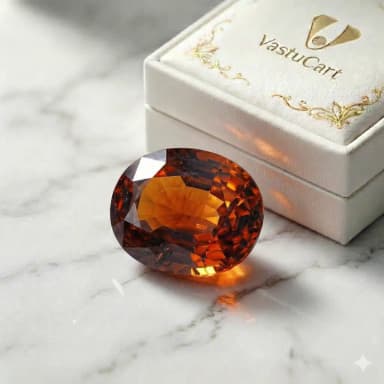
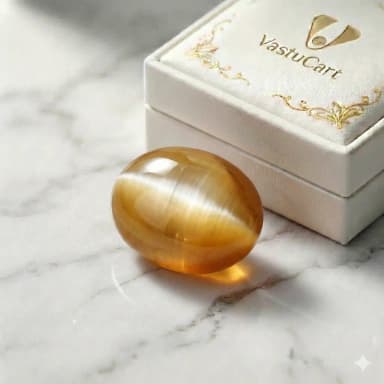

Disclaimer: Hessonite amplifies whatever Rahu is currently expressing. Always consult a qualified Jyotishi before permanent wearing of any nodal gemstone.
Rudraksha beads for Rahu in 1st house
The Rahu-aligned rudraksha is the Nau Mukhi (Nine Mukhi), the bead directly ruled by Durga and the north node.
The classical Rahu rudraksha and the bead specifically associated with Durga as the patron deity of the north node. Contains the amplification energy, supports the grounded leadership the placement requires, and stabilises the inner intensity when the Rahu-Mars friction is strong.
The eight-mukhi bead is the south node's bead and is worn alongside the Nau Mukhi when the practitioner wants to balance the full nodal axis. Recommended for natives who experience strong axis events during transit windows or who feel the amplification spilling into instability.
Rahu Yantra for the lagna placement
Sacred recitations for Rahu at the lagna
Yad guhyam paramam loke sarva rakshakaram nrinam
Yan na kasyachit akhyatam tan me bruhi pitamaha
Brahmovacha
Asti guhyatamam vipra sarva bhutopakarakam
Devyastu kavacham punyam tac chrinushva mahamune
Translation: Markandeya said: O grandfather, that which is the most secret in the world, capable of granting full protection to all beings, that which has not been told to anyone, please tell me. Brahma said: O brahmin, there exists a most secret hymn that benefits all beings, the meritorious armour of the goddess. Listen to it, O great sage. The Durga Kavach is the protective armour hymn from the Devi Mahatmyam and is the perfect daily recitation for a chart where Rahu sits at the lagna and the amplification energy needs a containing field.
Read the full stotra on stotra.vastucart.inTools for Rahu 1st house Mesh natives
Is your Tanu Bhava Rahu carrying the magnetic-leader signature?
Get a full personalised analysis of your lagna Rahu, the amplification direction, and the unconventional vocation pattern.
Questions about Rahu in 1st house, Mesh Lagna
Pt. Raghav Sharma has practiced Parashari Jyotish for over twenty two years from Varanasi. A student of the Varanasi Jyotish tradition, he specialises in Graha-in-Bhava analysis, Vimshottari Dasha predictions, and Muhurta. He has authored over four hundred in-depth articles on Jyotish principles across the VastuCart knowledge network.