
Ketu in the 4th house
Mesh Lagna (Aries Ascendant)
A practitioner study of Ketu in Sukha Bhava for Aries ascendant natives. The south node in Karka in the mother and home angle, the detachment pedagogy read as the quiet mirror of Rahu in the same house, and the inherited-moksha signature that shapes the inner domestic life.
Ketu in 4th house for Mesh Lagna, the quick reference
If you carry Ketu in the fourth house of a Mesh chart, you hold the quiet mirror of the more famous Rahu-4th placement, and the two readings deserve to be described together because they are structurally opposite and interpretively distinct. The fourth house from Mesh is Karka (Cancer), ruled by Chandra, and the Moon-Ketu relationship is classically treated as friction rather than friendship because the nourishing Moon and the dissolving Ketu pull in opposite directions. The sign is therefore not a friend for Ketu and the placement expresses through a medium that produces specific work for the native around mother, home, and emotional foundation. But where Rahu in 4th produces restlessness and movement, Ketu in 4th produces detachment and quiet dissatisfaction, and the two readings should not be conflated even though both involve the Sukha Bhava.
The second important feature is the structural reading of Ketu in the mother house. Classical Parashari tradition treats this placement as a marker of inherited karma related to mother, home, or emotional foundation that the current life is meant to complete rather than extend. The actual pattern the placement produces is a native whose relationship with mother, home, and emotional foundation carries a specific quiet detachment from the conventional version the family offered. The mother relationship is usually loving but emotionally distant, even when both parties wish it to be closer. The home rarely feels like the deep anchor it does for other natives. The inner sense of belonging that the 4th house classically provides tends to look for somewhere else the native cannot always name. Ketu also casts his full 10th aspect (counted from the 4th) onto the 10th house career angle, bringing the detachment signature into the career and producing the vocational pattern where the native works as if the career were not quite their own ambition but a duty they are completing on behalf of someone else. This guide reads every layer of Ketu in 4th house for Mesh Lagna natives: the Karka friction, the mother-detachment pedagogy, the Rahu-Ketu mirror distinction, the 10H career aspect, and the cat's eye protocol that requires especially careful chart confirmation here.
Why Ketu 4th and Rahu 4th are mirror images of the same pedagogy
The clearest way to understand Ketu in 4th of Mesh is to read it alongside its mirror placement, Rahu in the same house. Both nodal placements in the mother and home angle produce structural tension around the 4th house themes, but they work in opposite directions and ask the native for opposite practices. Rahu in 4th produces restlessness, physical movement, and the foreign-home signature where the native keeps searching for the right place and eventually finds it through an unexpected relocation. Ketu in 4th produces stillness, inner dissatisfaction, and the detachment signature where the native has a home and a mother but never quite feels the 4th house themes as deeply as peers describe them. Rahu's pedagogy is movement. Ketu's pedagogy is acceptance. Rahu's native grieves the version of home that never arrived. Ketu's native grieves the version of home they had but could not quite receive.
The mother-detachment reading is the second specific feature practitioners need to describe in consultation because natives often arrive carrying confusion about their own emotional response to the mother. They love the mother. They know the mother loves them. But the emotional transmission never quite lands the way it does for siblings or peers, and the native often feels guilty for the gap without understanding why the gap is there. The reading is that the south node signifies karma the native has already mostly completed with the mother in previous lives, and the current incarnation involves receiving the mother's care without needing the emotional bond to develop the same intensity other natives experience. The pattern is not rejection and it is not failure. It is structural completion, and natives who understand this can love their mother freely without the guilt of feeling less close than they think they should. The third interpretive layer is the 10th house aspect. From the 4th, Ketu casts his full 10th aspect to the 10th house career angle. The aspect brings the detachment signature into the career and produces the specific vocational pattern where the native works well and achieves recognition but never quite feels the career as their personal ambition. Many natives with this placement describe their career as something they do because they are good at it rather than because it defines them.
Ketu in the mother house is a soul that arrived having already received what the mother was going to give across many lifetimes. The work is to let the love happen now without forcing the inherited intimacy to match the depth peers describe.
How Ketu in the mother house shapes the Aries native
Physically the native carries the Mesh Lagna frame with the Ketu signature that classical texts catalogue carefully. The face often carries a quiet, watchful quality that strangers notice without being able to name, and the eyes are typically dark and slightly withdrawn in expression even when the native is engaged in conversation. Complexion can run on the fairer side because the Karka sign tempers the standard Mesh warmth. Many natives with this placement have a specific marker on the chest area (a birthmark, a small scar, or an asymmetry) that classical texts treat as the diagnostic sign of Ketu at the 4th house position. The body tends to be lean and still rather than restless, and natives often describe themselves as unusually comfortable in quiet empty rooms where peers feel the need for company.
Temperament is the layer where this placement most distinguishes the native from popular Aries stereotypes. These natives carry Mesh courage but the courage runs quietly rather than loudly, and they rarely feel the need to perform their willingness to act even when they are acting. They are unusually self-contained, often described by friends and family as the person who seems content alone in ways others find either enviable or slightly puzzling. They love their mother but the love expresses differently than it does for siblings or peers: quieter, more reserved, less in need of frequent contact. They often feel guilty about this difference during their twenties and thirties before they understand the structural reading and relax into the quieter love the chart produces. They are unusually comfortable with home changes (unlike the restless Rahu 4th natives) but not because they enjoy change, because they do not attach the same meaning to any particular house that other natives attach. The shadow side is the emotional isolation the placement can produce if the native treats the detachment as permission to avoid relational work entirely. Natives who accept the structural detachment while also building explicit relational commitments develop the rare quiet settledness that distinguishes this placement's best expression. Natives who use the detachment as a reason to avoid all intimate work can drift into a life that looks functional from outside but feels thin from inside.
Strengths, shadows and career fits
- Quiet self-containment from childhood
- Inherited completion of mother karma
- 10H aspect brings detachment-wisdom to career
- Unusually comfortable with solitude
- Home is functional without being defining
- Emotional stability does not depend on external circumstances
- Guilt about emotional distance from mother
- 4th house themes feel less rich than peers describe
- Chest and heart attention required
- Risk of isolation if detachment becomes avoidance
- Inner sense of belonging stays unresolved
- Home is hard to anchor in a specific place
- Research, mathematics, independent scholarship
- Hospice, palliative care, end-of-life services
- Backend technology and quiet infrastructure work
- Contemplative writing and solitary creative practice
- Teaching, especially one-on-one mentorship
- Archival, library, and preservation work
Where the detachment-carried-to-career vocation plays out
Career paths cluster around fields that reward the quiet self-containment the placement produces. Research, mathematics, and independent scholarship are the strongest single fit. Many natives spend their working life in research roles where the work is solitary and the depth of focus is the primary requirement. They often become the quiet expert colleagues trust precisely because there is no obvious agenda. Hospice, palliative care, and end-of-life services are specific medical fits because the placement gives the native unusual capacity to be present with transition themes.
Backend technology and quiet infrastructure work suit the chart because the native's natural mode is to do significant work behind the scenes without needing public visibility. Contemplative writing and solitary creative practice fit natives whose vocational pull is more literary, and the placement supports forms produced in extended solitude. Teaching, especially one-on-one mentorship, suits the chart. Archival, library, and preservation work round out the list because detachment and patience together are specifically valuable for long-horizon custodianship. Ketu mahadasha is when the vocational direction crystallises, often through a sudden shift away from a more public career toward the quieter work the chart has been pulling the native toward.
Ketu marked in the fourth house of Mesh
- Ketu in Sukha Bhava in Karka, marked in smoky violet
- 12 houses in North Indian format
- Lower-central diamond is the 4th house of home
Why the two nodal placements in the same house read so differently
The inherited-moksha pedagogy is the most useful frame for Ketu in 4th of Mesh. Classical tradition treats Ketu as the moksha karaka whose presence in any house indicates unfinished karma the current incarnation is meant to complete rather than extend. When Ketu sits in the mother and home angle, the native's karmic work with mother, home, and emotional foundation is largely already done from previous lives. The current incarnation involves settled acceptance rather than active development. The native does not need to build the mother relationship into something new because the relationship has already been built across lifetimes and is now in its completion phase. The work is acceptance, not construction.
The Rahu-Ketu contrast is the second feature practitioners should always read because confusing the two nodal placements leads to serious misreadings. Rahu in 4th produces restlessness, geographic movement, a foreign home signature, and the active search for the right place. Ketu in 4th produces stillness, acceptance of whatever home is currently available, and a sense that no place will feel quite as deep as peers describe. Rahu natives grieve the home that never arrived. Ketu natives grieve the home they had but could not quite receive. The third pattern is the 10H aspect. From the 4th, Ketu casts his full 10th-aspect to the career angle, bringing the detachment signature into the career domain. Natives work well and achieve recognition but never quite feel the career as personal ambition. The dispassionate stance often produces better work than peers who are more emotionally invested.
When Ketu in 4th delivers its Sukha Bhava chapter
Ketu mahadasha is the defining window for this placement and arrives with the acceptance of the mother and home pattern and the vocational shift toward quieter work the chart has been preparing.
Chest, heart and the quiet sensitivity profile
Health follows the Ketu in mother house pattern with specific chest and heart considerations. Constitution is generally lean and still, with vata most prominent because Ketu carries the inward, dry, withdrawn quality that vata describes. The 4th house body-part rulership covers the chest, heart, and lungs. Ketu's specific marker often appears here as a small birthmark or scar. The placement does not typically produce major cardiac risk on its own, but natives should know about chest-area sensitivity during periods of emotional stress around mother-related themes.
The mysterious-ailment pattern Ketu produces appears here as vague chest or respiratory symptoms that conventional diagnostics struggle to name, often responding as much to contemplative practice as medical treatment. The reading is that inner dissatisfaction with the 4th house themes translates into body symptoms when the emotional dimension is not given explicit attention. Daily walking, time in nature, and contemplative practice address the underlying current more effectively than purely medical interventions. Annual screening from the late thirties is recommended because baseline data is more useful than reactive testing.
Remedies for Ketu in the Mesh mother house
The daily Ganesha worship is the primary remedy for this placement because Ganesha is the classical patron deity of Ketu, and the secondary practice for this specific placement is explicit mother-honouring through any mother-form of the Devi (Annapurna, Parvati, or the native's ishta-devi) so that the detachment-pedagogy does not drift into neglect. Rise before sunrise, bathe, wear white or off-white clothing, and visit a Ganesha temple on Wednesdays and a Devi temple when accessible on Mondays or Fridays. The Ketu Stotram is the primary recitation for this placement because it is the classical hymn to the south node and activates the Ketu channel for the acceptance work the placement specifically asks for. Reciting the Ketu Stotram daily for forty days at any major transition involving mother, home, or vocation provides the inner stability the chart rewards.
Offer dub grass, modaka, red or white flowers, and coconut at the altar, and donate to causes that support elderly mothers, solitary women, or home-based elder care (all of which channel the 4L plus Ketu karakatvas constructively). The daily contemplative practice is the single most important lifestyle remedy for this placement because the chart literally asks the native to honour the inner stillness rather than fight it. Twenty minutes of sitting meditation, scriptural reading, or silent practice at the same time each day compounds across decades into the difference between the placement's settled expression and the version that drifts into emotional isolation. The gemstone is cat's eye (Lehsunia, Vaidurya), made from chrysoberyl, and it is recommended only after especially careful chart confirmation because Ketu in the mother house amplifies home and mother themes sharply and the gemstone must be timed to a moment when the native is ready. Wear a natural chrysoberyl cat's eye of minimum five ratti set in silver on the small finger of the right hand on a Wednesday or Tuesday at sunrise after Ketu mantra recitation, and only after a practising Jyotishi has confirmed the timing. The lifestyle adjustment that compounds most is explicit mother-honouring practice. Because the chart produces structural distance rather than structural closeness, natives who maintain explicit warmth (regular phone calls, visits, participation in her decisions) experience the placement as acceptance rather than estrangement across decades.
Gemstones for Ketu in 4th house Mesh Lagna
Cat's eye is the primary Ketu gemstone but is recommended only after careful chart confirmation because the mother house is especially sensitive to amplification.
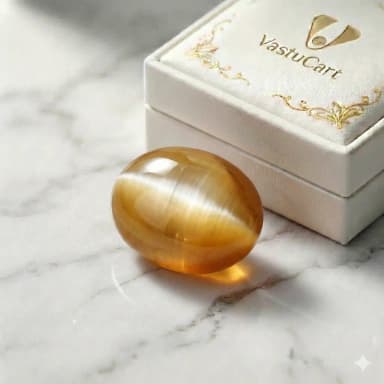
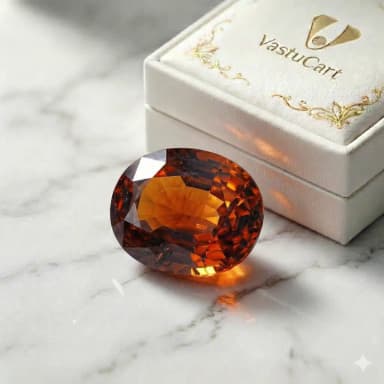

Disclaimer: Cat's eye in the mother house amplifies Sukha Bhava themes sharply. Always consult a qualified Jyotishi before permanent wearing.
Rudraksha beads for Ketu in 4th house
The Ketu-aligned rudraksha is the Ashta Mukhi (Eight Mukhi), the bead directly ruled by Ganesha and the south node.
The classical Ketu rudraksha and the bead specifically associated with Ganesha as the patron deity of the south node. Removes obstacles to the acceptance pedagogy the placement asks for, supports the quiet inner stability that distinguishes this placement from the Rahu 4th restlessness, and stabilises the emotional orientation around mother and home.
The Moon bead serves as secondary support for this placement because the dispositor of Ketu here is Chandra (Moon rules Karka, the sign Ketu occupies). Wearing the Do Mukhi alongside the Ashta Mukhi compounds the placement's strength by honouring both planet and sign-lord, and softens the mother-detachment edge.
Ketu Yantra for the mother house placement
Sacred recitations for Ketu in the mother house
Raudram raudrat makam ghoram tam ketum pranamamyaham
Dhvajakaram mahavairam chitra varnam bhayanakam
Rudra rupam maha ketum pranamamyaham sada
Shikhinam varadam shantam dvija bhakti pradayakam
Grahastham naam na vadhyam pranamami shikhinam sada
Translation: Resembling the palash flower, chief among the star-planets, terrible and of fierce nature, I salute that Ketu. Flag-shaped, great enemy, of varied colour, frightening, the form of Rudra, the great Ketu I always salute. The crested one, the granter of boons, the peaceful, the giver of devotion to the twice-born, residing in the houses and not to be opposed, I always salute the crested one. The Ketu Stotram is the classical hymn to the south node and is the perfect daily recitation for a chart where Ketu sits in the mother and home angle and the acceptance pedagogy needs contemplative support.
Read the full stotra on stotra.vastucart.inTools for Ketu 4th house Mesh natives
Is your Sukha Bhava Ketu carrying the inherited-moksha signature?
Get a full personalised analysis of your fourth house Ketu, the mother pedagogy, and the contemplative vocation the chart is preparing.
Questions about Ketu in 4th house, Mesh Lagna

Pt. Raghav Sharma has practiced Parashari Jyotish for over twenty two years from Varanasi. A student of the Varanasi Jyotish tradition, he specialises in Graha-in-Bhava analysis, Vimshottari Dasha predictions, and Muhurta. He has authored over four hundred in-depth articles on Jyotish principles across the VastuCart knowledge network.