
Venus in the 6th house
Mesh Lagna (Aries Ascendant)
A practitioner study of Shukra debilitated in Kanya for Aries ascendant natives. Venus in his own debility sign in the Ripu Bhava, the 2L plus 7L in dushthana, and the neecha bhanga check that determines whether the placement reads as sustained struggle or as rescued raja yoga delivered later in life.
Venus in 6th house for Mesh Lagna, the quick reference
If you carry Shukra in the sixth house of a Mesh chart, you hold one of the most interpretively demanding Venus placements in the entire Aries ascendant catalogue because the chart combines three weakness layers that make the reading meaningless without the specific neecha bhanga check practitioners need to run. The sixth house from Mesh is Kanya (Virgo), ruled by Budha, and Kanya is the exact sign of Venus's debilitation (neecha) with the deep debility point at 27 degrees. Debilitation is the lowest dignity any planet can hold in Vedic astrology, and classical texts describe the result as the full karakatva range expressing at reduced functional strength. The 6th house is also Ripu Bhava, a classical dushthana of enemies, debt, illness, and daily service, and benefic planets in dushthanas experience an additional reduction from the house category. Venus's dual 2L plus 7L lordship further complicates the reading because both the wealth lord and the marriage lord are affected by the debility at the same time.
The single most important interpretive move is the neecha bhanga check. Classical Parashari tradition treats debilitation as a provisional reading that can be cancelled by specific rescue conditions, and when the cancellation applies, the debilitated planet often produces Neecha Bhanga Raja Yoga, a cancellation-based raja yoga that classical texts treat as one of the most powerful reversal patterns in the whole catalogue. The primary rescue condition for Venus debilitated in Kanya is that Mercury (the lord of Kanya) must be well placed, specifically in a kendra from the lagna or from the Moon. If Mercury sits in the 1st, 4th, 7th, or 10th from the lagna, the debility is cancelled and the placement flips from sustained struggle into rescued raja yoga. This guide reads every layer of Venus in 6th house for Mesh Lagna natives: the debility mechanics, the neecha bhanga check with the specific rescue conditions, the 2L plus 7L in dushthana reading, the diamond protocol that applies only after the rescue condition is confirmed, and the practitioner nuance that distinguishes the two very different lived versions of the same placement.
Why the neecha bhanga check changes the entire reading
Students often arrive at this placement carrying significant anxiety because popular astrology reduces debilitated placements to a flat weakness prediction, and the honest practitioner answer is that the popular reading is structurally incomplete. Classical Parashari texts describe multiple cancellation conditions for debilitation (neecha bhanga yoga), and when any of the conditions apply, the debilitated planet often produces unusually strong results in middle age even though the early life reading looks difficult. The conditions classical texts specifically list for neecha bhanga include the lord of the sign of debilitation being well placed, the planet of exaltation of the debilitated planet being in a kendra or aspecting, the debilitated planet itself being in a kendra from the Moon, and the dispositor being in a kendra from the lagna. Any one of these cancels the debility.
For Venus debilitated in Kanya in Mesh chart specifically, the primary rescue condition is Mercury (the lord of Kanya) well placed. Mercury is already significant for Mesh Lagna as the 3L plus 6L, and Mesh natives with Mercury in a kendra (1st, 4th, 7th, or 10th house) carry the neecha bhanga rescue automatically. The 6H Mercury-7H Venus mutual exchange (parivartana) is another variation that practitioners should check, though the specific structure differs. A secondary rescue condition is Jupiter (the planet of Venus's exaltation in Meena) being well placed, particularly in a kendra or trine. And the third condition is the Moon being in a kendra from the debilitated Venus, which depends on the specific chart. Practitioners reading this placement in consultation should always run the check explicitly rather than giving a blanket negative reading, because natives with the rescue condition often have one of the strongest hidden chart patterns in the catalogue. Without the rescue, the placement produces sustained 2L and 7L struggles: wealth that arrives through difficult work, marriage that carries adversarial dynamics, and a specific pattern where the native's refined Venus gifts are forced to express through the service and daily-labour register of the 6th house.
Debilitated Venus in the enemy house without the rescue is the native learning to polish jewels in a workshop they did not choose. Debilitated Venus with the rescue is the same jewels eventually finding buyers who pay several times their weight in gold.
How debilitated Shukra in Kanya shapes the Aries native
Physically the native carries the Mesh Lagna frame with the specific modification that debilitated Venus in an earth sign produces. The Venusian beauty markers are present but in a subdued register rather than the radiant form friendly-sign Venus placements produce. The face is pleasant but not striking. Complexion runs cooler without the characteristic Venus warmth. The body is lean and practical rather than athletic-elegant. The 6th house body-part rulership covers the stomach, intestines, and digestion, and natives should pay sustained attention because the debilitated Venus in the digestive region adds sensitivity around reproductive-fluid health, urinary function, and refined-eating patterns the native may struggle to maintain consistently.
Temperament is the layer where the debility most visibly expresses, and the reading depends entirely on whether the neecha bhanga rescue applies. Without rescue, the native's refined gifts express through service work they did not choose, often feeling like they are polishing jewels for someone else's benefit. They work hard, they serve carefully, and the compensation does not match the quality of the work. With the rescue, the same external pattern holds for the first half of life but reverses dramatically in middle age when the cumulative refined work finally finds recognition, delivering a dramatic upgrade in marriage, income, and reputation. The shadow side without rescue is the chronic sense of being under-appreciated that can produce resentment the native does not deserve to carry. Natives who commit to the work without resentment during the early years are the ones who receive the fullest expression of the reversal raja yoga.
Strengths, shadows and career fits
- Neecha bhanga can deliver reversal raja yoga
- Refined gifts expressed through service work
- Work ethic compounds across decades
- Middle-age reversal possible with rescue
- Unusual capacity for detailed aesthetic labour
- Deep patience during service years
- Debilitation reduces functional output
- 2L plus 7L weakness affects wealth and marriage
- Early life pattern often under-rewarded
- Stomach and reproductive sensitivity
- Marriage may carry adversarial dynamics
- Resentment risk without conscious practice
- Refined service work and craftsmanship
- Healthcare, especially women's health
- Forensic work and quality auditing
- Culinary arts and hospitality service
- Textile, garment, and artisanal production
- Insurance, underwriting, refined commerce
Where the service-through-refinement vocation plays out
Career paths cluster around fields that combine refined aesthetic or interpersonal skill with the 6th house service register. The strongest single fit is refined service work and craftsmanship where the native's Venusian gifts express through daily labour that accumulates quality over time. Many natives build careers in artisanal production, restoration, or traditional crafts where the work requires both aesthetic sense and patient repetition, and the compensation pattern follows the chart's specific rhythm of modest early-career income that compounds into genuine expertise by middle age. Healthcare, especially women's health, obstetrics, midwifery, and reproductive medicine, fits the chart because the Venus reproductive-fluid karakatva combined with the 6H medical rulership produces natives with unusual vocational alignment for caring-medical work.
Forensic work and quality auditing fit because the 6th house rules discrimination of the subtle, and debilitated Venus in Mercury's sign produces natives whose aesthetic eye combined with analytical care makes them unusually good at catching errors, fraud, or quality issues that others miss. Culinary arts and hospitality service work because Kanya is the earth sign of food and care, and natives often build careers in the service end of refined hospitality (chef, sommelier, service manager) where the Venus taste sense meets the 6H daily-labour discipline. Textile, garment, and artisanal production suit natives whose craft is tactile rather than abstract. Insurance, underwriting, and refined commerce round out the list because the 2L wealth combined with the 6H analytical register produces natives well-suited to financial fields where detail and risk-assessment are the actual work. Shukra mahadasha is when the vocation either crystallises into the rescue-pattern reversal (if the neecha bhanga applies) or settles into the sustained-service pattern (if it does not). Practitioners should always run the check before reading the dasha promises.
Venus marked in the sixth house of Mesh
- Shukra debilitated in Kanya in Ripu Bhava, marked in soft pearl
- 12 houses in North Indian format
- Right-central diamond is the 6th house of service
Why practitioners run the check before giving any reading at all
The neecha bhanga check is the single most important interpretive move for this placement. Classical Parashari texts list several conditions that cancel debilitation. First, the lord of the debility sign must be well placed. For Venus in Kanya, the dispositor is Mercury, and Mercury in a kendra (1, 4, 7, 10) from the lagna cancels the debility. Second, the planet of exaltation of the debilitated planet should be well placed: Jupiter exalts in Karka, and Jupiter in a kendra activates the rescue. Third, the debilitated planet itself being in a kendra from Moon adds another rescue layer. Any one of these, and especially Mercury in kendra, activates the Neecha Bhanga Raja Yoga reading.
When the neecha bhanga applies, classical texts describe the result with unusual specificity. The early life of the native looks exactly like the unrescued debility pattern. But beginning in the mid-thirties or early forties, the pattern reverses dramatically. The work that went unrewarded for years finds sudden recognition. The marriage that was difficult stabilises into unexpected richness. The income grows into genuine abundance. Natives describe it as feeling like two different lives. The parivartana check is the second feature practitioners should run: if Mercury and Venus are in a sign exchange, the rescue is unusually clean. The third pattern is the mahadasha timing. Neecha bhanga raja yogas typically deliver their reversal during the Shukra mahadasha itself or during the Venus sub-period, and natives often experience the reversal beginning within months of the dasha activation rather than gradually.
When Venus in 6th delivers its Ripu Bhava chapter
Shukra mahadasha is the defining window for this placement and arrives either with the neecha bhanga reversal or with sustained service-life intensification depending on whether the rescue applies.
Stomach, reproductive system and the debility-sensitivity profile
Health follows the debilitated Venus in the medical house pattern with specific 6th house considerations. Constitution tends toward vata-pitta with specific sensitivities around digestion, reproductive fluids, and the refined-food tolerance that Venus karakatva rules. The 6th house body-part rulership covers the stomach, intestines, and digestive system, and natives should pay sustained attention to all of these because the debilitated Venus in the digestive region produces the specific pattern where refined food pleasures the native cannot always indulge without digestive consequences. Daily dietary discipline becomes non-negotiable, and the discipline is itself one of the 6th house service practices the chart specifically asks for.
The reproductive-fluid and urinary system is the second specific layer because Venus karakatva covers reproductive health directly and the debility here can produce specific vulnerabilities around fertility, reproductive balance, and the hormonal-reproductive axis that the native should track from early adulthood. Women natives should monitor cycle regularity and reproductive hormone balance. Men natives should monitor prostate health and reproductive function. Both sexes benefit from sustained hydration, refined-diet hygiene, and regular screening from the late twenties rather than reactive testing. Friday is the ritual day, and Wednesday adds a secondary observance because the dispositor of Venus here is Budha. Annual full-panel screening including reproductive and digestive markers is specifically recommended because the debility makes baseline data significantly more useful than reactive testing.
Remedies for debilitated Shukra in Ripu Bhava
The Friday discipline is foundational and delivers specific benefit for this placement because debilitated planets respond unusually well to sustained ritual practice on their own weekday, and the Wednesday observance adds a secondary layer because the dispositor of Venus here is Mercury. Rise before sunrise, bathe with cool water, wear white, soft pink, or pale ivory clothing on Fridays and green or pale aqua on Wednesdays, and visit a Lakshmi or Devi temple on Fridays and a Saraswati or Vishnu temple on Wednesdays. The Lakshmi Sahasranama is the primary recitation for this placement because the debilitated Venus specifically benefits from the comprehensive thousand-name invocation of the goddess of refined abundance, and the length of the recitation matches the patience the placement requires.
Reciting the Lakshmi Sahasranama daily during Shukra mahadasha or at any major life transition is the formal protocol, though shorter recitations are acceptable during other periods. Offer white flowers, sweets, refined food, and white rice at the altar, and donate to causes that support women in difficult material situations (women's shelters, widow support, single-mother aid), all of which channel the 2L wealth and 7L marriage karakatvas constructively. Service to elders, the sick, and the refined-craft workers (tailors, weavers, artisans) is the specific 6th house remedy that pairs with the Venus karakatva. The gemstone is diamond (Heera) but it is recommended here only after the neecha bhanga check has been confirmed by a practising Jyotishi. Wearing diamond on a debilitated Venus without the rescue condition can intensify the weakness rather than correcting it. When the rescue applies (especially Mercury in kendra), wear a natural colourless diamond of minimum half a ratti set in platinum or white gold on the small finger of the right hand on a Friday at sunrise after Shukra mantra recitation. White sapphire is the accessible substitute. When the rescue does not apply, practitioners often recommend delaying gemstone work and focusing on stotra practice, charity, and service until the chart's specific rescue timing arrives. The lifestyle adjustment that compounds most is treating the early years as preparation rather than punishment. Natives who accept the service work without resentment during the years before the rescue activates often find that the rescue, when it comes, delivers a transformation larger than the years of patience would predict.
Gemstones for Venus in 6th house Mesh Lagna
Diamond is the primary Venus gemstone but is recommended here only after the neecha bhanga rescue condition has been confirmed by a practising Jyotishi.


Disclaimer: Debilitated Venus is the specific case where gemstone work should only follow a confirmed neecha bhanga reading. Always consult a qualified Jyotishi before wearing.
Rudraksha beads for Venus in 6th house
The Shukra-aligned rudraksha is the Chha Mukhi (Six Mukhi), the bead directly ruled by Venus and Kartikeya.
The classical Venus rudraksha and the primary bead for any Shukra strengthening protocol. Supports the debilitated Venus recovery, amplifies the neecha bhanga rescue when it applies, and is specifically recommended for natives in refined service work, healthcare, or artisanal craft.
The Mercury bead serves as the specific rescue-supporting bead for this placement because the dispositor of Venus here is Budha and Mercury's strength is exactly what activates the neecha bhanga. Wearing the Char Mukhi alongside the Chha Mukhi compounds the rescue current and is strongly recommended for natives with confirmed Mercury-in-kendra charts.
Shukra Yantra for the debilitated Venus
Sacred recitations for debilitated Shukra in Kanya
Chandra roopaa indira indu shitala aahlada jananii
Pushti shiva paataa satyaa vimlam vishva janani
Tushti daridryanashiny preetih pushti karii shubhaa
Om ishwariye vidyayayai siddhi swaaha mahalakshmyai namah
Translation: Eternally abiding, of the nature of bliss, moon-faced, four-armed. Of the form of the moon, Indira, cool as the moon, producer of joy. Nourisher, consort of Shiva, protector, truthful, pure, mother of the universe. Giver of contentment, destroyer of poverty, increaser of joy, bestower of auspiciousness. Salutations to the supreme goddess, the knowledge, accomplishment, Svaha, the great Lakshmi. The Lakshmi Sahasranama is the comprehensive thousand-name hymn to the goddess of refined abundance and is the specific recitation recommended for a chart where Venus is debilitated and the chart's refined gifts need the full length of the goddess's names to draw the rescue through.
Read the full stotra on stotra.vastucart.inTools for Venus 6th house Mesh natives
Is your Ripu Bhava Venus carrying the neecha bhanga rescue?
Get a full personalised analysis of your sixth house debilitated Shukra, the rescue conditions, and the reversal timing the chart may be preparing.
Questions about Venus in 6th house, Mesh Lagna
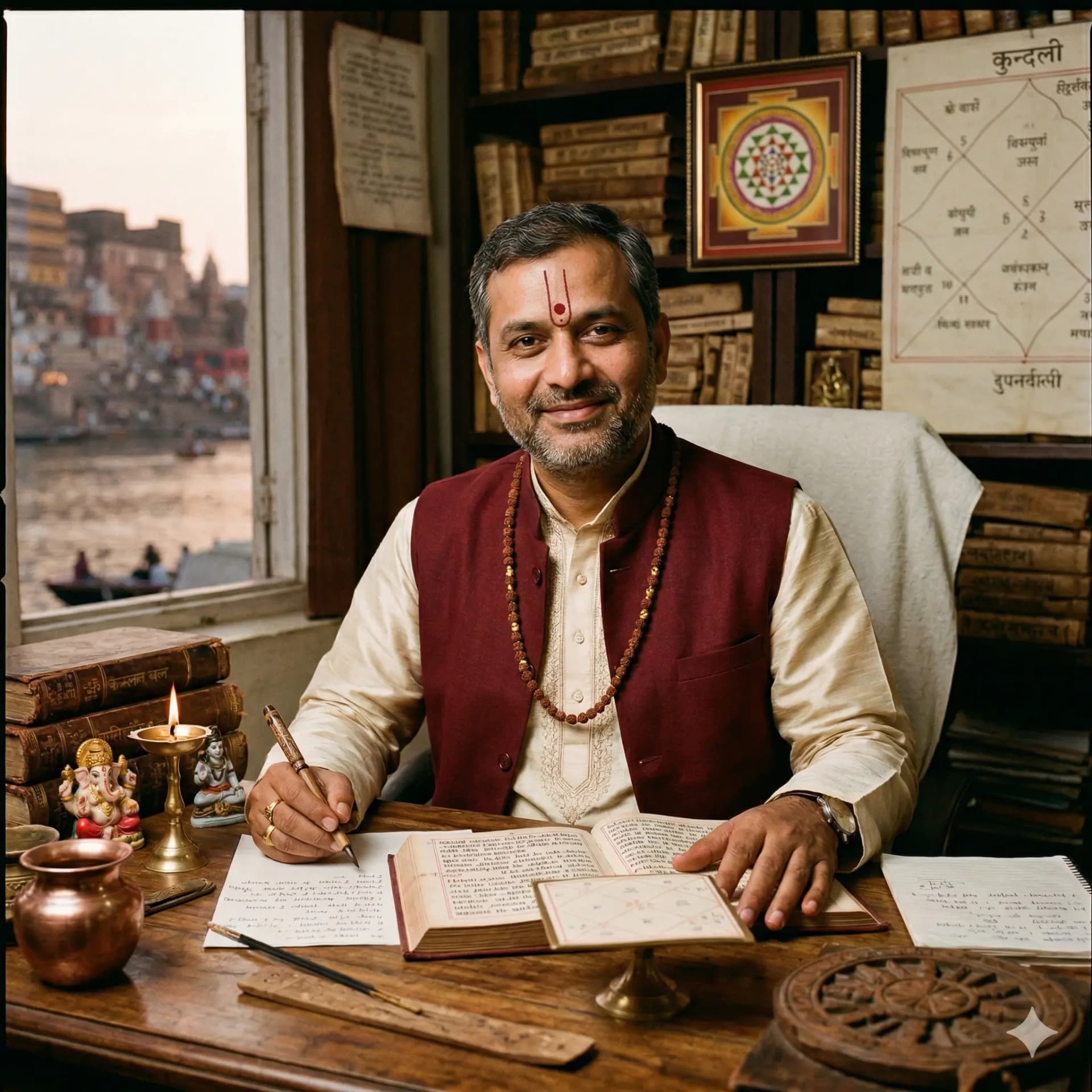
Pt. Raghav Sharma has practiced Parashari Jyotish for over twenty two years from Varanasi. A student of the Varanasi Jyotish tradition, he specialises in Graha-in-Bhava analysis, Vimshottari Dasha predictions, and Muhurta. He has authored over four hundred in-depth articles on Jyotish principles across the VastuCart knowledge network.