
Moon in the 9th house
Mesh Lagna (Aries Ascendant)
A practitioner study of Chandra in Dharma Bhava for Aries ascendant natives. Moon in friendly Dhanu, the 4L in 9H kendra-to-trikona raja yoga, the mother-as-dharmic-figure signature, and the long-journey pattern that shapes the inner spiritual life of the native.
Moon in 9th house for Mesh Lagna, the quick reference
If you carry Chandra in the ninth house of a Mesh chart, you hold one of the cleanest dharmic Moon placements in the entire Aries ascendant catalogue, because the placement combines three structural strengths that all work in the same direction. The ninth house from Mesh is Dhanu (Sagittarius), ruled by Guru, and Jupiter is generally favourable toward the Moon in classical relationships even though the technical rule treats them as neutral (Moon is the natural counsellor and Jupiter the natural teacher, and their shared commitment to wisdom produces practical friendliness even when the textbook rule is neutral). By sign relationship the placement is comfortable, holding mid-strength functional status that the friendly Dhanu sign welcomes. The ninth house is also Dharma Bhava, the trikona of dharma, father, teacher, long journeys, classical learning, and the inner orientation toward truth that the trikona houses collectively rule. Placing the mind karaka in the dharma trikona produces a native whose emotional and mental life is wired toward the dharmic dimension of existence from a young age.
The second structural feature is the kendra-to-trikona raja yoga the placement creates. For Mesh Lagna, Chandra rules Karka and is therefore the 4L. Placing the 4L (the lord of the strongest kendra) in the 9H (the deepest dharmic trikona) creates one of the cleanest raja yoga combinations classical Parashari texts describe, where the foundation angle of home and mother flows directly into the dharmic pillar of truth and wisdom. The two angles reinforce each other, and the practical effect is that the native's home life and mother figure carry the dharmic current directly, producing families where the dharmic orientation runs through the mother rather than through the father, and natives whose deepest spiritual inheritance comes through maternal channels. As with all paksha-sensitive Moon placements, the lunar phase at birth shapes the functional intensity. This guide reads every layer of Moon in 9th house for Mesh Lagna natives: the friendly sign comfort, the kendra-to-trikona raja yoga, the mother-as-dharmic-figure signature, and the pearl protocol that applies here with high confidence.
Why the 4L in 9H produces the mother-as-guru pattern
The most useful interpretive frame for understanding Moon in 9th of Mesh is the mother-as-dharmic-figure reading, which captures both the structural truth and the lived experience the chart produces. Popular astrology often treats the 9th house father-signature as the default, but the 9th house in classical tradition is broader than that: it is the house of all dharmic transmission, and the dharmic figure can be the father, the teacher, the grandfather, the guru, or the mother depending on which planet occupies the house. When Chandra (the karaka of mother) sits in the 9th, the chart is explicitly naming the mother as the dharmic transmitter, and the reading is unusually consistent in clinical reports for natives with this placement: their mother is the one who introduced them to prayer, to scripture, to dharmic practice, to pilgrimage, and to the inner orientation that the native carries into adulthood as their own.
The 4L in 9H configuration is the second specific feature that deserves careful reading because it forms a clean kendra-to-trikona raja yoga. Classical Parashari texts list kendra-to-trikona raja yogas among the three cleanest raja yoga patterns because they connect the foundation of the chart (the four kendras that supply structural support) with the dharmic pillars (the three trikonas that supply meaning and blessing). When the 4L occupies the 9H, the home and mother angle flows into the dharma house, and the combination produces a native whose domestic and spiritual life become inseparable. The home becomes the place where dharmic practice happens. The mother becomes the teacher. The native's emotional grounding and their spiritual orientation are not two separate things, they are one continuous expression. The third interpretive layer is aspect. From the 9th, Chandra aspects the 3rd house with his full opposition aspect, bringing the dharmic-emotional current into the parakrama and communication angle. Natives often become teachers, writers, or communicators whose output carries an unmistakable dharmic quality that readers and students recognise even when the surface topic is secular.
When the home lord sits in the dharma house of Jupiter's sign, the mother becomes the first teacher and the home becomes the first temple. The native does not need to travel far to find their lineage. They were born into it already.
How Chandra in friendly Dhanu shapes the Aries native
Physically the native carries the Mesh Lagna frame softened by the unmistakable lunar quality that Moon placements consistently produce, with an additional dharmic warmth that distinguishes this position from other friendly-Moon locations. The face is round to oval rather than angular, the cheeks hold a gentle fullness that family members notice from infancy, and the eyes carry the warm, steady, slightly contemplative quality that classical texts assign to a strong Chandra in the dharma trikona. Complexion runs notably fairer than typical Mesh natives because Chandra rules complexion, and the friendly Dhanu sign adds a warm golden undertone that other Moon placements do not share. Hair is typically thick, soft, and well-kept, and the body has a natural elegance that combines the Aries frame with the lunar softness. The 9th house body-part rulership covers the hips, thighs, and upper legs, and natives should pay sustained attention to all three because the combination of Moon sensitivity and 9th house rulership produces specific vulnerabilities during stress periods.
Temperament is the layer where the placement most distinguishes the native from popular Aries stereotypes. These natives are still pioneers and still carry Mesh courage, but the courage is filtered through an unusually contemplative emotional life that other Aries placements do not produce. They take action when action is required, but the action is almost always preceded by a quiet inner check against an emotional sense of what is right that they inherited from their mother and that they have internalised as their own moral compass. They love their mother openly and speak of her in dharmic terms even when they cannot articulate why the framing feels accurate. They are unusually gentle with children, elders, and vulnerable people because the lunar emotional intelligence combined with the dharmic orientation produces a specific kind of warmth that other placements struggle to replicate. The shadow side is the emotional dependency on the mother figure that the placement can produce. Natives who do not learn to internalise the dharmic-maternal inheritance as their own can remain structurally dependent on the mother's approval into their thirties and forties, and the chart specifically asks for the integration of the inheritance into the native's own adult authority. Natives who complete this integration produce the rare combination of emotional warmth and dharmic authority that this placement is genuinely capable of supporting.
Strengths, shadows and career fits
- Kendra-to-trikona raja yoga in dharma house
- 4L home flows into 9L dharma
- Mother as dharmic transmitter signature
- Innate moral compass from childhood
- Aspects 3H, brings dharma to communication
- Long journeys and pilgrimages elevate the life
- Krishna paksha reduces functional strength
- Emotional dependence on mother figure
- Hip and thigh attention required
- Over-reliance on inherited dharma
- Difficulty with adult dharmic authority
- Father relationship may feel secondary
- Teaching, especially religious or philosophical
- Counselling, therapy, emotional guidance
- Writing on spiritual or family themes
- Hospice, palliative care, end-of-life work
- Travel writing, cultural scholarship
- Dharmic non-profit leadership
Where the dharmic-maternal vocation plays out
Career paths cluster around fields where the dharmic-emotional combination can express directly, and the strongest single fit is teaching with a religious or philosophical dimension. Many natives spend years as teachers within traditions that value emotional-dharmic transmission, becoming the teachers whose students remember not just what they taught but how the teaching felt. The placement specifically supports teaching in settings where the student relationship is as important as the curriculum.
Counselling, therapy, and emotional guidance work because the lunar empathetic intelligence combined with dharmic orientation produces natives whose mode of help is both emotionally attuned and morally grounded. Writing on spiritual and family themes fits natives whose vocational pull is more literary. Hospice and palliative care suit the chart because the Moon's mother-karakatva combined with the 9th house dharmic orientation produces unusual capacity to accompany people through the spiritual dimension of transition. Travel writing and cultural scholarship channel the 9th house long-journey signature. Dharmic non-profit leadership rounds out the list. Chandra mahadasha is when the vocation crystallises, often through a family event or pilgrimage that opens the rest of the working life.
Moon marked in the ninth house of Mesh
- Chandra in Dharma Bhava in friendly Dhanu, marked in luminous silver
- 12 houses in North Indian format
- Upper-left diamond is the 9th house of dharma
Why the chart delivers dharma through the maternal channel
The mother-as-guru pattern deserves direct attention because it shapes the arc of the native's spiritual development. Classical texts treat the 9th house father-signature as the default, but the reality is more nuanced: the dharmic figure can be any family member or teacher depending on which planet occupies the house. When Chandra sits there, the mother is explicitly named as the dharmic transmitter. Clinical reports are remarkably consistent: mothers are typically spiritually oriented in some specific way. They pray at home, take children to temples, read scripture aloud, observe fasts, or maintain a household practice that shapes the child's religious formation. The transmission is usually informal, and many natives do not recognise it as teaching until they look back from their thirties.
The long-journey signature is the second specific feature. The 9th house rules both literal and metaphorical long journeys, and this placement produces natives for whom travel is a structural component of their spiritual life. Many natives experience at least one major period of living abroad or making a significant pilgrimage, usually in their twenties or early thirties. The journey is formative in a way other travel is not: natives return different people, with the dharmic orientation they carried from childhood either consolidated or transformed into something larger. The third pattern is the dharmic-emotional integration challenge. Because the chart wires the mother's inheritance into the native's emotional centre, some natives struggle to develop their own adult dharmic authority independent of the mother's framework, and the integration usually requires conscious inner work. Practitioners should ask about this because natives often do not recognise the integration as the spiritual practice the chart is actually asking for.
When Moon in 9th delivers its Dharma Bhava chapter
Chandra mahadasha is the defining window for this placement and arrives with the dharmic vocation crystallising through a mother-event or a long journey that shapes the rest of the life.
Hips, thighs and the dharmic sensitivity profile
Health follows the friendly-sign Moon in the dharma trikona pattern with specific 9th house body-part considerations. Constitution is generally strong because the friendly Dhanu sign supports the lunar warmth, with kapha most prominent and pitta secondary. The 9th house body-part rulership covers the hips, thighs, and upper legs, and natives should pay sustained attention to all three because the combination of lunar sensitivity and 9th house rulership produces specific vulnerabilities during stress periods: hip stiffness in mid-life, thigh weakness from sedentary work, and the classical sciatic pain that 9th house placements can produce. Long walking is the foundational practice the chart specifically supports, and natives who establish a daily walking habit in their twenties report sustained lower-body health into their fifties.
The emotional sensitivity is the second specific layer because the Moon's mind karakatva in the dharma trikona produces a native whose mental health is tied to the state of their dharmic practice. Natives who maintain contemplative practice report sustained emotional stability that comes apart when the practice lapses. The recovery framework is therefore both dharmic and contemplative rather than purely pharmacological: regular practice, scripture reading, and occasional pilgrimage or retreat produce the stability that the chart specifically requests. Monday is the ritual day, and Thursday adds a secondary observance because the dispositor of Moon here is Guru (Jupiter). Annual gastrointestinal screening and hip mobility assessment from the late thirties complete the preventive baseline.
Remedies for Chandra in the Mesh dharma trikona
The Monday discipline is foundational and delivers genuine benefit for this placement because the chart is structurally aligned with the lunar current the day carries, and Thursday adds a secondary observance because Jupiter is the dispositor of Moon here. Rise before sunrise, bathe with cool water, wear white, silver-grey, or pale cream clothing on Mondays and yellow or gold on Thursdays, and visit a Shiva temple if accessible because Chandra sits on Shiva's matted hair in the iconography. The Chandra Sahasranama is the primary recitation for this placement because it is the thousand-name hymn to the Moon and activates the full range of lunar expressions that the dharma trikona specifically calls into action.
Offer white flowers, white rice, milk, or sugar at the altar, and donate dairy, scripture books, or travel funds to pilgrims, all of which channel the 4L plus 9H karakatvas constructively. The mother-honouring practice is the single most important lifestyle remedy because the chart specifically wires the mother into the native's dharmic life. Natives who maintain explicit warmth toward the mother, who visit her regularly, who involve her in significant life decisions, and who honour her dharmic contribution openly experience the placement deliver its fullest expression across decades. The gemstone is pearl (Moti) and is recommended with high confidence here because the friendly sign and trikona placement together support the gemstone protocol cleanly. Wear a natural Basra or saltwater pearl of minimum five ratti set in silver on the small finger of the right hand on a Monday at sunrise after Chandra mantra recitation. The paksha reading should still be confirmed. The lifestyle adjustment that compounds most is treating pilgrimage as the chart's literal instruction rather than as an optional devotional extra. Because the 9th house specifically rules long journeys and the Moon here is in friendly Dhanu, natives who make at least one major pilgrimage in their twenties or thirties see the placement deliver its fullest transformation.
Gemstones for Moon in 9th house Mesh Lagna
Pearl is the primary recommendation here because the friendly sign and trikona placement together support the gemstone protocol with high confidence.
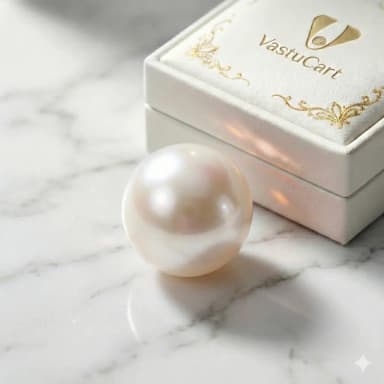

Disclaimer: Pearl works strongly with the dharmic Moon, but the paksha reading should be confirmed by a qualified Jyotishi before permanent wearing.
Rudraksha beads for Moon in 9th house
The Chandra-aligned rudraksha is the Do Mukhi (Two Mukhi), the bead directly ruled by the Moon and the Shiva-Parvati pair.
The classical Moon rudraksha and the safest daily-wear bead for any Chandra strengthening protocol. Supports the dharmic Moon, amplifies the mother-as-teacher signature, and is specifically recommended for natives in teaching, counselling, or contemplative writing vocations.
The Jupiter rudraksha and the safest daily-wear bead in the tradition. For this placement specifically, the Panch Mukhi honours the dispositor of Moon (Guru rules Dhanu) and compounds the placement's strength by strengthening both planet and sign-lord through Jupiter's dharmic current.
Chandra Yantra for the dharmic Moon
Sacred recitations for Chandra in friendly Dhanu
Atreyam kasyapam somam amritam amrit ashanam
Shyama pada sarojakyam hima ambu dhara sandaram
Shri chandram nirmal kaanti sita pancha mukha ajaram
Translation: I bow to Chandra who has the form of the Sun, wearing white garments, auspicious, son of Atri, born of Kashyapa lineage, Soma, the nectar, consumer of nectar. I bow to the one with dark lotus-like feet, surrounded by rivers of snow water. Shri Chandra of pure brilliance, cool, five-faced, ageless. The Chandra Sahasranama invokes the thousand names of the Moon and is the most comprehensive hymn to Chandra, ideal for a chart where the Moon sits in the dharma trikona and the full range of lunar expressions needs daily strengthening.
Read the full stotra on stotra.vastucart.inTools for Moon 9th house Mesh natives
Is your Dharma Bhava Moon carrying the mother-as-guru signature?
Get a full personalised analysis of your ninth house Chandra, the dharmic inheritance, and the long-journey pattern the chart is preparing.
Questions about Moon in 9th house, Mesh Lagna
Pt. Raghav Sharma has practiced Parashari Jyotish for over twenty two years from Varanasi. A student of the Varanasi Jyotish tradition, he specialises in Graha-in-Bhava analysis, Vimshottari Dasha predictions, and Muhurta. He has authored over four hundred in-depth articles on Jyotish principles across the VastuCart knowledge network.