
Ketu in the 8th house
Mesh Lagna (Aries Ascendant)
A practitioner study of Ketu in Ayush Bhava for Aries ascendant natives. The south node in Vrishchika which some lineages treat as Ketu's exaltation-like sign, the classical yogi-transformation amplification, and the occult-mastery signature that distinguishes this placement from the other Ketu positions in the catalogue.
Ketu in 8th house for Mesh Lagna, the quick reference
If you carry Ketu in the eighth house of a Mesh chart, you hold one of the classical yogi indicators that practitioners read with unusual care because the placement combines the moksha karaka with the house of transformation and hidden matters in a combination that multiple lineages treat as exceptionally spiritually significant. The eighth house from Mesh is Vrishchika (Scorpio), ruled by Mangal, and some Parashari lineages (notably the tradition following Maharishi Jaimini's nakshatra-based interpretation) treat Vrishchika as Ketu's exaltation-like sign because the intense transformative nature of the sign resonates with Ketu's moksha-and-dissolution karakatva in a way other signs do not. The classical reading is nuanced: mainstream Parashari texts do not list Ketu's exaltation at all (Ketu is a shadow planet and has no formal dignities in the primary tradition), but the Vrishchika placement is consistently described as producing the strongest positive expression of the south node, and practitioners reading this placement should describe the strength clearly rather than applying the blanket dushthana-reduction rule popular astrology uses.
The second structural feature is the 8th house itself. The 8th is classically a dushthana of transformation, hidden matters, inheritance, chronic illness, occult knowledge, and the death-and-rebirth themes the house rules. Ketu's core karakatva of moksha, detachment, and past-life completion aligns directly with the 8th house themes in a way other planets do not experience. When the moksha karaka occupies the moksha-through-transformation house in the sign that most supports transformative work, the compound signature is recognisable: natives with this placement often develop unusual capacity for occult research, depth-psychological work, tantric or esoteric practice, and the uncovering of hidden knowledge in whatever field they pursue. Classical texts describe this as one of the clearest yogi-indicators in the catalogue, though practitioners should qualify the reading because yogi-signatures require multiple chart factors and no single placement determines a formal monastic outcome. This guide reads every layer of Ketu in 8th house for Mesh Lagna natives: the Vrishchika classical strength, the transformation amplification, the yogi-signature with practitioner nuance, and the cat's eye protocol that requires especially careful chart confirmation here.
Why this placement is classically treated as the strongest Ketu position
Students learning classical Jyotish notice that Ketu in 8th receives unusual interpretive attention, and the reason is the specific alignment between planet, sign, and house. Ketu is the moksha karaka whose core function is dissolving attachment to worldly themes. The 8th house is the seat of transformation, inheritance, occult knowledge, and the death-and-rebirth themes that force natives to engage with dissolution of conventional identity. Vrishchika is ruled by Mars and carries the most intense transformative register in the zodiac. When the moksha karaka sits in the transformation house in the most transformative sign, the three layers reinforce each other and produce the compound signature classical texts describe as yogi-indicator.
The practical reading is not literal monastic renunciation but inner orientation toward depth work other charts experience as foreign territory. Natives are drawn to fields where hidden knowledge becomes their specialty: depth psychology, Jyotish, tantra, forensic investigation, archaeological research, occult studies. The professional life often involves significant engagement with themes others avoid. The inheritance pattern is the second layer. Ketu here often produces specific patterns where the native receives inheritance from unexpected sources or develops unusual expertise in intergenerational wealth administration. The third layer is longevity. Ayush Bhava means longevity house, and Ketu here classically produces strong longevity with transformative illness events that reshape life direction at key moments and unusual resilience through difficult health periods.
Ketu in the transformation house of Mars's sign is the native whose soul chose to incarnate into a life where the surface layer and the hidden layer would refuse to stay separate. The work is to become skilled at the depth the chart was built to teach.
How Ketu in Vrishchika shapes the Aries native
Physically the native carries the Mesh Lagna frame with the intense Ketu signature that the Vrishchika sign amplifies. The face often has a penetrating, searching quality that strangers notice without being able to name, and the eyes carry the classical 8th house signature that classical texts describe as looking into rather than looking at the person in conversation. Complexion can run darker or more intense than typical Mesh natives because Ketu combined with the watery-fixed Vrishchika produces a specific depth quality. The body tends to be lean and sinewy, built for endurance rather than display. Many natives carry a specific marker (a birthmark, scar, or distinctive feature) in the 8th house body-part region (reproductive area, lower back, or the region classically associated with chronic transformation) that the family notices from infancy.
Temperament is the layer where this placement most clearly expresses the yogi-signature tendency. These natives carry Mesh courage combined with an unusually contemplative inner life that other Aries placements do not produce, and the contemplation runs through transformation themes rather than through the quieter contemplative register the other Ketu placements produce. They are drawn to intense experiences, intense people, and intense knowledge, and they often feel that ordinary surface-level social interaction is genuinely exhausting compared to the depth work they prefer. They are private about personal matters even with close friends, and the privacy is structural rather than secretive, reflecting the 8th house hidden-matters karakatva combined with Ketu's natural reticence. Many natives report dream lives and inner experiences that they do not share with anyone because they have learned that the experiences do not translate into casual conversation. The shadow side is the isolation risk that comes from processing intense material without adequate support. Natives who do not build explicit contemplative practices, therapeutic relationships, or friendships that can hold the depth often experience the 8th house themes as chronic health concerns, family karma difficulties, or emotional turbulence that seems to have no external cause. Natives who commit to the depth work the chart is specifically asking for develop the rare combination of intense capability and inner stability that distinguishes this placement's fullest expression.
Strengths, shadows and career fits
- Classical yogi signature alignment
- Moksha karaka in moksha house
- Vrishchika classical strength
- Unusual capacity for occult research
- Strong longevity in Ayush Bhava
- Inheritance and joint finance insight
- Isolation risk without support structures
- Reproductive and chronic region vulnerabilities
- Intense material exhausts casual contact
- Popular astrology fear-mongering compounds self-doubt
- Privacy can strain close relationships
- Transformation events come through crisis
- Depth psychology and psychiatry
- Jyotish, tantra, and esoteric studies
- Forensic and investigative medicine
- Archaeological and historical research
- Inheritance law and estate planning
- Hospice and palliative care services
Where the yogi-transformation vocation plays out
Career paths cluster around fields that reward the native's unusual capacity for depth work. The strongest single fit is depth psychology and psychiatry because the chart produces natives whose clinical mode reaches psychological territory other therapists approach more cautiously. Many natives build careers in mental health work where their personal experience of processing intense emotional and psychological material translates into clinical insight. Jyotish, tantra, and esoteric studies are specific niches because Ketu in the 8th house is one of the classical indicators for natives whose vocational pull is toward traditional esoteric knowledge, and many natives with this placement eventually find their way into Vedic astrology practice, classical scripture study, or tantric traditions where the hidden-knowledge work becomes their primary professional identity.
Forensic and investigative medicine fits the chart because the 8th house directly rules medical research into difficult cases, and the Ketu signature produces natives who approach the work with the depth-orientation the cases require. Archaeological and historical research work because the hidden-knowledge-uncovering signature translates directly into fields that require patient long-term excavation of material others missed. Inheritance law and estate planning are specific niches because the 8th house rules inheritance directly, and Ketu here often produces natives whose professional expertise serves clients navigating intergenerational wealth transfer. Hospice, palliative care, and end-of-life services round out the list because the moksha karaka in the transformation house gives the native unusual capacity to be present with death and dying without emotional destabilisation. Ketu mahadasha is when the vocational direction crystallises, often through a transformation event in the native's personal life that redirects them from a more conventional path toward the depth work the chart was preparing.
Ketu marked in the eighth house of Mesh
- Ketu in Ayush Bhava in Vrishchika, marked in smoky violet
- 12 houses in North Indian format
- Eighth house is the seat of transformation
Why classical texts treat this as a spiritually significant placement
The yogi-signature reading is the most useful frame for Ketu in 8th of Mesh. Classical Parashari texts treat Ketu in the 8th as one of the specific indicators for natives whose incarnation is weighted toward spiritual work, and the reading is consistent enough across sources that practitioners recognise the pattern immediately. But the yogi-signature does not mean literal renunciation. The practical expression is usually the native who lives an outwardly conventional life while carrying an inner orientation toward depth work that makes their surface life less representative of who they actually are. Natives often feel that the outer life is a costume while the inner life is the real work.
The practitioner nuance that separates this placement from sustained difficulty is commitment to explicit depth work. Natives who build contemplative practices, find teachers, or develop professional expertise in hidden-knowledge fields experience the placement as unusual capability and inner stability. Natives who resist the depth pull often experience 8th house themes as chronic difficulties: health concerns that do not respond to standard treatment, emotional turbulence without external cause, family karma complications. The chart is not punishing them. The chart is asking for the specific work it was built to teach. Practitioners should also ask about inheritance situations directly because Ketu here often produces patterns where the native receives inheritance from unexpected channels with complications that require careful handling.
When Ketu in 8th delivers its Ayush Bhava chapter
Ketu mahadasha is the defining window for this placement and arrives with transformation themes crystallising into the chart's specific yogi-signature expression.
Reproductive region, longevity and the transformation profile
Health follows the Ketu in Ayush Bhava pattern with specific 8th house considerations. Constitution is generally lean and wiry with vata-pitta prominence because Ketu combined with Vrishchika's intensity produces a nervous-system sensitivity that benefits from careful management. The 8th house body-part rulership covers the reproductive organs, urogenital system, hormonal axis, and the region classically associated with chronic illness. Natives should pay sustained attention to all of these because the intensity of the placement adds specific vulnerabilities that benefit from preventive monitoring rather than reactive care. Women natives should monitor reproductive and hormonal health. Men natives should monitor prostate and urogenital health.
The longevity reading is the second specific layer because Ayush Bhava literally means longevity house, and Ketu here classically produces strong longevity with specific patterns. Natives with this placement often live longer than family members expect, though the long life includes specific transformation events (chronic conditions, major health shifts, periodic intense illness periods) that reshape the native's life direction at key moments. The health pattern is not steady, it is transformative, and natives who track their own health carefully and work with practitioners who understand the transformation register navigate the pattern more successfully than natives who try to treat each event in isolation. Wednesday or Tuesday is the ritual day, and Saturday adds a secondary observance in some lineages. Annual full-panel screening including reproductive, hormonal, and cardiovascular markers is recommended from the late twenties because the 8th house placement specifically benefits from baseline data over reactive testing.
Remedies for Ketu in the Mesh transformation house
The daily Ganesha worship is the primary remedy for this placement because Ganesha is the classical patron deity of Ketu, and the secondary practice layer for this specific placement is Hanuman or Kartikeya worship because the dispositor of Ketu here is Mars and the Mars-connection deities honour the sign-lord alongside the planet. Rise before sunrise, bathe, wear white or off-white clothing on Wednesdays and red or saffron on Tuesdays. Visit a Ganesha or Hanuman temple as accessible. The Ketu Dosh Nivaran Stotram is the primary recitation for this placement because it is the specific remedial hymn for intense Ketu placements and directly addresses the transformation themes the 8th house amplifies. Reciting the Ketu Dosh Nivaran daily during Ketu mahadasha or at any major transformation event provides the stabilising current the chart specifically requests.
Offer dub grass, modaka, red flowers, sesame, and coconut at the altar. Donate to causes that support depth work and hidden-knowledge research (Jyotish scholarships, classical scripture preservation, esoteric study programmes, hospice funding), all of which channel the placement's vocational signature constructively. The contemplative practice is the single most important lifestyle remedy because the chart literally asks the native to honour the inner spiritual work that the placement structurally produces. Daily meditation, scriptural study, contemplative reading, or formal esoteric practice compound across decades into the difference between the placement's highest expression and the version that produces chronic difficulty through neglect of the inner dimension. The gemstone is cat's eye (Lehsunia, Vaidurya), made from chrysoberyl, and it is recommended only after especially careful chart confirmation because Ketu in the 8th house amplifies transformation themes sharply and the gemstone must be timed to a moment when the native is ready for the intensification. Wear a natural chrysoberyl cat's eye of minimum five ratti set in silver on the small finger of the right hand on a Wednesday or Tuesday at sunrise after Ketu mantra recitation, and only after a practising Jyotishi has confirmed the timing. Hessonite is the companion node stone. The lifestyle adjustment that compounds most is accepting the yogi-signature as the chart's literal instruction. Natives who commit to explicit depth work develop the inner stability that sustains them through the transformation events the chart inevitably produces, and the stability is itself the placement's finest expression.
Gemstones for Ketu in 8th house Mesh Lagna
Cat's eye is the primary Ketu gemstone but is recommended only after especially careful chart confirmation because the transformation house amplifies Ketu themes sharply.
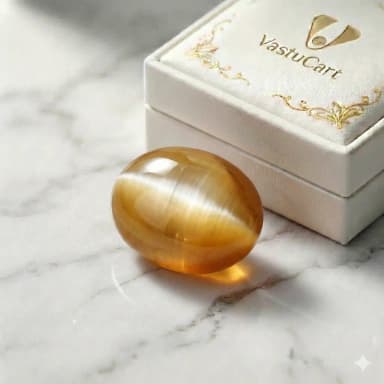
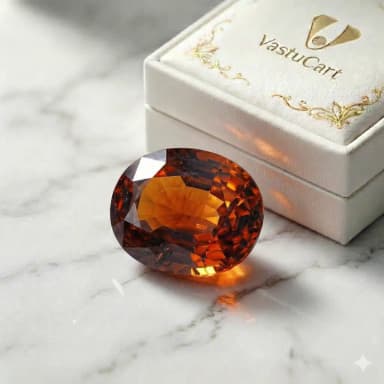

Disclaimer: Cat's eye in the transformation house amplifies Ayush Bhava themes sharply. Always consult a qualified Jyotishi before permanent wearing.
Rudraksha beads for Ketu in 8th house
The Ketu-aligned rudraksha is the Ashta Mukhi (Eight Mukhi), the bead directly ruled by Ganesha and the south node.
The classical Ketu rudraksha and the bead specifically associated with Ganesha as the patron deity of the south node. Supports the yogi-transformation signature, amplifies the depth vocation, and is specifically recommended for natives in depth psychology, Jyotish, tantra, forensic medicine, or hospice work.
The Mars bead serves as the specific dispositor-supporting bead for this placement because the dispositor of Ketu here is Mangal (Mars rules Vrishchika) and Mars is also the Mesh lagna lord. Wearing the Teen Mukhi alongside the Ashta Mukhi compounds the placement's strength by honouring planet, sign-lord, and lagna lord simultaneously.
Ketu Yantra for the transformation placement
Sacred recitations for Ketu in Vrishchika
Palasha pushpa sankasham taraka graha mastakam
Raudram raudratmakam ghoram tam ketum pranamamyaham
Dhoomra varnam shikhi ketum chitravarnam bhayankaram
Naraari natha sahitam tam ketum pranamamyaham
Translation: Om Shram Shreem Shraum Sah, salutations to Ketu. Resembling the palash flower, chief among the star-planets, terrible and of fierce nature, to that Ketu I bow. Smoke-coloured, crested, of varied colour, fearsome, accompanied by the lord of the seers, to that Ketu I bow. The Ketu Dosh Nivaran Stotram is the specific remedial hymn for intense Ketu placements and is the primary recitation for this 8th house position because it directly addresses the transformation themes the chart amplifies while invoking the south node for grace rather than fear.
Read the full stotra on stotra.vastucart.inTools for Ketu 8th house Mesh natives
Is your Ayush Bhava Ketu carrying the yogi signature?
Get a full personalised analysis of your eighth house Ketu, the transformation pattern, and the inheritance themes the chart produces.
Questions about Ketu in 8th house, Mesh Lagna
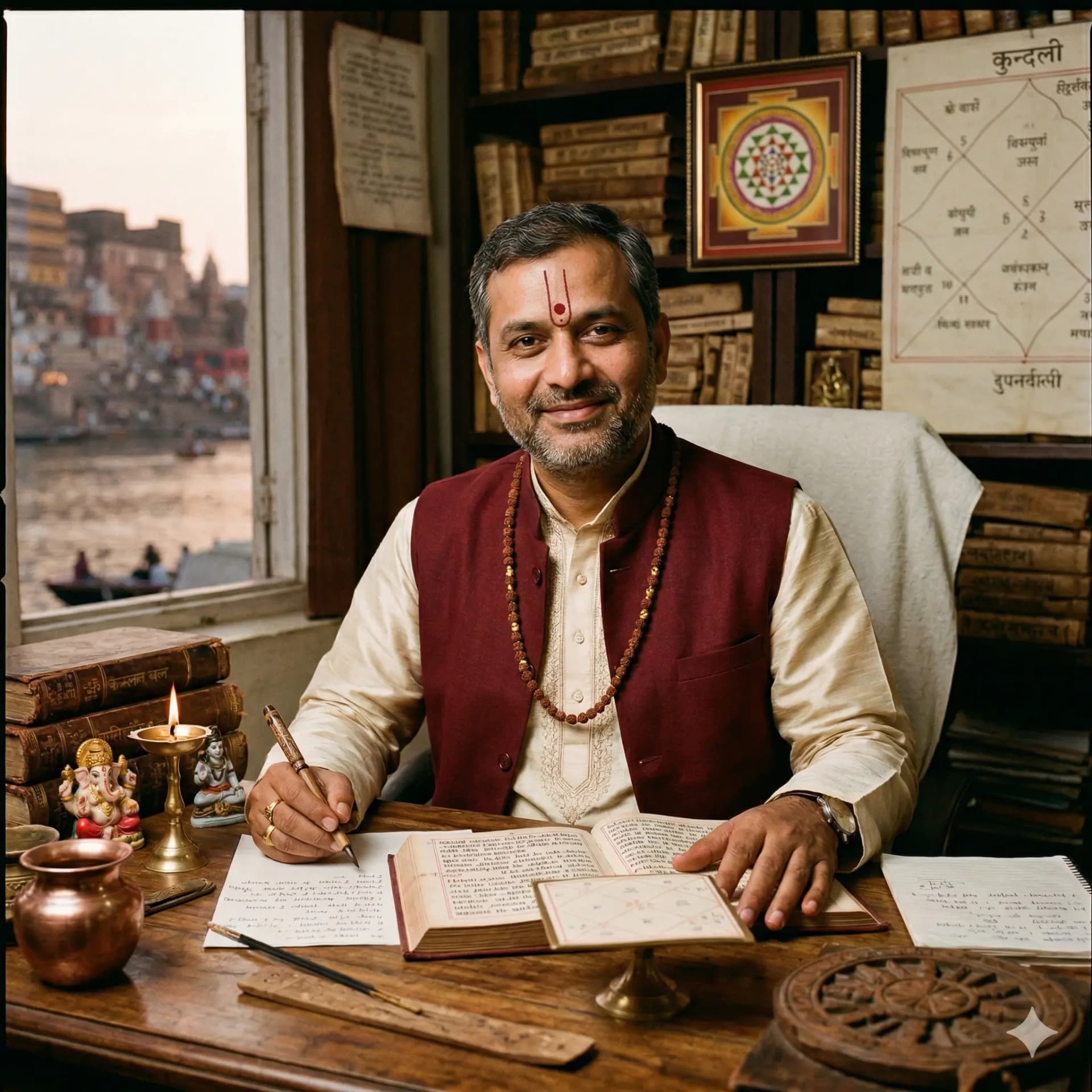
Pt. Raghav Sharma has practiced Parashari Jyotish for over twenty two years from Varanasi. A student of the Varanasi Jyotish tradition, he specialises in Graha-in-Bhava analysis, Vimshottari Dasha predictions, and Muhurta. He has authored over four hundred in-depth articles on Jyotish principles across the VastuCart knowledge network.