
Ketu in the 2nd house
Mesh Lagna (Aries Ascendant)
A practitioner study of Ketu in Dhana Bhava for Aries ascendant natives. Ketu in Vrishabha, the moksha karaka sitting in the wealth and speech house, and the detachment-from-accumulation signature that defines how the native relates to family wealth, food, and vocal expression across the adult decades.
Ketu in 2nd house for Mesh Lagna, the quick reference
If you carry Ketu in the second house of a Mesh chart, you hold a placement that drops a moksha-karaka shadow planet into the wealth-and-speech house of Venus's own sign, and the reading deserves a careful practitioner framing because popular astrology often describes it through fear rather than through the specific structural mechanics the chart actually produces. The second house from Mesh is Vrishabha (Taurus), and classical texts place Ketu's debility in this sign while also honouring lineage variation where some streams treat Vrishabha Ketu as cooperative rather than afflicted. Ketu is the south node, a chaya graha without sign ownership of its own, and the lunar node's behaviour depends strongly on its sign dispositor. The dispositor here is Shukra, and the relationship the native develops with Shukra through remedies shapes much of how this placement will deliver.
The second structural feature is that Ketu in a house acts like a subtraction from the house karakatvas rather than an addition. In the 2nd of accumulation, Ketu tends to detach the native from the normal drives toward family wealth accumulation, collected possessions, routine speech, and conventional food patterns. The detachment is rarely deprivation, it is usually a specific inner quality where the native has already understood the limits of accumulation before the peer group arrives at that understanding. This guide reads every layer: the Ketu-Vrishabha sign debate, the 2nd house detachment mechanics, the mantra-speech-as-moksha signature, and the remedial protocol through Shukra that makes this placement work.
Why Ketu in Dhana Bhava produces the detachment-from-accumulation signature
Classical Parashari tradition reads the nodes as shadow planets whose behaviour is structural rather than substantive. Rahu amplifies the karakatvas of the house he sits in because the north node hungers; Ketu reduces or refines the karakatvas of the house he sits in because the south node has already completed the lesson the house teaches. When Ketu sits in the 2nd house, the karakatvas of wealth accumulation, family possession, and routine material speech get an internal refinement where the native discovers early that these things are not the source of contentment the peer group assumes them to be. The refinement is usually earned through a past life where the same themes were lived to completion, and the present chart carries the residue of that completion.
For Mesh natives the practical expression of this refinement is specific and worth describing carefully in consultation. Family wealth is often present but the native feels separate from it, as if the accumulated resources belong to the family more than to them personally. Speech tends toward a distilled mantra register rather than a chatty social register, and natives report that they lose interest in small talk in their twenties and become known for saying little until the moment requires a lot. Food habits run toward the simple rather than the refined despite the Vrishabha sign, and many become vegetarian, minimally indulgent, or drawn to ritual fasting even without formal religious commitment. The reading is distinct from Rahu-in-2nd (which produces hunger for wealth accumulation, experimental speech, and appetite-driven food habits). Ketu produces the mirror pattern where the same karakatvas are approached from the position of someone who has already seen through them.
When the moksha karaka sits in the wealth house of Venus's sign, the native is not poor, they are simply finished with possession as a project. The speech becomes mantra, the food becomes prasad, the family resources become something held lightly.
How Ketu in Vrishabha shapes the Aries native
Physically the native carries the Mesh frame but with the smoky modification Ketu produces wherever he sits. The face often has an unusual or striking feature that draws attention, sometimes a mark, sometimes a distinctive jawline, sometimes an expression that others remember. The eyes carry a quality other people describe as old or far-seeing even when the native is young. Complexion is often slightly dusky or carries an indoor quality because the south node does not connect the native strongly to outward physical vanity. The body can run lean even when the native eats well, and many natives describe a lifetime relationship with food where hunger and satiation feel detached from the social rituals of eating. The 2nd house rules face, mouth, teeth, neck, throat, and the speech apparatus, and natives with this placement should treat dental and vocal health as genuine priorities because the detachment signature can produce neglect of routine preventive care.
Temperament is where the moksha-karaka-in-speech signature expresses most clearly. These natives carry Aries courage but pair it with an inner quietness that other Mesh placements rarely produce. They are slow to speak in group settings because the chart specifically refines the impulse toward routine speech, and when they do speak they tend toward distilled statements that carry more weight than the word count suggests. Friends often describe them as intense or mysterious even when the native feels ordinary from the inside. They care for family in a loyal but slightly detached register where the love is real but the attachment to specific family outcomes is looser than peers. The shadow is the over-withdrawal pattern. Natives who retreat completely from speech, family engagement, or normal material effort miss the refinement the chart is actually offering, which is mastery through use rather than mastery through avoidance. Those who accept the detachment as an inner quality and continue to participate fully in the outer world develop the specific combination of presence and non-grasping this placement supports.
Strengths, shadows and career fits
- Moksha karaka refines speech toward mantra register
- Early detachment from possession anxiety
- Research and occult capacity through past life residue
- Family wealth present but lightly held
- Aspects 8H, depth of inner research reaches hidden matters
- Natural capacity for ritual fasting and food discipline
- Detachment can be read as coldness by family
- Speech reticence can hinder routine networking
- Dental and vocal preventive care often neglected
- Vrishabha debility requires active remedies
- Risk of over-withdrawal from material effort
- Family wealth quarrels possible without clear boundaries
- Research, archaeology, and historical work
- Mantra, ritual, and priestly vocation
- Editing, proofreading, and precision writing
- Investigative journalism and specialised reporting
- Occult sciences and Jyotish consultation
- Minimalist design and craft practice
Where the detached-speech vocation plays out
Career paths cluster around fields where the capacity for precise distilled speech, research mastery, and refinement-through-subtraction becomes the vocational asset. The strongest single fit is research work in fields where the native brings a past-life residue of knowledge the present training only surfaces rather than generates. Many natives build careers as historians, archaeologists, classical scholars, or specialised researchers whose published work carries unusual depth relative to the word count. Editing and precision writing also fit because the chart rewards the capacity to cut and refine rather than to generate volume, and many natives become editors whose reputation rests on what they removed rather than what they added.
Mantra, ritual, and priestly vocation suit this placement because Ketu in the 2nd specifically produces the capacity to speak mantra with the inner emptiness the practice requires. Investigative journalism fits because the chart gives natives the ability to say less while revealing more, and many build careers where the reputation for not speaking casually becomes the professional credential that makes sources trust them with sensitive information. Occult sciences and Jyotish consultation are a natural fit because the 8th-house aspect supplies the research depth the work requires. Minimalist design and craft practice suit natives whose pull is more visual, since the refinement-through-subtraction signature expresses naturally through aesthetic reduction. Ketu mahadasha is when the vocation crystallises, often through a specific research or mantra project that becomes the native's definitive professional signature.
Ketu marked in the second house of Mesh
- Ketu in Dhana Bhava in Vrishabha, marked in smoky saffron
- 12 houses in North Indian format
- Second house is the seat of wealth and speech
Why the chart refines rather than destroys the wealth house
The detachment-from-accumulation reading is the most useful frame for Ketu in 2nd of Mesh because it names the mechanism through which the placement produces its actual effect. Popular astrology often reads Ketu in 2H as destructive: family wealth lost, speech broken, family quarrels. The classical reading is more precise. Ketu subtracts the ordinary grip the native would otherwise develop on the house karakatvas, and the subtraction can look destructive if the native resists it or productive if the native accepts it. Natives who spend their twenties and thirties fighting the detachment, trying to force themselves into conventional accumulation goals or routine social speech, report feeling blocked and frustrated even when they technically succeed. Natives who accept the refinement early and channel the house energies into research, mantra, and distilled vocational speech report feeling released and often surprise themselves with the specific form of success the chart actually produces.
The mantra-speech reading is the second reliable feature and deserves explicit discussion in consultation. Ketu in the 2nd specifically refines the vocal apparatus toward the register where each word carries more weight than ordinary speech contains. Natives often report that when they do speak in a serious context, their words land differently than they expected, and friends describe them as sounding older or deeper than their peers. The practical application is that the chart rewards deliberate mantra practice and deliberate professional speech training, because both disciplines honour the refinement the placement has already structurally begun. The third pattern is the 8th house aspect. From the 2nd, Ketu throws his opposition onto the Randhra Bhava where he functions particularly well, producing the combination where the native's capacity for research into hidden or transformative matters becomes the second vocational signature alongside the primary work.
When Ketu in 2nd delivers its Dhana Bhava chapter
Ketu mahadasha is the defining window for this placement and arrives with the detachment-refinement signature crystallising into a specific research or mantra vocation the native carries forward.
Dental care, speech apparatus and the shadow stamina profile
Health follows the Ketu-in-Dhana pattern with specific second-house considerations. Constitution tends toward vata predominant with pitta secondary because the shadow planet produces dry and irregular tissue quality even when the native eats well. The second rules face, mouth, teeth, neck, throat, and the full speech apparatus, and natives with this placement should treat dental and periodontal care as a genuine priority because Ketu in the mouth house often correlates with neglected preventive dentistry that becomes a mid-life burden. Twice yearly dental cleaning from the twenties onward, soft-bristled brushing, and immediate treatment of any dental issue are the preventive practices the chart specifically requests.
Speech and throat care is the second consideration because the refinement signature can produce vocal irregularity when the native goes through extended silence followed by sudden heavy speaking. Natives in research or mantra vocations benefit from structured vocal warm-ups before long speaking engagements, and annual ENT review from the late thirties is advisable. The digestive pattern is the third layer because Ketu in the food-house often produces natives who eat irregularly or who feel genuinely unattached to meal routines, and the corrective is a disciplined eating schedule rather than an attempt to cultivate appetite. Tuesday is the ritual day and Friday adds a secondary observance because the dispositor of Ketu here is Shukra, and the Venus remedies strengthen the chart's primary healing channel.
Remedies for Ketu in the Mesh wealth house
The Ganesha discipline is foundational here because Ketu-related placements specifically respond to Ganapati worship, and the chart supports daily Ganesha practice alongside a Friday observance for the Shukra dispositor. Rise before sunrise, bathe, wear grey, indigo, or muted earth tones on the Ketu focus days and white or pink on Fridays. Offer durva grass and modak to a Ganesha altar, and visit a Ganesha or Subrahmanya temple as accessible. Ketu Kavacham is the primary recitation for this placement because the protective armour hymn stabilises the shadow channel precisely where the chart is carrying the refinement pressure, which is what this Dhana Bhava signature structurally needs.
Offer durva grass, modak, red sandalwood, and sesame on Ketu focus days and white flowers, sweets, or refined food on Fridays. Donate books, food to ascetics, or funds to mantra and research institutions, which channel the detachment-and-refinement signature alongside the speech theme. The daily mantra discipline is the single most productive lifestyle remedy because the chart specifically rewards deliberate cultivation of the distilled vocal register the placement has already structurally begun. Reading classical texts aloud, formal mantra japa, or structured ritual recitation compounds across decades into the vocal authority the placement produces. The gemstone protocol is complex because cats eye (Lehsunia) is the classical Ketu stone but is recommended only after a careful chart review because shadow planet gemstones can be unpredictable, and for this placement the Shukra-based remedies through Venus stotra and Ganapati worship are usually the safer primary path. The lifestyle adjustment that compounds most is accepting the refinement as a feature rather than resisting it as a defect.
Gemstones for Ketu in 2nd house Mesh Lagna
Cats eye is the classical Ketu gemstone but is recommended only after a considered chart review. For this placement the safer primary path is often remedial work through Shukra and Ganapati rather than direct Ketu stone wearing.

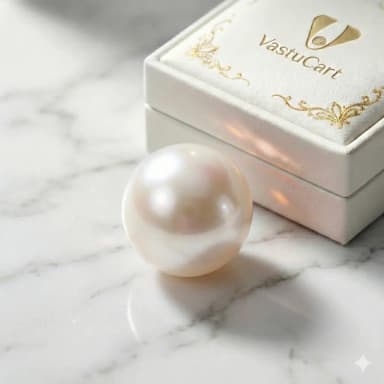

Disclaimer: Cats eye for Ketu in Dhana Bhava is a complex recommendation and always requires a practising Jyotishi review before any permanent wearing.
Rudraksha beads for Ketu in 2nd house
The Ketu-aligned rudraksha is the Nau Mukhi, the nine-face bead classically ruled by Devi and considered supportive for Ketu placements.
The Nau Mukhi is the primary bead for Ketu strengthening protocols and is specifically aligned with the shakti energies that stabilise the shadow planet. Supports the detachment-refinement signature, honours the moksha karaka function, and is specifically recommended for natives building careers around mantra, research, or distilled vocational speech.
The Venus bead serves as secondary support because the dispositor of Ketu in Vrishabha is Shukra. Wearing the Chha Mukhi alongside the Nau Mukhi supports the chart's primary remedial pathway by honouring both the shadow planet and its sign-dispositor together, which the placement structurally invites.
Ketu Yantra for the shadow Ketu in Dhana Bhava
Sacred recitations for Ketu in Vrishabha
Samushadbhir ajayatha
Om chitraverayata dhimahi sarparajaya dhimahi
Tanno ketuh prachodayat
Palayet sarvato ketuh shikhi varnah sadaiva mam
Translation: Om, making the flagless one flag-bearing, shaping form from the formless, born with the dawns. Om, may we know the varied-bodied, let us meditate on the king of serpents, may Ketu inspire us. May Ketu the flame-coloured protect me from every direction at all times. The Ketu Kavacham is the protective armour hymn for the shadow south node and is the daily recitation recommended for a chart where Ketu sits in the wealth house and the refinement signature is the native's central vocational pressure.
Read the full stotra on stotra.vastucart.inTools for Ketu 2nd house Mesh natives
Is your Dhana Bhava Ketu carrying the detachment-refinement signature?
Get a full personalised analysis of your second house Ketu, the family wealth detachment pattern, and the mantra-speech timing the chart produces.
Questions about Ketu in 2nd house, Mesh Lagna
Pt. Raghav Sharma has practiced Parashari Jyotish for over twenty two years from Varanasi. A student of the Varanasi Jyotish tradition, he specialises in Graha-in-Bhava analysis, Vimshottari Dasha predictions, and Muhurta. He has authored over four hundred in-depth articles on Jyotish principles across the VastuCart knowledge network.