
Rahu in the 6th house
Mesh Lagna (Aries Ascendant)
A practitioner study of Rahu in Ripu Bhava for Aries ascendant natives. Rahu in Kanya, the north node in its classical own house of enemies, debts, and disease, and the conquest signature that defines how the native's ambition transforms adversity into competitive mastery across the adult decades.
Rahu in 6th house for Mesh Lagna, the quick reference
If you carry Rahu in the sixth house of a Mesh chart, you hold one of the structurally strongest nodal placements classical Parashari tradition recognises because the 6th house is directly described as Rahu's own house in multiple lineage streams, and any planet in its own house gains substantial functional strength. The sixth house from Mesh is Kanya (Virgo), ruled by Budha, and the Rahu-Mercury relationship is classically cooperative. Placing Rahu in Mercury's analytical sign inside the bhava that Rahu rules by lineage produces a compounded strength where the native's amplification hunger finds exactly the target it needs to deliver competitively.
The second structural feature is that the 6th is simultaneously an upachaya house (growth bhava) and a dushthana house (difficulty bhava). The unusual combination is precisely what makes Rahu thrive here: Rahu is the amplifier-planet who wants targets to overcome, and the 6H is specifically the seat of enemies, debts, disease, litigation, daily obligations, and competitive service. Where other planets suffer in the dushthana conditions, Rahu feeds on them and converts them into material outcomes. The upachaya growth curve means the benefits compound across the adult decades, and classical texts describe the placement as productive for natives who embrace the competitive field rather than trying to avoid it. This guide reads every layer: the Rahu-Kanya sign reading, the 6H own-house mechanics, the enemy-debt-disease conquest signature, and the full remedial protocol that honours the placement's structural pattern.
Why Rahu in Ripu Bhava produces the conquest signature
Classical Parashari tradition names Rahu as the planet whose nature is amplification and whose placement always raises the karakatvas of the house he occupies. In the 6th the karakatvas are enemies, debts, disease, litigation, daily obligations, service, and the difficult dimensions of worldly life most natives would prefer to avoid. The usual rule that Rahu in a house intensifies that house's themes would normally sound like a warning for a 6H placement, but the 6th is the specific exception where intensification turns into mastery. The reason is that competitive situations structurally reward whoever brings the most hunger and willingness to engage, and Rahu is the planet who supplies exactly that quality. Where an unprepared native would lose, a Rahu native engages with specific appetite and typically prevails.
For Mesh natives the expression pattern is detailed and consistent enough to describe predictively. Enemies appear early in life and the native develops competitive instinct through direct encounter rather than through theoretical training. Legal or litigation involvement happens at some point in the adult life and the native usually prevails because they bring more focus to the dispute than their opponents expect. Debts, whether the native's own or those they help resolve for others, become a professional theme, and many natives build careers in debt recovery, financial restructuring, or the specifically difficult commercial territory others avoid. Disease and chronic health issues may arise in specific dasha windows, but the native develops unusual self-healing capacity and often becomes deeply knowledgeable about their own physiology. Service in the sense of daily disciplined work becomes a competence rather than a burden, and many natives find their vocational home in the fields where other workers would burn out. The reading is distinct from Ketu-in-6th refinement or Shani-in-6th discipline: Rahu here produces specifically competitive mastery, where the native converts adversity into reputation through the sustained application of ambition.
When the hunger-amplifier sits in his own house of enemies and debts, the native is not afflicted, they are equipped. Every adversary becomes material for the reputation, every debt becomes the lesson that makes the next decade easier.
How Rahu in Kanya shapes the Aries native
Physically the native carries the Mesh frame with the smoky amplification Rahu produces wherever he sits, combined with the earthy precision the Kanya sign adds. The face often has an unusual combination of sharp intelligence and smoky intensity where people notice the native without being quite able to describe what makes them stand out. The eyes carry a specifically analytical quality that serves the native well in competitive contexts because opponents rarely realise how carefully they are being assessed. Complexion runs slightly dusky or carries an unusual tonal quality that friends sometimes remark on, and the body tends toward the wiry-athletic rather than the solid, with the specifically prepared physique of someone whose life includes regular physical demand. The 6H rules the lower abdomen and intestines, and natives here should treat digestive health as a genuine priority because Rahu in the digestion house correlates with periodic gut issues, food sensitivities, or metabolic irregularity that responds well to consistent preventive care rather than reactive treatment.
Temperament is where the conquest signature expresses most visibly. These natives carry Aries courage and pair it with a calculating analytical register the Kanya sign adds, producing the unusual combination of direct courage and patient preparation. They often rehearse difficult conversations in advance, they are comfortable with conflict that other peers avoid, and they develop the specifically adult competence of treating adversity as information rather than as injury. They speak with precision in competitive contexts and know how to say exactly the sentence that resolves a dispute in their favour. They develop loyalty to the few allies who earn their trust through demonstrated capability rather than through charm, and they are often surprisingly forgiving of former enemies once the conflict is concluded. The shadow is the over-combat pattern. Natives whose appetite for competitive engagement spills into unnecessary conflict pay a specific karmic price through exhaustion and litigation cost, and the Kanya earth-sign stability can harden into rigidity during stress periods. Those who channel the conquest signature through deliberate legal, medical, or service vocations rather than through personal quarrels develop the specific combination of competitive mastery and sustained reputation this placement structurally supports.
Strengths, shadows and career fits
- Rahu's classical own house in Ripu Bhava
- Upachaya growth curve rewards competitive effort
- Enemies and litigation typically resolved in native's favour
- Debt management and financial restructuring capacity
- Service mastery turns daily obligations into competence
- Aspects 12H, competitive focus reaches hidden territory
- Digestive and intestinal issues need preventive care
- Over-combat pattern can burn through allies
- Mental stress from sustained conflict exposure
- Food sensitivities during dasha peak periods
- Rigid earth-sign response to emotional flexibility
- Risk of enjoying conflict beyond functional purpose
- Law, litigation, and legal consultation
- Medical practice and emergency response
- Debt recovery and financial restructuring
- Competitive sports and martial disciplines
- Detective work and investigative journalism
- Military, security, and protective services
Where the enemy-conquest vocation plays out
Career paths cluster around fields where competitive engagement, precise analytical work, and sustained discipline become the vocational asset. The strongest single fit is law and litigation because the chart specifically rewards the mindset of engaging disputes directly and winning through sustained preparation, and many natives build careers as litigation lawyers, legal consultants, or specialist advocates whose reputation rests on their willingness to take the cases other lawyers avoid. Medical practice and emergency response fit strongly because the 6H rules disease and health, and Rahu here gives natives unusual capacity to function well in the specifically high-pressure situations where other medics would burn out.
Debt recovery, financial restructuring, and the turnaround-specialist commercial fields suit the placement because the chart literally joins Rahu's amplification hunger with the 6H debt rulership, and many natives build careers as chief restructuring officers, recovery specialists, or turnaround consultants whose professional identity rests on their ability to stabilise situations others consider hopeless. Competitive sports and martial disciplines fit natives whose pull is physical because the chart rewards disciplined competitive training. Detective work and investigative journalism suit analytical-pull natives because the combination of Mercury's Kanya precision with Rahu's focused intensity produces the exact temperament investigative work requires. Military, security, and protective services round out the list because these are the institutional fields where sustained disciplined service converts into long reputation. Rahu mahadasha is when the vocation crystallises most visibly, typically through a specific high-profile case, competition, or restructuring project that establishes the native's definitive professional reputation for the decades that follow.
Rahu marked in the sixth house of Mesh
- Rahu in Ripu Bhava in Kanya, marked in smoky indigo
- 12 houses in North Indian format
- Sixth house is the seat of competitive service
Why the chart rewards engagement rather than avoidance
The enemy-debt-disease conquest reading is the most useful frame for Rahu in 6th of Mesh because it captures the specific mechanism through which the placement produces its unusual combination of adversity and mastery. Most placements in Vedic astrology reward harmony between planet and house, and the usual astrological instinct is to soften difficult placements through remedies aimed at reducing the house's karakatvas. Rahu in 6H is the specific exception where the difficulty is itself the material the placement wants the native to work with, and practitioners should frame the reading accordingly. The 6H is classically described as Rahu's own house in several Parashari lineage streams because the bhava's difficulty-ridden karakatvas exactly match Rahu's hunger to overcome obstacles, and any native who tries to avoid the 6H themes in their career typically feels frustrated because the chart is specifically built for engagement.
The competitive-mastery reading is the second reliable feature practitioners should describe in consultation. Natives with this placement typically discover their competitive instinct through direct encounter with early-life adversaries, sometimes at school, sometimes in early work, and the encounter becomes formative rather than damaging because the native's natural response is to engage rather than retreat. Many report that the defining moment of their adult career was a specific legal, competitive, or difficult professional situation they approached with focused ambition and won through sustained preparation. Practitioners can ask about early adversarial encounters and the answer usually confirms the pattern. The third feature is the 12H aspect. From Ripu Bhava, Rahu throws his full opposition aspect onto the Vyaya Bhava of hidden matters, foreign lands, and moksha, carrying the amplification signature into the occult and cross-border dimensions of life. Many natives develop unusual research, intelligence, or foreign-connection capacity alongside their primary conquest vocation, and the combination produces the pattern where the native's competitive work reaches material that other professionals in the same field do not see. The pattern crystallises most visibly under the Rahu mahadasha window.
When Rahu in 6th delivers its Ripu Bhava chapter
Rahu mahadasha is the defining window for this placement and arrives with the conquest signature crystallising into a specific high-profile competitive or legal vocation that defines the native's adult reputation.
Digestive care, intestinal balance and the competitive stamina
Health follows the Rahu-in-Ripu pattern with specific sixth-house considerations. Constitution tends toward vata-pitta with a sharp analytical edge because the shadow planet combines with Kanya earth to produce a precise but sensitive tissue quality. The 6H rules the lower abdomen, intestines, and the digestive-absorption region, and natives with this placement should treat digestive and intestinal health as a primary preventive priority because Rahu in the digestion house correlates with periodic gut issues, food sensitivities, or the specific kind of metabolic irregularity that responds well to consistent preventive care rather than to reactive emergency treatment. Annual stool and digestive screening from the late twenties is worthwhile because early data compounds well into long-term digestive stability.
The mental-regulation layer is the second consideration because the sustained competitive engagement the chart structurally demands puts continuous load on the nervous system. The corrective is structured rest and deliberate recovery windows inside the effort cycle rather than attempts to push harder through fatigue. Daily walking, gentle yoga, and the disciplined eating schedule the Kanya sign specifically favours all serve as productive recovery mechanisms. Saturday is the ritual day for Rahu-related placements, and Tuesday adds a secondary observance because the lagna lord Mangal is classically the great supporter of the 6H conquest signature for Mesh natives and honouring both planets together strengthens the placement's structural footing. Annual digestive, cardiac, metabolic, and mental-stress screening from the late thirties matters because sustained competitive engagement benefits substantially from early baseline data.
Remedies for Rahu in the Mesh conquest house
Hanuman worship is the foundational remedy for Rahu placements in classical tradition, and the 6H placement specifically responds to Hanuman-related practice because Shri Hanuman is the archetypal conqueror of enemies, debts, and adversity. The chart supports daily Hanuman practice alongside a Saturday Shani observance because Saturn is Rahu's functional friend and the combination of Hanuman and Shani remedies gives the placement its strongest remedial channel. Rise before sunrise, bathe, wear saffron or red on Tuesdays and grey or dark blue on Saturdays. Offer sindoor and sesame oil to a Hanuman altar on Tuesdays and sesame oil libation to a Shani altar on Saturdays. Visit a Hanuman, Shani, or Durga temple as accessible. Hanuman Chalisa is the primary recitation for this placement because the forty-verse hymn specifically names Hanuman's conquest of obstacles and is classically recommended as the most effective Rahu remedy in Parashari tradition.
Offer sindoor, sesame oil, black sesame seeds, mustard oil, or iron on the ritual days. Donate food to service workers, funds to legal-aid causes, or resources to institutions that serve patients in medical care, which channels the conquest signature constructively and compounds the placement's benefit through the karmic pathway the chart invites. The daily discipline of honest service is the single most productive lifestyle remedy because the chart specifically rewards deliberate engagement with the 6H themes through useful work rather than through avoidance. The gemstone protocol is relatively confident for this specific placement because the 6H is classically Rahu's own house, and hessonite (Gomed) can be worn with reasonable confidence after a chart review, typically set in silver or panchadhatu on the middle finger of the right hand on a Saturday evening at sunset after Rahu Kavacham recitation. Natives who combine Hanuman Chalisa recitation with deliberate engagement in their competitive vocation report the placement as a reliable source of sustained professional success.
Gemstones for Rahu in 6th house Mesh Lagna
Hessonite is the classical Rahu gemstone and is recommended with reasonable confidence here because the 6th house is classically considered Rahu's own house and the placement supports the gemstone protocol more directly than most Rahu placements.


Disclaimer: Hessonite for Rahu in the classical own-house position of Ripu Bhava is a relatively clean recommendation but always requires a practising Jyotishi review before any permanent wearing.
Rudraksha beads for Rahu in 6th house
The Rahu-aligned rudraksha is the Ashta Mukhi, the eight-face bead classically ruled by Ganesha.
The Ashta Mukhi is the primary bead for Rahu strengthening protocols and is specifically aligned with the Ganapati energy that removes obstacles. Supports the enemy-conquest signature, amplifies the own-house 6H strength, and is specifically recommended for natives building careers in law, medicine, debt recovery, or competitive professional fields.
The three-face bead serves as secondary support because the lagna lord for Mesh is Mangal and the Agni-ruled bead honours the lagna lord whose support strengthens any 6H placement through the 6-1 lagna-to-enemy axis. Wearing the Tri Mukhi alongside the Ashta Mukhi compounds the placement's competitive support through both the planet and the lagna lord together.
Rahu Yantra for the conquest Rahu in Ripu Bhava
Sacred recitations for Rahu in Kanya
Baranau raghuvar bimal jasu jo dayaku phal chari
Jai hanuman gyan gun sagar jai kapisa tihun lok ujagar
Ram doot atulit bal dhama anjani putra pavan sut nama
Bhoot pishacha nikat nahin awai mahavir jab nam sunavai
Translation: Having cleansed the mirror of my mind with the dust of the lotus feet of Shri Guru, I describe the pure fame of the best of Raghus, the giver of the four fruits of life. Victory to Hanuman, ocean of knowledge and virtue, victory to the lord of monkeys who illumines the three worlds. Messenger of Rama, abode of incomparable strength, son of Anjani, called the son of the wind. Ghosts and spirits do not come near when the mighty one's name is heard. Hanuman Chalisa is the classical Parashari remedy for Rahu placements and specifically aids Rahu in the 6th house through its direct invocation of the conqueror of obstacles and adversaries.
Read the full stotra on stotra.vastucart.inTools for Rahu 6th house Mesh natives
Is your Ripu Bhava Rahu carrying the enemy-conquest signature?
Get a full personalised analysis of your sixth house Rahu, the competitive mastery pattern, and the legal-medical-service vocation timing the chart produces.
Questions about Rahu in 6th house, Mesh Lagna
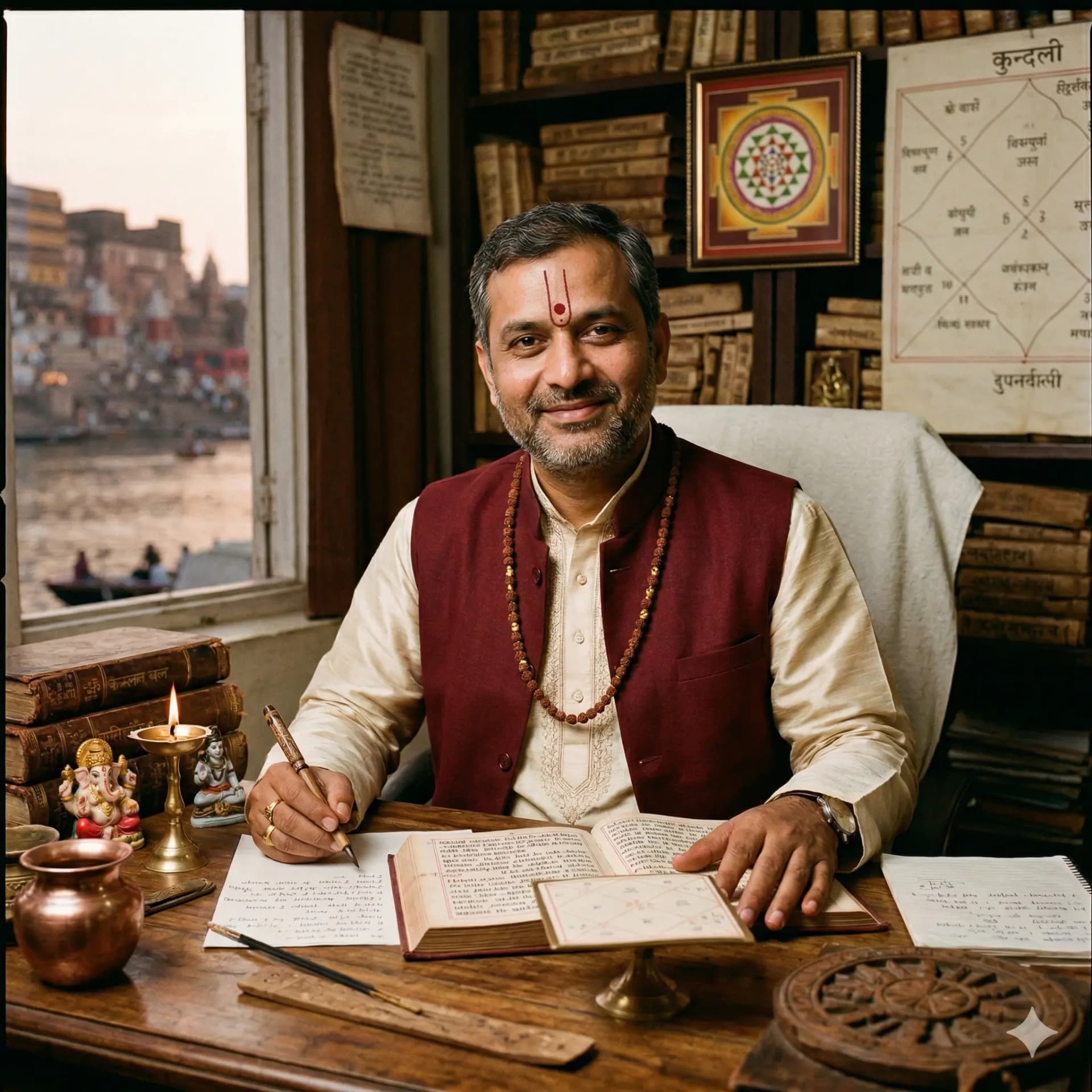
Pt. Raghav Sharma has practiced Parashari Jyotish for over twenty two years from Varanasi. A student of the Varanasi Jyotish tradition, he specialises in Graha-in-Bhava analysis, Vimshottari Dasha predictions, and Muhurta. He has authored over four hundred in-depth articles on Jyotish principles across the VastuCart knowledge network.