
Moon in the 7th house
Mesh Lagna (Aries Ascendant)
A practitioner study of Chandra in Kalatra Bhava for Aries ascendant natives. The fourth lord (home karaka) travelling to the marriage house, the emotional-fusion spouse signature, and the classical merger of home and marriage axes this placement is known for.
Moon in 7th house for Mesh Lagna, the quick reference
Moon in 7th house for Mesh Lagna is the placement where the mother-karaka meets the marriage house. The seventh house from Mesh is Tula (Libra), Shukra's sign, and Chandra in Tula sits in neutral-to-friendly territory, neither in own sign nor in debilitation, with the exact strength depending heavily on the waxing or waning state at birth. The structural signature is the layer that gives this placement its name. Chandra is the fourth lord for Mesh Lagna (Karka is the Moon's own sign and falls on the fourth), and placing the fourth lord in the seventh house creates an exchange of energy between Sukha Bhava (home, mother, emotions) and Kalatra Bhava (spouse, marriage, partnership) that classical texts read as the spouse becoming the native's emotional home. This guide reads every layer of Moon in 7th house for Mesh Lagna natives: the fourth-lord-in-seventh significance, the waxing-versus-waning diagnostic, spouse profile, partnership business fit, chandra mahadasha delivery, and the pearl protocol that stabilises the emotional channel across decades.
When the mother karaka becomes the shape of marriage
The fourth house is Sukha Bhava, the domain of home, mother, emotional security, vehicles, and the sense of belonging that roots a person in their early life. The seventh house is Kalatra Bhava, the domain of spouse, marriage, partnership, and the public-facing other the native stands across from in any formal relationship. When the fourth lord leaves the fourth and travels to the seventh, classical Parashara tradition treats this as a specific structural exchange, the emotional home axis merges with the marriage axis, and the native's sense of belonging ends up anchored in the spouse rather than in the family of origin or the physical house. For many natives this is experienced as love at first sight, for others as a gradual settling of the heart into the partnership, but the underlying mechanism is the same, the chart has made the spouse the native's emotional home.
Tula rashi adds a second layer. Shukra rules Tula, and the Moon-Venus relationship in classical texts is mixed, Chandra considers Venus a neutral, Venus considers Chandra an enemy, but the sign itself is airy, diplomatic, and oriented toward partnership balance, which actually suits the marriage-house placement remarkably well. The Moon in Tula produces an emotional disposition that values fairness, aesthetic harmony, and mutual give and take, which is exactly what long-term partnership rewards. The third layer is the waxing or waning state of the Moon at birth, which I will cover in its own section below, because the difference between the two states is larger than almost any other Chandra distinction and decides how this placement expresses across a lifetime.
The fourth lord in the seventh does not move the native out of their family home, it moves the meaning of home into the marriage. The chart is asking the native to build belonging with their spouse rather than inherit it from the past.
How a Tula-coloured Moon shapes the Aries native
Physically the native carries the Mesh Lagna frame with softened edges throughout. The face tends to be oval rather than sharp, the complexion holds a warm peach or rose undertone from the Venus-ruled sign, the eyes are gentle and slightly dreamy rather than alert and martial, and the overall bearing is welcoming rather than commanding. Hair is typically soft and wavy, and the native often has an unusually photogenic quality that they themselves may not notice. Walking is relaxed, hand gestures are open, and strangers find these natives approachable in a way that most Aries ascendants are not. In consulting practice, I recognise this combination first by how the native describes their childhood home, almost always fondly, and second by the way they unconsciously soften their tone when they mention their spouse or intended spouse.
Temperament is the revealing layer. These natives carry Mars courage but process every major decision through the lens of emotional harmony and partnership consent. They do not need the spouse to validate their decisions, but they deeply prefer to move through life alongside someone rather than alone, and they feel incomplete during any extended period of singleness. The shadow side is a tendency to take partnership friction personally, because the emotional-home-in-marriage signature makes any couple conflict feel existential. Natives who learn early that disagreements are not threats to the relationship navigate this placement beautifully. Natives who collapse at every conflict carry unnecessary suffering that the remedial practice can significantly ease. The second shadow is over-giving, these natives sometimes pour so much of themselves into keeping the partnership harmonious that they lose track of their own centre, and midlife often delivers a gentle correction that the placement was asking for all along.
Strengths, shadows and career fits
- Fourth-lord-in-kendra raja yoga seed
- Spouse feels like emotional home
- Love marriage highly common
- Partnership business durability
- Strong home aesthetic sense
- Easy public warmth and appeal
- Separation anxiety during spouse absence
- Over-investment in partner's moods
- Difficulty during extended singleness
- Mother-spouse tension if not managed
- Business partner emotional entanglement
- Waning Moon amplifies insecurity
- Hospitality and food industry
- Couples counselling and therapy
- Real estate with partner involvement
- Wedding planning and events
- Beauty, lifestyle and aesthetic brands
- Family-owned business leadership
Why partnership-based work outperforms solo ventures here
Career paths cluster around work that is either literally partnership-based or that serves the emotional and domestic lives of others. Hospitality and food industry are the strongest fits because Chandra is the karaka of nourishment and Tula adds the welcoming quality these careers require. Restaurant ownership (often with a spouse as co-founder), boutique hotel operations, and any food business that treats the guest as a home visitor suit these natives. Couples counselling and therapy form a second cluster because the native's own emotional fluency is the foundation the practice draws on.
Real estate careers involving families and couples, wedding planning and event design, beauty and lifestyle brand building, and family-owned business leadership round out the career palette. The underlying rule is that partnership structure outperforms solo structure, not because the native cannot work alone but because the chart delivers its deepest rewards through collaboration. Chandra mahadasha runs ten years and is typically the defining relationship and business-partnership window of the life.
Moon marked in the seventh house of Mesh
- Chandra in Kalatra Bhava, marked in soft silver
- 12 houses in North Indian format
- Right-hand diamond is the 7th house, opposite the lagna
The paksha diagnostic that decides the spouse experience
Any reading of Moon in 7th house for Mesh Lagna has to begin with the paksha (lunar phase) state at birth, because the difference between a waxing Moon and a waning Moon in this placement is the difference between a marriage that feels nourishing and a marriage that feels draining, with identical structural astrology in every other respect. A waxing Moon (shukla paksha, new moon to full moon) in Tula produces a native whose emotional resources grow through the partnership, whose spouse actively restores the native's inner world during difficult phases, and whose mid-life years deliver an unusually settled home life. Classical texts name this the full expression of the fourth-lord-in-seventh blessing.
A waning Moon (krishna paksha, full moon to new moon) in Tula produces the same structural signature but with significantly higher emotional vulnerability. These natives sometimes experience marriage as a continuous drain unless the remedial practice is followed carefully, because a waning Moon carries a natural depletion tendency and placing it in the marriage house means the depletion hits the partnership channel directly. The practical rules for a waning Moon are stricter, always wear the pearl gemstone after consultation, always observe the Monday discipline without skipping, and pay attention to the partner's emotional state because the native's own mood will track the spouse's mood more closely than is healthy. The second diagnostic is the condition of Shukra (Tula's sign lord). A well-placed Shukra elsewhere in the chart, especially in its own sign, exaltation, or in a kendra or trikona, significantly strengthens the Moon in Tula. A poorly placed Shukra weakens it further. Always check this before drawing conclusions about the placement.
When Moon in 7th delivers its partnership chapter
Chandra mahadasha is the defining ten-year window for this placement. Shukra, Guru and Mangal periods also colour the marriage and partnership story.
Kidneys, reproductive system and the water-element constitution
Health follows an unusual pattern because Chandra brings a water-element constitution that does not sit naturally with the Mesh Lagna fire baseline. The body runs cooler than the typical Aries ascendant profile, skin tends to be softer and retains more moisture, and the native feels cold more easily than peers. Digestion is moderate rather than strong, and the appetite tracks the emotional weather more closely than other placements report, these natives genuinely cannot eat when they are upset, and they eat well when they feel secure in their relationships. The seventh house body-part rulership is the lower abdomen, kidneys, and reproductive system, so these zones need attention from the late twenties onwards. Kidney function should be monitored through annual blood tests, and women with this placement sometimes face reproductive rhythm irregularities that are worth tracking before they become clinical.
The corrective routine is specifically emotion-aware. Physical exercise remains important (Mesh Lagna always benefits from movement) but the type matters. Walking outdoors, gentle yoga, swimming, and low-intensity cardiovascular work suit the water-element constitution better than aggressive weight training or high-impact sports, which can deplete the constitution over time. Food rhythm is the second layer, regular meals at consistent times keep the emotional-digestive channel stable, and natives should specifically avoid eating when stressed because the food does not absorb well under those conditions. Monday is the ritual day, observe a lighter diet, wear white, recite Chandra Kavacham or Chandra Stotram at moonrise, and visit a Shiva temple if one is accessible because Shiva wears the crescent moon on his matted hair and is the classical deity remedy for any Chandra weakness. The single biggest health improvement natives can make is maintaining emotional honesty with their spouse, because the placement's health channel is wired directly to the partnership harmony channel, and suppressed feelings express as physical symptoms within weeks.
The spouse profile and why the first meeting often feels like coming home
This is the central interpretive theme because Moon in 7th is the fourth lord in Kalatra Bhava, the mother-karaka in the spouse house, and the signature shapes the entire marriage experience for the native. The spouse is almost always described as feeling familiar from the very first meeting, as if the native recognised them rather than got to know them. Classical texts name this the emotional-home signature, and it expresses as unusually rapid intimacy in the early phase of the relationship followed by decades of deep settled partnership. The partner is typically warm, nurturing, emotionally expressive, and often has a strong domestic instinct regardless of gender, they enjoy cooking for the native, caring for the native's comfort, and building the shared home environment as a project they undertake together.
Love marriage is far more common than arranged marriage in this combination, because the emotional recognition signature makes conventional family-introduced matches feel flat by comparison. When the native does go through arranged channels, they almost always meet the eventual spouse through an informal family setting (a relative's home, a wedding, a festival gathering) rather than a formal introduction. The mother-spouse dynamic is worth flagging as an area of active management, because the fourth lord (mother karaka) now lives in the seventh (spouse house), and both the native's mother and spouse sometimes feel they are competing for the same emotional space. Natives who consciously maintain separate channels for each relationship, regular mother contact that is not filtered through the spouse, and regular spouse intimacy that is not triangulated by the mother, find that the tension resolves naturally. Practical pairing: prefer Karka, Vrishabha, Kanya, or Meena lagnas for the partner. Always run a Manglik audit since Mars is the lagna lord, review the Navamsa carefully, and schedule marriage during a Guru-Chandra or Chandra-Shukra antardasha for the strongest timing.
Remedies for the fourth lord in the seventh
The Monday discipline is foundational because this placement depends on a steady emotional channel more than almost any other Moon combination. Rise before sunrise, wear white or pale cream clothing, and observe a lighter diet through the day. At moonrise, offer water from a silver vessel facing east, and recite Chandra Kavacham or Chandra Stotram in full. On Monday evenings, visit a Shiva temple if accessible because Shiva wears Chandra on his matted hair, and offer bilva leaves, white rice, or a small milk abhishek at the lingam.
The gemstone is pearl (Moti). Wear a natural Basra or South Sea pearl of minimum four ratti set in silver on the little finger of the right hand on a Monday evening after Chandra mantra recitation. Moonstone is the secondary alternative. The lifestyle adjustment that compounds most is daily emotional check-ins with the spouse, even brief five-minute conversations, because the placement delivers its full blessing to natives who keep the emotional home of the marriage well-tended. Natives who maintain the daily intimacy channel see the chart compound rewards across decades.
Gemstones for Moon in 7th house Mesh Lagna
The primary stone for Chandra in Tula is pearl (Moti). Moonstone is the secondary alternative for budget-conscious natives.
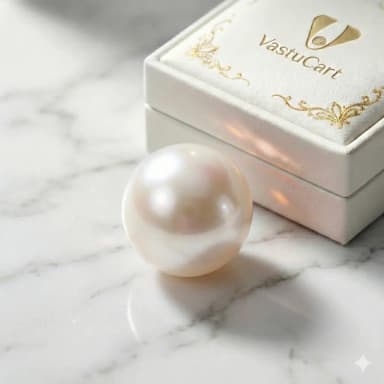

Disclaimer: Always consult a qualified Jyotishi who has reviewed your full birth chart and verified the Moon's paksha before wearing any lunar gemstone.
Rudraksha beads for Moon in 7th house
The Chandra-aligned rudraksha is the Do Mukhi (two-faced), directly associated with Shiva-Shakti and the lunar channel.
The direct rudraksha for Moon. Stabilises the emotional home channel, supports marital harmony, and is the primary bead for any fourth-lord-in-seventh configuration. Worn after Shiva abhishek on Monday evening.
The six-faced bead associated with Kartikeya and Venus resonance. Useful for natives who want to strengthen the aesthetic and partnership harmony channels of a Tula-coloured Moon.
Chandra Yantra for the fourth lord
Sacred recitations for Chandra
Chandro amritaatmaa varadah shashaankah shreyaamsi mahyam pradadaatu devah
Dadhi shankha tushaaraabham kshirodaarnava sambhavam
Namaami shashinam somam shambhor mukuta bhooshanam
Translation: The white-clothed, white-bodied, crowned, white-bright Moon, holding the staff in his two hands, the nectar-souled Chandra, the boon-giver, may the deva bestow all auspicious things on me. I bow to the Moon who shines like curd, conch, and frost, born from the ocean of milk, the ornament on the crown of Shambhu (Shiva). The Chandra Stotram is the daily recitation that stabilises the emotional channel this placement depends on.
Read the full stotra on stotra.vastucart.inTools for Moon 7th house Mesh natives
Is your Moon waxing or waning in the seventh?
Get a full personalised analysis of your Chandra placement, paksha diagnosis, and marriage timing windows.
Questions about Moon in 7th house, Mesh Lagna
Pt. Raghav Sharma has practiced Parashari Jyotish for over twenty two years from Varanasi. A student of the Varanasi Jyotish tradition, he specialises in Graha-in-Bhava analysis, Vimshottari Dasha predictions, and Muhurta. He has authored over four hundred in-depth articles on Jyotish principles across the VastuCart knowledge network.