
Moon in the 1st house
Mesh Lagna (Aries Ascendant)
A practitioner study of Chandra at the ascendant of Mesh Lagna. Moon in Mesha, Mars's friendly sign, the body as a vessel for the lunar tide, the 4L in 1H raja yoga, and the waxing-versus-waning diagnostic that decides whether the placement reads as strength or vulnerability.
Moon in 1st house for Mesh Lagna, the quick reference
If you carry Chandra at the lagna of a Mesh chart, you hold the most personal lunar placement in the entire Aries ascendant catalogue, because the Moon at the first house literally becomes the body it occupies. The first house from Mesh is Mesha (Aries), ruled by Mangal, and the Moon and Mars share a classical friendship rooted in their respective karakatvas of mind and action. By sign relationship the Moon is comfortable here in a friend's territory, neither exalted nor debilitated, holding mid-strength functional status that classical texts describe as productive but specifically sensitive to the paksha (lunar phase) at the moment of birth. Shukla paksha (waxing Moon, from the day after Amavasya through the day before Purnima) gives the placement its full benefic expression. Krishna paksha (waning Moon, from Purnima through Amavasya) reduces the benefic strength and shifts the reading toward emotional vulnerability that the native must work with consciously throughout life.
The second structural feature is the 4L in 1H configuration. For Mesh Lagna, Chandra rules Karka, which falls on the fourth house, the kendra of home, mother, emotional foundation, and inner sukha (contentment). Placing the 4L in the 1H creates a kendra-to-kendra raja yoga where the lord of one of the four foundation angles occupies another foundation angle, producing a native whose personal identity is inseparable from their home, their mother, and their emotional inner world. This guide reads every layer of Moon in 1st house for Mesh Lagna natives: the paksha diagnostic that decides functional strength, the 4L in 1H raja yoga, the fire-water tension between the watery Moon and the fiery Aries body, and the pearl protocol that strengthens the placement when the chart calls for it.
Why the paksha decides whether the Moon delivers or struggles
Students often ask whether Moon in the 1st of Mesh is a good or bad placement, and the honest practitioner answer is that the question cannot be answered without first checking the lunar phase at birth. The Moon is the only planet in Vedic astrology whose functional strength varies measurably with its phase relationship to the Sun, and the rule is straightforward. A waxing Moon (shukla paksha, from one day after the new moon through the full moon) is functionally benefic and grows in strength as it approaches the full moon. A waning Moon (krishna paksha, from one day after the full moon through the new moon) is functionally weaker and grows more vulnerable as it approaches the new moon. The shukla paksha Moon at the lagna of Mesh produces a native whose emotional life is rich, generous, and visibly nourishing to family and community. The krishna paksha Moon at the same position produces a native who feels the lunar themes (sensitivity, mother, home) more as private burdens than as public gifts.
The 4L in 1H configuration is the second specific structural feature that deserves careful attention. For Mesh Lagna, Chandra owns Karka, and Karka falls on the fourth house, the deepest of the four kendras and the seat of sukha, mother, vahana (vehicles), property, education, and the inner sense of belonging. Placing this 4L in the 1H creates a clean kendra-to-kendra raja yoga where the lord of one foundation angle occupies another, and the practical effect is that the native's personal identity carries the qualities of the fourth house from birth. Mother is the dominant relational figure in childhood. Home is the emotional reference point throughout life. Property and vehicles often come earlier than peers expect. Education is taken personally rather than instrumentally. The third interpretive layer is aspect. From the first, Chandra aspects the seventh house with his full opposition aspect, bringing the lunar tide into the marriage and partnership domain in ways that shape spouse choice and emotional dynamics in the partnership.
When the Moon sits at the lagna, the body itself becomes a tide chart. Friends learn to read your phases the way sailors read the sea, and the work of the placement is to honour the rhythm rather than fight it.
How Chandra at the lagna shapes the Aries native
Physically the native carries the Mesh Lagna frame softened by an unmistakable lunar quality that distinguishes them from every other Aries ascendant in the room. The face is round to oval rather than angular, the cheeks hold a fullness that family members notice from infancy, and the eyes carry the moist, dreamy quality classical texts assign to a strong Chandra. Complexion runs notably fairer than typical Mesh natives because Chandra rules complexion and his presence at the lagna lightens the overall tone. Hair is typically thick, soft, and on the wavy side, and the body has a tendency toward gentle fullness from the late twenties onward that the watery Moon influence produces over a fiery base. The 1st house body-part rulership covers the head and brain, and natives should pay attention to migraines, sinus issues, and stress-related head pain throughout life because the lunar sensitivity at the head signature can produce these symptoms when emotional pressure builds.
Temperament is the layer where the placement diverges most sharply from the popular Aries portrait. These natives carry the Mesh courage in a quieter, more reflective key. They are still pioneers, still first to act, still capable of leadership, but the action emerges from emotional reading of the situation rather than pure impulse. They cry more readily than other Aries natives, and they are not embarrassed by it because the Moon at the lagna makes emotional expression part of identity rather than a private weakness. They are also unusually attuned to other people's moods, often reading rooms within seconds of entering and adjusting their own behaviour to match. The shadow side is exactly this attunement, because natives who do not establish strong emotional boundaries can absorb the moods of family, colleagues, and strangers until their own internal weather becomes indistinguishable from the people around them. Natives who learn early to recognise the difference between their own emotions and absorbed emotions develop one of the most genuinely empathetic personalities the chart catalogue can produce.
Strengths, shadows and career fits
- Body becomes vessel for the lunar tide
- 4L in 1H kendra-kendra raja yoga
- Mother as dominant childhood support
- Empathetic emotional intelligence
- Aspects 7H, brings warmth to marriage
- Property and vehicles arrive earlier than peers
- Krishna paksha reduces functional strength
- Emotional absorption from environment
- Migraines and sinus vulnerability
- Mood-driven decision making
- Fire-water tension produces internal weather
- Public crying may feel exposing
- Hospitality, hotels, food service leadership
- Maternal and child healthcare
- Counselling, therapy, emotional support
- Real estate, property development
- Dairy, agriculture, water-based business
- Public-facing service and customer care
Where the lunar identity channel plays out
Career paths cluster around fields that reward emotional intelligence and visible warmth, and the strongest single fit is hospitality and food service leadership. The Moon as 4L of home placed at the lagna produces a native whose entire vocational instinct is to make other people feel at home, and hotels, restaurants, guest houses, and food businesses become natural career territory. Many natives with this placement run family hospitality operations or rise into senior roles at large hospitality groups where the personal warmth becomes a competitive advantage that systems cannot replicate. Maternal and child healthcare is the parallel professional fit because the Moon karakatva covers mother, milk, and the early-life nutritional cycle, and natives are often drawn into obstetrics, paediatrics, lactation consulting, child psychology, and early-childhood education.
Counselling and therapy roles work because the empathetic absorption the placement produces becomes a clinical tool when channelled through training. Natives often find their way into counselling, therapy, social work, and emotional support roles where the ability to read other people's internal weather is precisely the skill the work requires. Real estate and property development suit the chart because the 4L at the lagna keeps the native's mind on home and land throughout life, and many natives with this placement build property portfolios as a parallel income stream even when their primary career is elsewhere. Dairy, agriculture, and water-based businesses (mineral water, beverages, fishing, irrigation) channel the Chandra karakatva of fluids productively. Public-facing service roles where the warmth shows (front-of-house management, customer care leadership, community organising) round out the list. Chandra mahadasha is typically when the vocation crystallises, and the placement responds particularly well to female mentors and maternal-figure bosses who recognise the empathetic gifts the chart carries.
Moon marked in the first house of Mesh
- Chandra at the lagna in Mesha, marked in luminous silver
- 12 houses in North Indian format
- Central diamond is the 1st house of Tanu Bhava
Why two natives with the same placement can read very differently
The interpretive insight that separates a serious reading from a popular one is that two Mesh Lagna natives with the same Moon-in-first placement can experience it very differently depending on the lunar phase at birth. A child born three days before the full moon carries a Chandra at near-peak functional strength. The same Chandra in a child born three days after the full moon carries reduced strength because the Moon is now waning. The day-of-birth check is the first thing I do in consultation, and the difference shows up immediately in the native's emotional self-report. Shukla paksha natives describe their emotional life as a resource they draw on. Krishna paksha natives describe the same emotional life as a tide they ride, sometimes with more effort than they would prefer.
The fire-water tension is the second feature practitioners need to read carefully. Mesha is fiery and ruled by Mars, while Chandra is the cool, fluid, watery planet of mind. Placing watery Chandra in fiery Mesha at the lagna produces a constitutional dynamic where the Moon's natural soothing function is amplified by the body but also slightly destabilised by the fire of the sign. The result is an emotional life that runs hot rather than cool, where feelings rise quickly, peak intensely, and then dissipate, leaving the native somewhat exhausted by the internal weather even when the external world has not changed. Natives who build cooling practices into daily life see the placement settle into a sustainable pattern by the early thirties. The remedy is rhythm, not suppression, and the chart specifically rewards natives who treat their emotional life as a tide to be honoured rather than a flood to be controlled.
When Moon in 1st delivers its Tanu Bhava chapter
Chandra mahadasha is the defining window for this placement and arrives with the emotional and identity awakening that the lagna position specifically produces.
Head, fluids and the lunar sensitivity profile
Health follows the watery Moon at the fiery lagna pattern with specific sensitivities that natives should track from early adulthood. Constitution is moderately strong, kapha dosha most prominent and pitta secondary because the Mesha sign adds fire to the otherwise cool lunar base. The 1st house body-part rulership covers the head, brain, and sensory organs. Migraines, sinus congestion, vision strain, and stress-pattern head pain are the specific vulnerabilities. Daily hydration is non-negotiable because the watery Moon at a fiery body dehydrates faster than the native's instincts will signal. Two to three litres of water daily, plus seasonal cooling foods like coconut water, melon, yoghurt, and mild dairy, keep the constitution in balance.
Sleep is the second specific health layer because Chandra rules sleep itself and its position at the lagna means sleep quality directly affects identity, decision-making, and emotional regulation. Natives who sacrifice sleep for work or screens experience the placement's signature dim within days. Natives who honour sleep as a primary practice see the chart's gifts compound across decades. Monday is the ritual day, and the placement responds beautifully to Monday observance because Chandra's own weekday wires directly into the lunar current the chart carries. Annual ENT, vision, and basic neurological screening from the mid-thirties completes the preventive baseline.
Remedies for Chandra at the Mesh lagna
The Monday discipline is foundational and delivers genuine benefit for this placement because the chart is structurally wired to the lunar current that the day carries. Rise before sunrise, bathe with cool water, wear white, silver-grey, or pale cream clothing, and visit a Shiva temple if accessible because Chandra sits on Shiva's matted hair in the iconography and Shiva worship strengthens the lunar channel through the deity who carries it. The Soma Suktam is the primary recitation for this placement because it is the Vedic Rigveda hymn to Soma, the lunar nectar deity who is functionally Chandra in his most ancient form, and the recitation directly invokes the cooling, nourishing tide that the placement specifically activates. Offer white flowers, white rice, milk, or sugar at the altar, and donate dairy, water vessels, or food to elderly women, mothers in need, or maternal charities, all of which channel the 4L karakatva constructively.
The full moon practice is the single most important monthly remedy for this placement, and natives who establish a Purnima observance from their twenties (sitting in moonlight for ten to fifteen minutes, hydrating with water that has rested in moonlight, recitation of a chosen Chandra hymn) see the chart's lunar signature settle into its most balanced expression across decades. The gemstone is pearl (Moti) and is recommended with confidence here when the paksha reading supports it. Wear a natural Basra or saltwater pearl of minimum five ratti set in silver on the small finger of the right hand on a Monday at sunrise after Chandra mantra recitation. For krishna paksha natives, the pearl protocol is even more important because it works to compensate for the reduced functional strength the phase produces, and consistent wearing usually brings noticeable emotional regulation within three to six months. The lifestyle adjustment that compounds most is building rhythm into daily life. Because the Moon governs cycles, natives who structure their day, week, month, and year as nested rhythms (consistent wake time, weekly rest day, monthly Purnima practice, annual seasonal reset) see the placement deliver its fullest expression.
Gemstones for Moon in 1st house Mesh Lagna
Pearl is the primary gemstone here and works particularly well for krishna paksha natives where the phase reduces the Moon's functional strength.
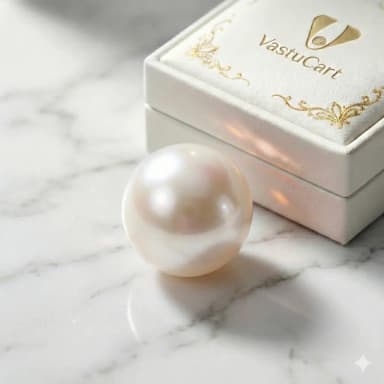

Disclaimer: Pearl works strongly with the Moon at the lagna but the paksha reading should be confirmed by a qualified Jyotishi before permanent wearing.
Rudraksha beads for Moon in 1st house
The Chandra-aligned rudraksha is the Do Mukhi (Two Mukhi), the bead directly ruled by the Moon and Shiva-Parvati pair.
The classical Moon rudraksha and the safest daily-wear bead for any Chandra strengthening protocol. Supports the lunar tide at the lagna, balances the fire-water tension of the placement, and is specifically recommended for natives who feel the krishna paksha vulnerability and need consistent emotional regulation support.
The rarest and most revered bead. Supports the friendship between Chandra and Surya that this placement carries, strengthens the lagna identity through the Sun and Moon together, and is recommended for natives stepping into public-facing leadership roles where the empathetic gifts must hold under pressure.
Chandra Yantra for the lagna Moon
Sacred recitations for Chandra at the lagna
Bhadra hi nah pramatir asya samsadi agne sakhye ma rishama vayam tava
Soma raja amritam adhi yoyuvanah suvarbhuta bhuvanasya gopah
Tvayedam vishvam bhuvanam vavridhanam tava vrate trivishtape niveshitam
Translation: May we offer this praise to the all-knowing one, like a chariot fashioned with care. May his protection be benevolent in our assembly. O Agni, in friendship with you may we never come to harm. King Soma, immortal and youthful, has become the protector of all worlds. By you all this universe has grown, settled within your sacred ordinance in the threefold heavens. The Soma Suktam is the most ancient hymn to the lunar nectar deity and is the perfect daily recitation for a chart where the Moon sits at the lagna.
Read the full stotra on stotra.vastucart.inTools for Moon 1st house Mesh natives
Is your Tanu Bhava Moon shukla or krishna paksha?
Get a full personalised analysis of your lagna Chandra, paksha strength, and the lunar tide that shapes your identity.
Questions about Moon in 1st house, Mesh Lagna
Pt. Raghav Sharma has practiced Parashari Jyotish for over twenty two years from Varanasi. A student of the Varanasi Jyotish tradition, he specialises in Graha-in-Bhava analysis, Vimshottari Dasha predictions, and Muhurta. He has authored over four hundred in-depth articles on Jyotish principles across the VastuCart knowledge network.