
Mars in the 3rd house
Mesh Lagna (Aries Ascendant)
A practitioner study of Mangal in Parakrama Bhava for Aries ascendant natives. Mars in an Upachaya house, the courage karaka sitting in its own karaka house, and why this is one of the strongest Mars placements in the Mesh Lagna catalogue despite the enemy sign Mithuna.
Mars in 3rd house for Mesh Lagna, the quick reference
Mars in 3rd house for Mesh Lagna is one of the most quietly powerful Mangal placements in the Aries ascendant catalogue. The third house from Mesh is Mithuna (Gemini), Budha's sign, and Mangal in Mithuna sits in an enemy sign because Mars and Mercury are classical adversaries. On the surface that sounds limiting, but the sign weakness is overridden by something much larger, the third house is an Upachaya (growing) house, and Mars is the planet that benefits most from Upachaya placement. Classical Parashara names the third house Parakrama Bhava, the house of valour, and lists Mars as the karaka (significator) of that exact domain. Placing the courage planet in the courage house, even in an enemy sign, creates a double-karaka alignment that grows stronger year by year through the native's self-effort. This guide reads every layer of Mars in 3rd house for Mesh Lagna natives: the Upachaya growth curve, why this placement is not Manglik despite common confusion, the younger sibling signature, communication and career fits, and the red coral protocol that practitioners recommend here without hesitation.
Why the Upachaya principle overrides the enemy sign
The third house is Parakrama Bhava, the domain of valour, courage, self-effort, hands and arms, short journeys, younger siblings, communication, and the raw capacity of the native to push against resistance. Classical texts group the third house with the 6th, 10th, and 11th as the four Upachaya houses, meaning houses that grow (upachaya = growth) and that favour malefics. The reasoning is practical, the domains these houses cover (valour, enemies, karma, gains) are exactly the domains where malefic energy produces productive outcomes rather than destructive ones, because the native needs fire, not softness, to win in these fields. Any malefic in an Upachaya grows stronger over time through the lived experience of the native, and the third house in particular benefits from Mars because Mars is the very karaka of the courage the house represents.
Mithuna rashi adds a second layer. Budha rules Mithuna, and the Mars-Mercury relationship is classically inimical at the planetary level, but the sign itself is airy, communicative, adaptable, and quick. What happens when Mars enters this sign is not a debilitation of his nature but a translation of it into a different register. The native still carries full Mars courage, but the courage expresses through words, argument, and mental quickness as often as through physical action. Many natives with this combination become outstanding debaters, sports commentators, combat journalists, or entrepreneurs who use verbal sharpness to carve a path that peers without the Mars-Mithuna combination would never attempt. The third and most important interpretive point is that this placement is not Manglik. Classical Manglik Dosha covers Mars in the 1st, 2nd, 4th, 7th, 8th, and 12th houses. The 3rd is not on that list. Natives with this placement should never be told they carry Manglik Dosha simply because their Mars is prominent.
Mars in Parakrama Bhava is not a placement the native inherits, it is a placement the native earns. The chart hands them an engine and tells them to build the road themselves, then doubles down when they do.
How the Upachaya Mars shapes the Aries native
Physically the native carries a wiry Mesh Lagna frame with unusually strong hands, arms, and shoulders, the exact body parts the third house rules. The grip is firm, gestures are precise and animated, and the native often excels at sports or physical activities that demand hand-eye coordination rather than pure strength. The face holds alert intelligence, the eyes move quickly when listening, and the native is rarely still in conversation. Complexion runs warm, the jaw is firm but not heavy, and the overall impression is of quickness paired with latent power. Walking is brisk, speech is rapid, and strangers often describe these natives as high-energy without being aware that the Mithuna colour is adding the mental quickness to the Mars fire.
Temperament is the layer that makes this placement distinct. These natives carry the full Aries courage of the lagna but run it through a verbal and intellectual channel rather than a purely physical one. They argue hard, win debates that others avoid, and frequently rise through workplaces or fields by being willing to say what other people are thinking but will not voice. The shadow side is a tendency toward verbal impatience with slower thinkers and a sharp tongue that can wound people the native genuinely cares about. The redemption is that the placement rewards self-awareness, and natives who learn to temper the verbal edge by their late twenties see the Upachaya strength compound dramatically through their thirties and forties. Classical texts specifically describe Mars in the 3rd as a combination where the native earns what peers with easier placements are simply given, and the character built through that effort becomes the native's signature strength.
Strengths, shadows and career fits
- Upachaya growth strengthens over time
- Mars in its own karaka house
- Strong younger siblings who support
- Self-effort rise from modest origins
- Sharp communication and debate
- Not a Manglik Dosha position
- Verbal impatience with slower thinkers
- Conflict with elder siblings possible
- Risk of hand, arm, or shoulder injury
- Hot temper in conversation
- Restless during enforced inactivity
- Burning of bridges during the twenties
- Entrepreneurship and self-built ventures
- Sales, marketing and business development
- Journalism and combat reporting
- Writing, publishing and content
- Sports, coaching and fitness leadership
- Legal advocacy and argumentation
Where the Upachaya growth curve plays out
Career paths cluster around fields that reward self-effort, verbal quickness, and the willingness to operate at the edge of what the native can sustain. Entrepreneurship is the single strongest fit because the combination gives the native exactly the mix of courage and verbal capability that founding a business from nothing requires. Natives with this placement often build their own ventures rather than climb ladders inside established institutions, and by their mid-thirties many have founded two or three businesses with varying outcomes that feed into a stronger fourth attempt. Sales, marketing, and business development form the second cluster because these roles reward the quick thinking plus decisive action that Mars-in-Mithuna delivers naturally.
Journalism, especially combat reporting, political journalism, or sports journalism, suits these natives because the third house is literally the house of short journeys and written communication, and a strong Mars in it produces reporters who will go where others will not. Writing, publishing, and content creation fit because the combination is fundamentally about translating courage into words. Sports careers, coaching, and fitness leadership work well because the physical capability is real and the hands-arms rulership of the third house adds an unusual level of fine motor skill. Legal advocacy, especially trial and litigation work, is a classical fit because the placement gives a debating instinct that matches the courtroom perfectly. The Upachaya growth curve matters most for this placement, most natives do not look particularly successful in their twenties but compound visibly from age thirty onwards, and Mangal mahadasha is typically when the full strength of the placement finally shows in public outcomes.
Mars marked in the third house of Mesh
- Mangal in Parakrama Bhava, marked in bright crimson
- 12 houses in North Indian format
- Left-central diamond is the 3rd house
What the third house tells us about brothers and sisters
The third house is the classical house of younger siblings, and Mars as the natural karaka of siblings at the planetary level doubles the signal when he sits in this house. Natives with this placement almost always have at least one younger sibling, and the relationship with that sibling is one of the defining patterns of the native's early life. Classical texts describe the younger siblings of Mars-in-third natives as physically strong, courageous, often protective of the native, and frequently successful in their own right. The bond is rarely sentimental, these natives do not typically hug their younger brothers and sisters at every meeting, but the underlying loyalty is unusually deep and shows up most clearly in moments of family crisis when the native and the younger sibling instinctively act as a unit.
Relationships with elder siblings, on the other hand, can carry friction. The third house is the younger-sibling house, so Mars here does not directly describe the elder siblings, but the native's own martial temperament sometimes clashes with older brothers and sisters during formative years. This usually resolves as both sides mature, and by midlife the native often becomes the pivotal connector between elder and younger siblings in a multi-sibling family. For natives with no biological younger siblings, the signature typically expresses as a close friendship with someone who functions as a younger-brother figure, often a junior colleague, mentee, or cousin who the native protects and supports as if they shared childhood. The placement genuinely does not work without a younger-protected relationship in the native's life, and cultivating one consciously, when the family structure does not provide it, actually strengthens the chart's expression.
When Mars in 3rd delivers its courage chapter
Mangal mahadasha is the central window for this placement, but the Upachaya growth curve means Shani and Guru periods matter nearly as much for long-horizon outcomes.
Hands, arms, shoulders and the active physical profile
Health follows the strong-Mars pattern with specific third-house vulnerabilities layered on. Constitution is pitta-dominant with strong metabolism and high baseline energy, the body handles physical effort well, and recovery from exertion is rapid. The specific vulnerabilities are the hands, arms, and shoulders, which the third house governs directly. Natives should take shoulder and rotator cuff care seriously from the early thirties, watch for repetitive strain injuries if the profession involves heavy keyboard or tool use, and guard against the fracture risk that elevated physical activity combined with Mars energy produces in sports contexts. Hand injuries in sports, combat training, or kitchen work are the single most common physical incident I see in consulting for this placement.
The corrective routine leans into the active profile rather than restraining it. Physical training is genuinely non-negotiable for these natives because unspent Mars energy makes them restless and short-tempered, and four to five sessions of sustained physical effort weekly is the ideal minimum. Include shoulder mobility work, grip strengthening, and at least one session weekly of the kind of activity the native actually enjoys (martial arts, weights, running, climbing, team sports). Sleep hygiene matters more for this placement than for most because Mars fire extends the mental day late into the night if unchecked, so establishing a wind-down routine by the late twenties prevents the kind of chronic sleep deprivation that compounds health risks across decades. Tuesday is the ritual day, observe a lighter diet, wear red, recite Mangal Kavacham in the morning and Hanuman Chalisa at dusk, and visit a Hanuman temple if accessible.
Remedies for the Upachaya Mars
The Tuesday discipline is foundational but interestingly less urgent for this placement than for an afflicted Mars, because the Upachaya growth curve naturally supports the planet over time. The practice is still valuable because it compounds the existing strength and directs the courage toward dharmic channels. Rise early on Tuesday, wear red or copper-toned clothing, and recite the Mangal Kavacham or Mangal Stotram in the morning. The Hanuman connection is especially meaningful for these natives because Hanuman is the deity of the courage the placement depends on, and the Bajrang Baan or Hanuman Chalisa recited at dusk serves as both protection and amplification for the already strong Mars.
The gemstone is red coral (Moonga) and this is one of the very few placements where I recommend the stone without hesitation. Wear a natural Italian or Mediterranean red coral of minimum six ratti set in copper or gold on the ring finger of the right hand on a Tuesday morning after Mangal mantra recitation. Red coral suits this combination precisely because the Upachaya house can absorb the direct Mars amplification without triggering the friction that a debilitated or afflicted Mars would produce. The lifestyle adjustment that matters most is deliberate practice of verbal restraint during arguments the native knows they can win. The placement gives the native the ability to win virtually any debate, but the chart's deepest reward is the wisdom to choose when not to. Natives who develop this discrimination by their early thirties see the Upachaya curve compound into a form of authority that other placements can never match.
Gemstones for Mars in 3rd house Mesh Lagna
For an Upachaya Mars, red coral (Moonga) is recommended without hesitation because the house supports direct Mars amplification.


Disclaimer: Even a supported Mars placement deserves a full chart review before daily gemstone wear. Always consult a qualified Jyotishi.
Rudraksha beads for Mars in 3rd house
The Mangal rudraksha is the Teen Mukhi (three-faced), directly associated with the fire trinity, with Gyarah Mukhi as the Hanuman complement.
The direct rudraksha for Mars. Amplifies the Upachaya growth, stabilises the physical body, and supports courageous ventures during Mangal mahadasha. Worn after Tuesday abhishek.
The Hanuman bead. Strengthens courage, protects during self-effort ventures, and is the classical companion bead for any strong Mars, especially one in its own karaka house.
Mangal Yantra for the Upachaya lagna lord
Sacred recitations for Upachaya Mangal
Tehi ke karaj sakal shubh, Siddh karain Hanuman
Jai Hanumanta santa hitkari, Suna leejai prabhu araj hamari
Jasu vaeg rudra kopai, Tasu anakh ko banduka na ropai
Translation: By certain love and conviction, with humility the devotee offers respect. All auspicious tasks of such a devotee Hanuman completes. Victory to Hanuman, benefactor of the saints, hear my prayer, O Lord. His swift wrath rivals Rudra, none can oppose that fury with arrow or arms. Bajrang Baan is the classical hymn for natives whose courage is their signature, and it pairs perfectly with a strong Mars in Parakrama Bhava.
Read the full stotra on stotra.vastucart.inTools for Mars 3rd house Mesh natives
Is your Upachaya Mars growing on schedule?
Get a full personalised analysis of your Mars placement, sibling signature, and career trajectory.
Questions about Mars in 3rd house, Mesh Lagna
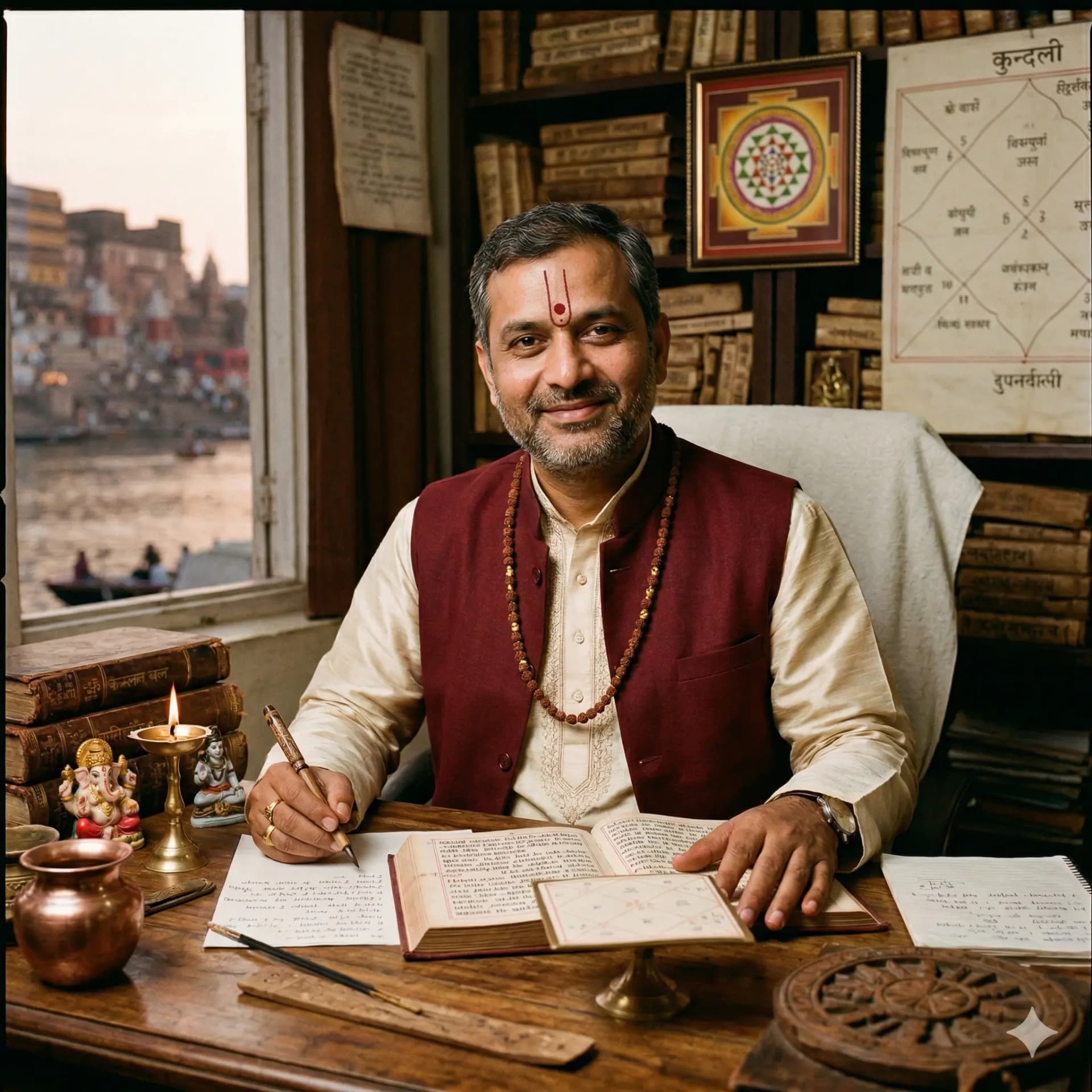
Pt. Raghav Sharma has practiced Parashari Jyotish for over twenty two years from Varanasi. A student of the Varanasi Jyotish tradition, he specialises in Graha-in-Bhava analysis, Vimshottari Dasha predictions, and Muhurta. He has authored over four hundred in-depth articles on Jyotish principles across the VastuCart knowledge network.